The state that has been trying to build high-speed rail since 2008 is now looking at high-speed buses.
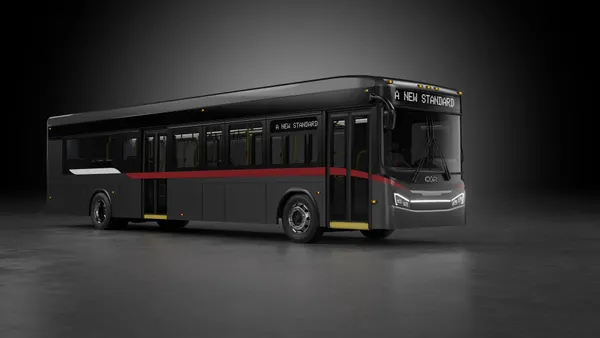
The California Department of Transportation, known locally as Caltrans, said it is exploring how the buses could operate along the state’s freeways at up to 140 mph. To do so, dedicated lanes would need to be built to isolate the high-speed buses from other traffic, according to a 2025 Caltrans research report.
Advanced safety technologies would also be essential. A driver could not be expected to respond quickly and effectively at high speeds, so autonomous vehicle systems such as lane-keeping and automatic emergency braking would be necessary, according to the report. “Automation can help maintain safe headways, ensure smooth steering through curves, and keep the vehicle operating within safe limits at all times,” the report states.
Infrastructure sensors, other vehicles or traffic control centers could warn buses by using vehicle-to-everything, or V2X, technology. V2X enables vehicles to communicate with other vehicles and roadside infrastructure.
A typical intercity bus would create drag and instability at such high speeds, and could react poorly in crosswinds, the research report says. Aerodynamic improvements would address these issues and reduce fuel consumption.
One estimate, presented during a recent Caltrans webinar, projected travel time between San Francisco and Los Angeles at a little over three hours at about 120 mph. The high-speed rail line aims for a two-hour, 40-minute trip when completed. Future high-speed bus routes could also include San Diego and Sacramento, California, the San Francisco Chronicle reported. Caltrans did not provide a cost estimate, according to ABC7 News.
Caltrans said in a statement to ABC7 News that the high-speed bus concept “remains exploratory.” But its research report concluded that “the concept of a 120 mph ‘freeway bullet bus’ is not science fiction.”