Dive Brief:
- Experts see little hope that the Senate will pass multiyear surface transportation legislation before the current act that funds highways and public transit expires on Sept. 30.
- Among the hurdles facing legislators are the proposed annual federal registration fees on electric and plug-in hybrid vehicles, the need to extend the fuel taxes that support the Highway Trust Fund and the likely need to transfer at least $150 billion from the general fund to keep the HTF solvent over the next five years, Eno Center for Transportation Senior Fellow Jeff Davis said during a July 14 Alliance for Innovation and Infrastructure webinar.
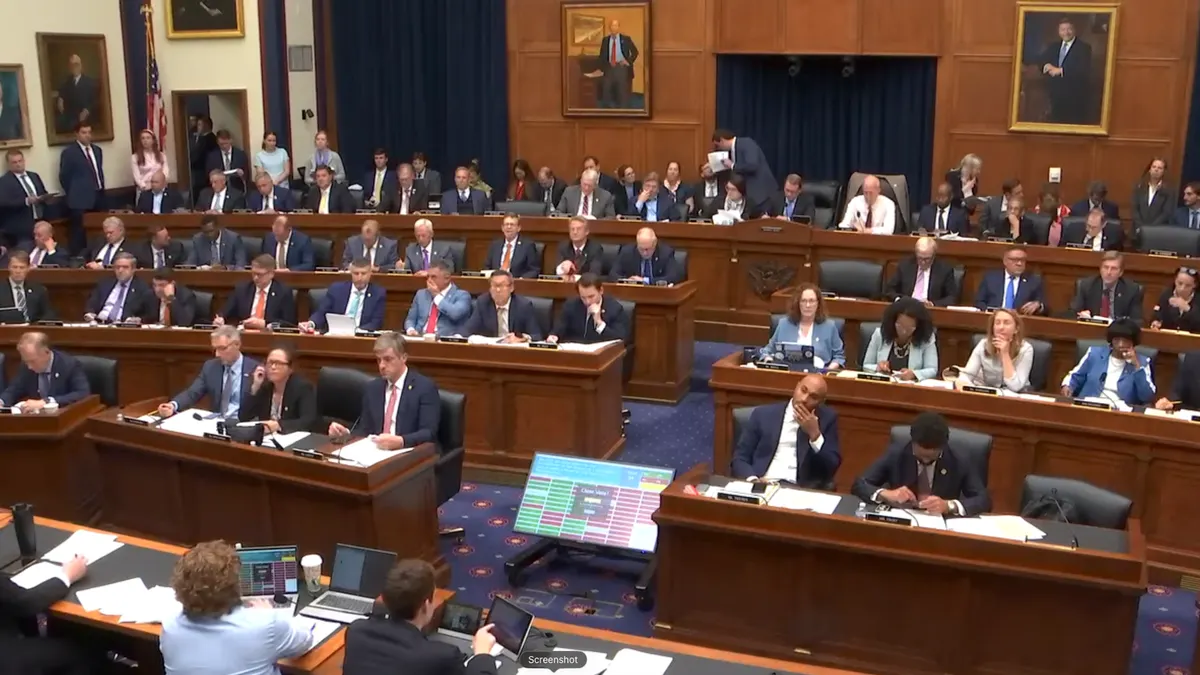
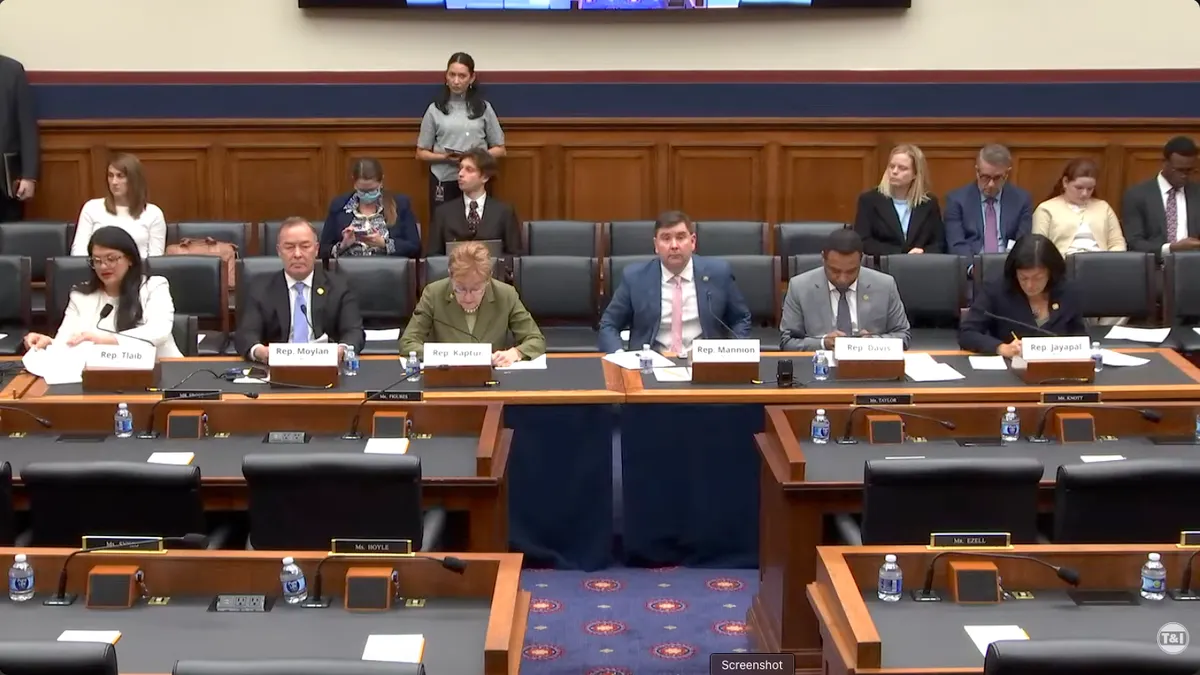
- While the bill passed the House Committee on Transportation and Infrastructure, other House and Senate committees have authority over different aspects of the legislation, the panelists explained. The Senate has yet to propose a bill, Bipartisan Policy Center Managing Director of Housing and Infrastructure Andy Winkler said during the webinar.
Dive Insight:
“We're just running out of time before we get closer and closer to the election,” Winkler said. The House begins its summer recess next week, and the Senate is scheduled to be out from Aug. 8 to Sept. 13.
That’s a good time for county leaders to meet with their senators and representatives, National Association of Counties Chief Government Affairs Officer Eryn Hurley said on the webinar. “What we're telling county leaders and our membership is, don't stop advocating,” she said. Especially on the Senate side, “there is a real window where county input can actually help shape whatever the starting text may pan out to be, instead of ultimately reacting to something that's already locked in.”
The panelists agreed that the likely outcome would be an extension of three months to a year of the current law.
“There's an incentive for the current House majority to push hard here because of the election uncertainty,” Hurley said. “But then at the same time, the case against the lame duck [session] is that it's a crowded window” to get a bill passed.
Marc Scribner, senior transportation policy analyst at the Reason Foundation, expects an extension through the end of the 119th Congress, followed perhaps by a longer extension, depending on the outcome of the midterm elections.