Dive Brief:
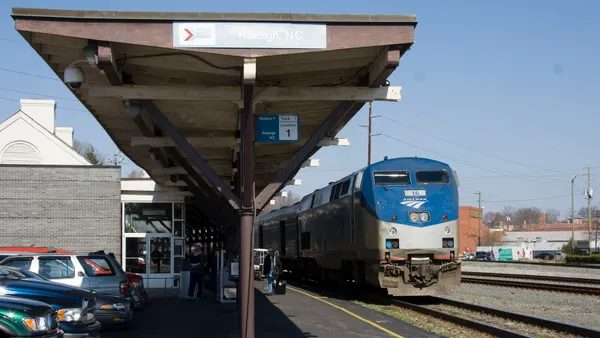
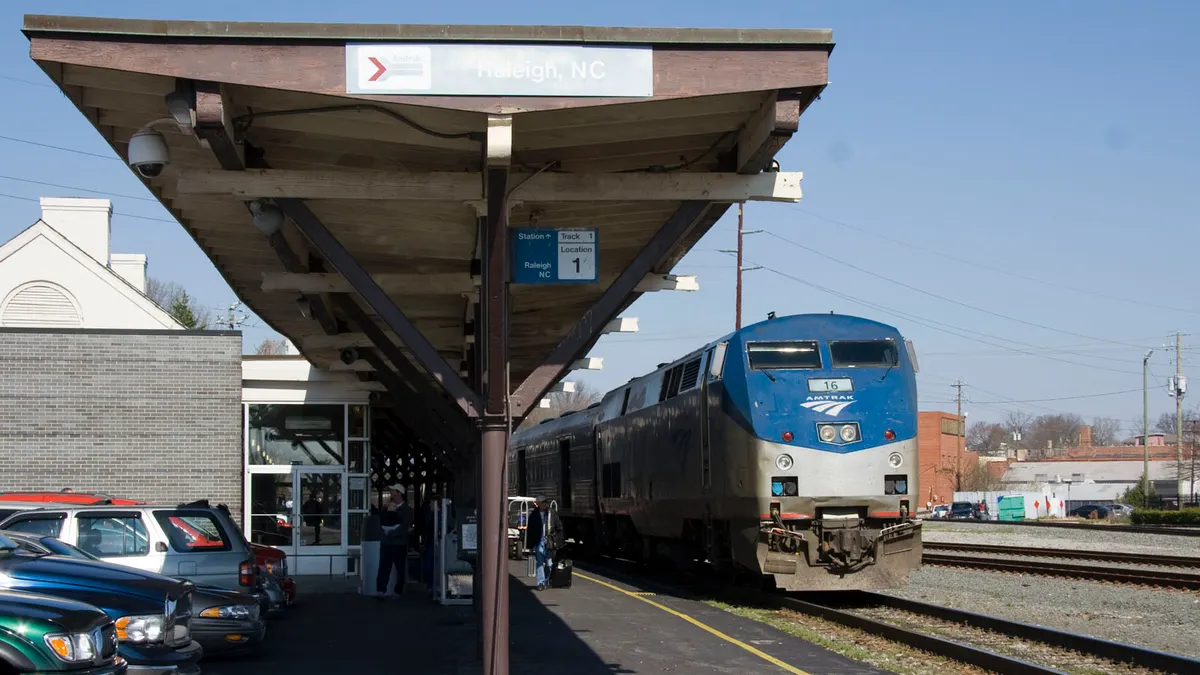
- The U.S. Department of Transportation said Thursday it has obligated $550 million for a new passenger rail line in North Carolina.
- The S-Line project will connect Richmond, Virginia, and Raleigh, North Carolina. Portions of the route will allow train speeds of up to 110 mph, according to the North Carolina DOT. The rail line could reduce travel time between the two cities by up to 90 minutes when completed, according to the US DOT.
- The North Carolina DOT received a nearly $1.1 billion grant under the Biden administration for the project. Amtrak and NC DOT will contribute an additional 20% in matching funds.
Dive Insight:
The S-Line is a CSX-owned freight rail line. The two states purchased the right-of-way for a portion of the line between Petersburg, Virginia, and Raleigh, and broke ground on the project in 2024 in Raleigh.
The project will relieve congestion on existing freight rail corridors and enable North Carolina and Virginia to schedule more frequent passenger train trips, according to the NC DOT.
The Federal Railroad Administration obligated the funds, a step that includes a written, project-specific agreement between the US DOT and North Carolina DOT. In April, the US DOT awarded nearly $300 million for the Piedmont Corridor between Raleigh and Charlotte, North Carolina, to eliminate nine grade crossings, install double track segments and improve trespassing prevention.
“This milestone is a testament to the strong partnership between the [Federal Railroad Administration], Amtrak, and NCDOT in advancing the S-Line and the earlier announced Piedmont Line corridors,” FRA Administrator David Fink said in a statement. “Through close collaboration, we are delivering vital investments that will modernize passenger rail and create a new Golden Age of Rail for the people of North Carolina.”
The NC DOT is leading planning for transit-oriented development along a 95-mile-long section of the rail corridor including Apex, Franklinton, Henderson, Norlina, Raleigh, Sanford, Wake Forest and Youngsville. Planning also includes community mobility hubs in these cities, enabling multimodal transportation, first- and last-mile connections and bike parking.