Dive Brief:
-
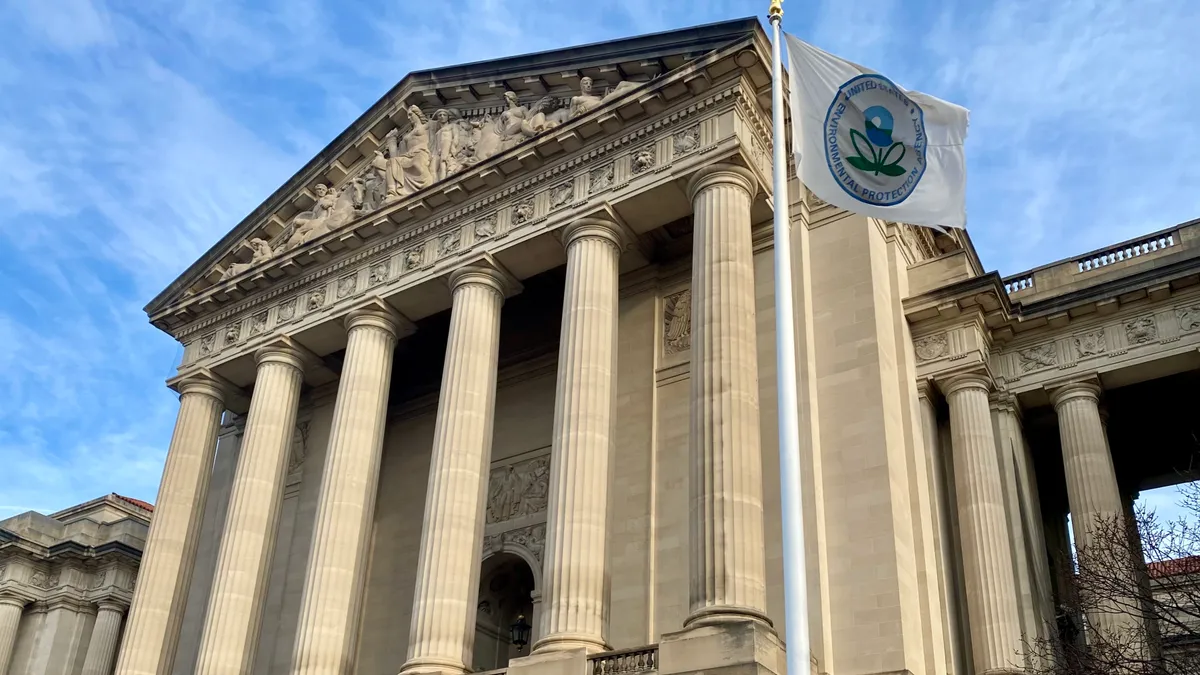
The U.S. Court of Appeals for the D.C. Circuit on Friday denied a challenge by several states and industry groups to a 2024 Environmental Protection Agency rule revising the National Ambient Air Quality Standards for fine particulate matter, also known as the “soot standard.”
- The EPA last year moved to vacate the stricter 2024 rule, agreeing with the plaintiffs that the agency under the Biden administration had exceeded its authority and failed to consider costs when it initiated the review that led to the revision.
-
A separate case filed in the U.S. District Court for the Northern District of California in April, in which a coalition of 10 states; the District of Columbia; Harris County, Texas; and New York City sued the EPA for failing to implement the 2024 “soot standard,” remains pending.
Dive Insight:
The Clean Air Act requires EPA to set air quality standards for fine particulate matter from vehicle exhaust pipes, power plants and factories and to designate areas of the country in violation of those standards. In 2024, the EPA under President Joe Biden set new standards lowering the soot standard from 12 micrograms to 9 micrograms per cubic meter of air by 2032.
Republican attorneys general from 24 states and a coalition of industry organizations filed suit in March 2024 arguing the EPA lacked statutory authority to promulgate the new rule and contending it was tainted by impermissible “environmental justice” considerations. In November 2025, the EPA under the Trump administration moved to vacate the rule on the grounds that it exceeded its statutory authority and acted unreasonably by failing to consider costs.
“Because these arguments lack merit, we deny the petitions for review and the motion for vacatur,” the June 26 appeals court ruling states.
If the EPA ultimately implements the 2024 standard, communities that fail to meet the stricter limit would be required to develop plans to reduce pollution, according to the EPA.
“If a standard is tightened, air quality policies and programs across the country must be adjusted,” a Harvard Law School Environmental and Energy Law Program brief states. “States and local regions must ensure that the sources of pollution in their jurisdiction decrease their emissions, so that the region can meet the new, more stringent national standard.”
Natural Resources Defense Council climate and health scientist Vijay Limaye, in an emailed statement, said Friday’s decision “removes any remaining doubt: the science has long been clear, and now the law is too. The EPA must stop stalling and deliver the clean air the Clean Air Act requires."
The EPA said in an emailed statement that it is reviewing the decision.