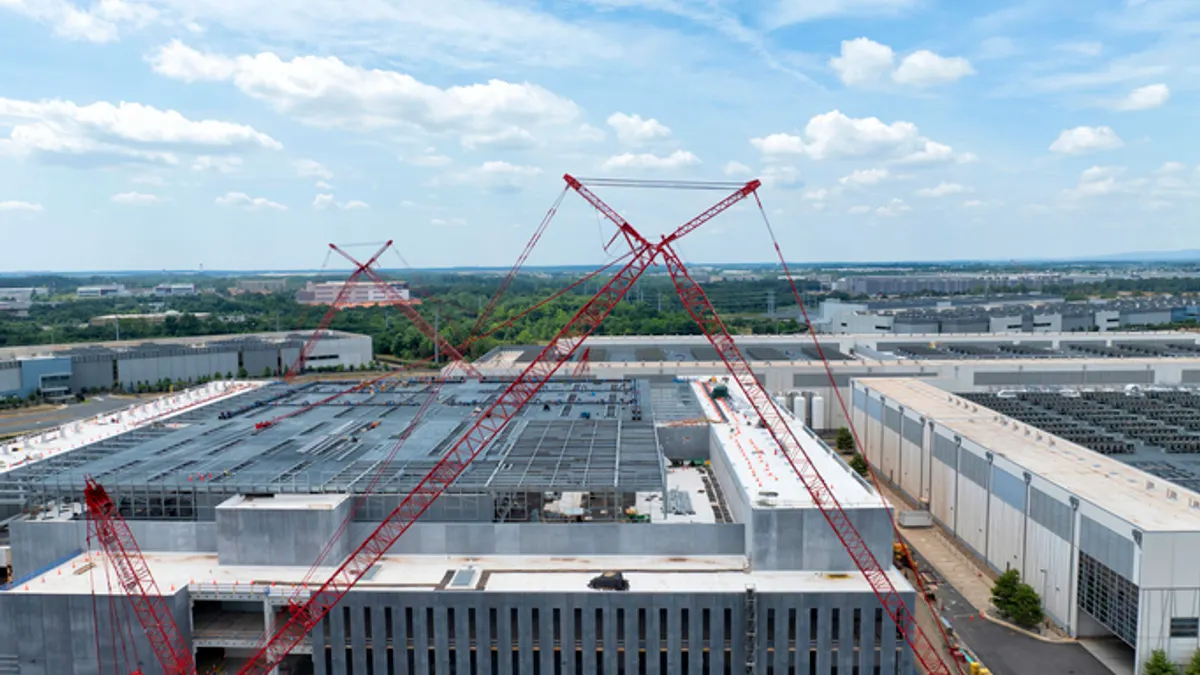
More than 70% of residents spanning both political parties say they oppose AI data centers, and policies to restrict or regulate them are rapidly increasing, according to Lauren Bridges, an assistant media studies professor at the University of Virginia.
At the local level, “moratoriums have started to spread like wildfire across the United States,” Bridges said during a National League of Cities and American Association for the Advancement of Science webinar this month. “We’ve seen a shift from an incentive paradigm to a more restrictive mode of data center governance.”
While cities are moving quickly to address data centers’ impact, they don’t have to choose between welcoming them and protecting their communities — but they do need to be proactive, the panelists said.
“There’s a lot of money being put into this particular industry, and municipalities can see a benefit as well,” said Aurora, Illinois, Sustainability Director Alison Lindburg. “You have to think about the economic impact of data centers, and I think that’s one of the things municipalities are struggling with.”
Get ahead of data center development
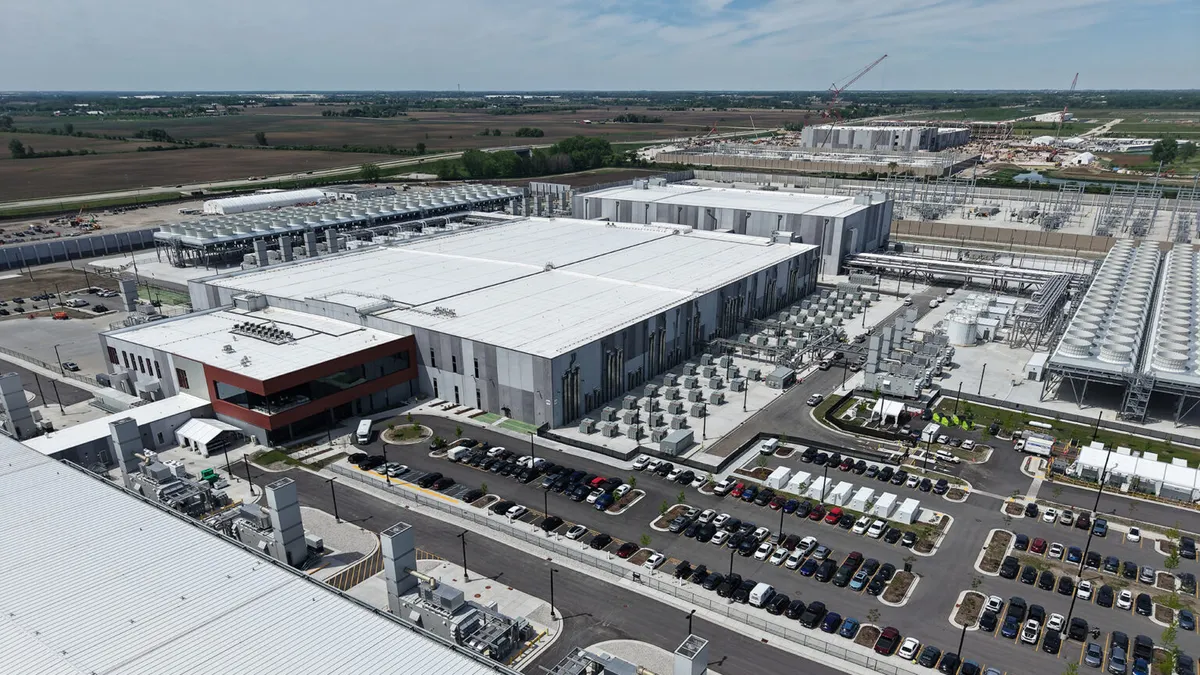
Even though several data centers had already been built in the city, Aurora hadn’t defined what a data center was until this year. That was a problem, Lindburg said.
“All of our data centers were being treated as warehouses, and they essentially don’t have the exact same uses and definitely not the same impacts,” she said. The data centers that had been built were not meeting state requirements and were raising resident concerns, so last year the city put a six-month moratorium on new ones. This gave city staff time to conduct research and hold a robust stakeholder engagement process, draft a policy and get regulations passed by the city council, Lindburg said.
In Anchorage, Alaska, data centers were not addressed as a contemplated use, so Anna Brawley, the Anchorage Assembly chair serving West Anchorage, worked with the planning staff to create an ordinance to regulate them. This imposed conditional rather than by-right use as well as defining which districts they’re allowed to be built in, residential buffers and noise-sensitive restrictions.
Anchorage’s data center definition also treats small and large facilities differently, scaling regulation to the size and intensity of the proposed facility. This is important because “there’s a material difference between a closet-sized data center and one that’s larger than a Walmart,” Brawley said.
The ordinance provides a middle ground, Brawley said. “It’s not a moratorium. It’s not a ban. It says if you’re building one of these, this is where they’re contemplated. These are the rules you have to follow, and this is the approval process you will go through.”
Address water, power and infrastructure capacity
Anchorage’s ordinance includes questions that planning and zoning commissioners should ask to ensure applicants have coordinated with water, sewer and electrical utilities, Brawley said.
In Aurora, electricity bills rose about 24% in 2025 — an increase the Citizens Utility Board attributes to data centers — and “water is becoming scarcer,” Lindburg said. So, the city is requiring data center developers to prove they will meet performance standards for water and power and set renewable and resilient grid requirements. Existing data centers must use Energy Star Portfolio Manager to show how much water and energy they’re using, Lindburg said.
Aurora has some control over utility regulation because it’s a home rule entity, Lindburg said, but it’s turning to the state to address many of the energy issues data centers bring to the table. The POWER Act, introduced in the Illinois General Assembly in February, would make data centers pay for their own new renewable energy and prohibit them from passing on infrastructure costs to ratepayers, she said.
Aurora also requires data centers to submit a water plan that includes disclosing cooling chemicals that would be used and how they will be disposed of. The city is in talks with the regional water regulator about putting sensors near data centers that would detect the presence of PFAS, fluorinated compounds that many cooling systems rely on, Lindburg said.
“We were kind of told that we were being a little over the top,” she said. But now that PFAS in data center water is becoming an issue across the country, “I love that we did that.”
Engage the public
Before it presented its policy proposals to the city council, Aurora held an open house in which about 200 residents provided input, Lindburg said. City staff also attended meetings in local wards, conducted an online resident survey and provided weekly email updates as it was finalizing its proposal.
Lindburg’s team held another public forum after it completed its proposal and ended up adjusting some of its recommendations based on the feedback, she said. Public comment periods during council meetings to discuss the recommendations sometimes stretched until almost midnight, she added.
In the surveys, water consumption, high energy use and increased utility bills rose to the top as residents’ key concerns, Lindburg said. “The overall community statement that we received here in Aurora was that people did not want any data centers at all,” she said.
“Moving from by-right development to special use or special exemption does mean that there’s going to be a more rigorous process for public engagement, just by nature of the change in zoning,” said Bridges, who led a University of Virginia team that built a data center policy database.
Across the country, data center developers are taking note, Bridges said. “After a lot of community pushback, there is now starting to be a much more serious engagement and understanding that there is a need to get out in front and answer questions with the community. So, I think there is a shift that’s been happening.”