Cities and counties are preparing for potential federal interference in Tuesday’s midterm elections.
State and local officials have been training poll workers on how to handle the presence of federal agents. The U.S. Department of Justice announced Oct. 29 that Immigration and Customs Enforcement and FBI agents will not serve as poll monitors, but agents from the Federal Bureau of Prisons; the Bureau of Alcohol, Tobacco, Firearms and Explosives; and the Drug Enforcement Administration will, according to court documents.
Election officials in more than 200 jurisdictions nationwide have been working with the nonprofit Public Rights Project’s Election Protection Hub on plans to address possible interference, Jennifer Holmes, the hub’s director, told Smart Cities Dive. That has included providing legal guidance and scenario planning, such as knowing who is responsible for interacting with federal agents, she said. “We are hearing concerns from all sorts of cities and counties — and that includes blue and red jurisdictions, large and small,” Holmes said.
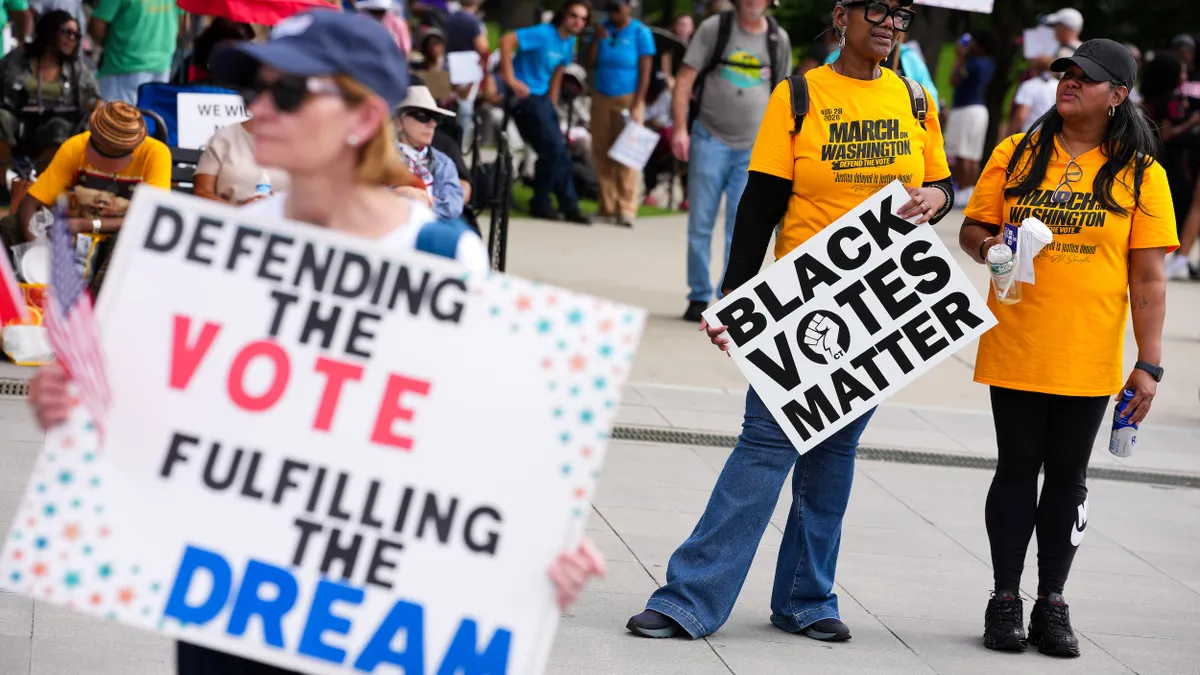
In Chicago, a coalition of local civil rights groups said Wednesday that “trained lawyers, ‘Know Your Rights’ experts, poll monitors and accredited poll watchers are volunteering to identify potential problems, assist voters, document concerns, and connect election officials and voting rights organizations when intervention is needed,” according to a news release from Mayor Brandon Johnson’s office.
“We will continue to use every tool available to protect Chicagoans and make sure people can exercise their rights without fear,” Johnson said in a statement.
Also Wednesday, after weeks of legal back and forth, U.S. District Judge David Carter on Oct. 28 denied the DOJ’s request for a restraining order to stop several California counties from processing ballots it said might have been cast by non-citizens. In L.A. County, the DOJ questioned the validity of 20,000 ballots this month.
“Never before in American history has the federal government, on the eve of an election, sought to coerce a state and local government to abandon their own Constitutional elections procedures and bend to the will of the Executive Branch,” Carter wrote in his ruling.
Holmes said the decision is a win for preserving democracy. “The Constitution gives states the authority to run elections, not the executive branch,” she said. “If the federal government is allowed to meddle like this, it really just upends our democracy. … Even though this opinion didn’t technically expand beyond LA, a lot of the principles enshrined in it will be an important shield for the counties that are also experiencing the same attacks.”
The DOJ has appealed the decision, and Holmes said “the threat doesn’t stop on election day because the votes still have to be counted, canvassed and certified, and … we are planning for potential government interference in that process as well.”
Officials are urging vigilance. “It’s critical that [mayors] are fully prepared, in these unprecedented times, as they work to protect the vote and ensure every eligible voter who wants to vote can vote and have their vote count,” the Democratic Mayors Association, a coalition of mayors in cities with at least 30,000 residents, said in a statement.
“Across the country, dedicated local election officials and public servants work tirelessly to uphold the integrity of our elections. They are joined by more than 650,000 professional and volunteer election workers who give their time, energy and expertise to make sure every vote is counted accurately,” San Diego Mayor Todd Gloria, president of the U.S. Conference of Mayors, said in a statement. “At a time when misinformation can undermine public confidence in the process, their work is more important than ever.”