Bob Hellman is CEO of American Infrastructure Partners, a private investment firm focused on U.S. infrastructure.
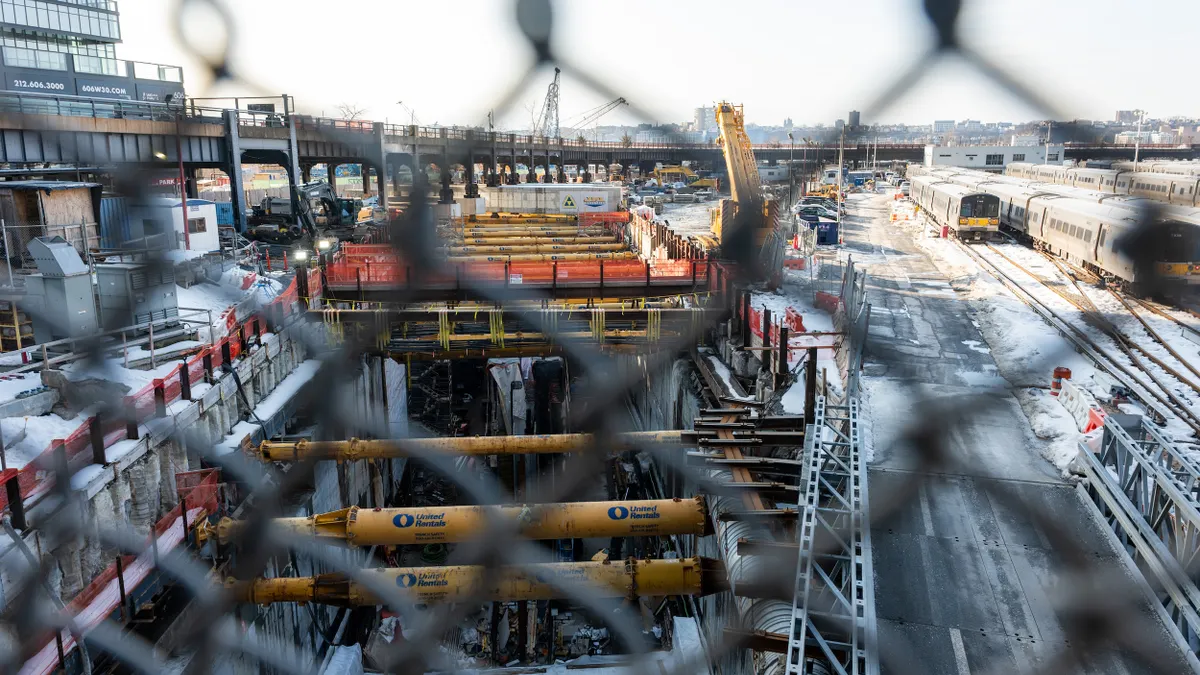
The Gateway Hudson Tunnel project was supposed to be a $13.5 billion fix for aging rail infrastructure under the Hudson River. Instead, it is becoming another government-managed money sink, already exceeding $16 billion with completion pushed years beyond its original target.
The failure is as sickening as it is predictable. Hitting taxpayers harder is not the answer to constant budgetary and execution failures. The answer is to bring operational and fiscal discipline to critical infrastructure that only private-sector capital and oversight can.
Governments simply cannot deliver major publicly funded infrastructure projects on time and under budget. Expecting that they will, given the sorry state of our existing infrastructure, is definitional insanity.
Gateway is hardly alone. Voters approved California’s high-speed rail system in 2008 at a cost of $33 billion, with trains scheduled to run by 2020. Today, the projected cost ranges from $89 billion to $128 billion, with no service expected before 2033. Over $15 billion has already been spent. The private capital that was once assumed to join the project has yet to materialize – which should set off alarm bells by itself.
This is how governments build megaprojects — and we’ve seen it play out for decades. Costs rise, timelines slip and accountability disappears. Boston’s Big Dig was originally estimated at $2.56 billion. The final construction cost reached nearly $15 billion — more than $24 billion when debt interest is included. Honolulu’s Skyline rail project began at $5.1 billion and is now more than a decade behind schedule and projected to cost about $10 billion.
The data are clear:
- A widely cited study of 258 transport projects across 20 countries found that 86% experienced cost overruns.
- Rail projects averaged 45% above original estimates.
- Bridges and tunnels averaged 34% above original estimates.
- A recent review of major projects at the National Nuclear Security Administration found cost overruns had more than doubled in two years, rising from $2.1 billion to $4.8 billion.
- The same study found schedule delays across the portfolio expanded from nine years to 30 years.
Catalytic capital, not blank checks
The federal government can always raise the debt ceiling, issue bonds or appropriate more funds — but the problem is that everybody knows it. Federal agencies routinely operate under cost-plus contracts, absorb overruns and return to Congress for additional funding. When escalation carries no financial consequence, that escalation becomes part of the plan.
That simply doesn’t work in the private sector, where project escalation can end careers. Investors lose equity. Contractors are replaced. Projects are rebid under fixed-price terms. Capital demands outcomes.
It wasn’t always this way. The Golden Gate Bridge was financed through a $35 million bond issue backed by property in six counties and repaid entirely through toll revenue. No state or federal funds were used to construct the bridge itself. Completed in 1937, it opened ahead of schedule and $1.3 million under budget. The bonds were fully retired in 1971, with $35 million in principal and $39 million in interest paid entirely from user fees.
That financial structure mattered. Revenue discipline and fixed financing terms forced performance. Cost overruns would have fallen directly on those responsible for delivery.
The federal government’s own credit programs show what a different model looks like. Under the Transportation Infrastructure Finance and Innovation Act, each dollar of federal budget authority can support up to $10 in credit assistance and leverage as much as $30 in total investment. Loans can finance up to 49% of project costs, with the remainder coming from state, local and private sources.
That structure forces discipline. Federal dollars act as catalytic capital rather than blank checks. Private equity stands in front of overruns. Revenue projections matter. Delivery schedules matter.
Indiana’s lease of its 157-mile toll road offers a textbook example. The state received $3.8 billion upfront and used the proceeds, along with $71 million in funding from the American Recovery and Reinvestment Act of 2009, to fund a decade of statewide transportation construction, including 87 road projects and 1,400 bridge rehabilitations. When the original concessionaire later went bankrupt due to swap losses, a new investor purchased the lease for $5.7 billion. Taxpayers bore no loss, and the toll road continued to operate.
LaGuardia Airport’s Terminal B redevelopment followed the same logic. Roughly $2.5 billion in private bonds, $1.5 billion from the Port Authority of New York and New Jersey, and $200 million in equity financed the $4 billion project under a design-build-finance-operate-maintain structure. The public authority retained ownership and regulatory oversight, while the private partners bore construction and operating risk. The terminal opened between 2016 and 2021 and is now considered among the world’s best.
These are governance structures that align capital with performance.
The Hudson Tunnel funding freeze triggered lawsuits and political outrage, but it should prompt a harder question: Why are megaprojects structured to assume that federal agencies will manage billions in construction risk without private capital sharing that risk?
If a project is economically sound, it should withstand rebidding under fixed-price terms and attract private co-investment. If it can’t, escalation will continue regardless of how many times Congress writes another check.
America’s infrastructure needs are real. Tunnels that went into service in 1910 carry more than 200,000 passengers each day under the Hudson River. Bridges, ports, transit systems and power infrastructure require renewal. Pension funds and long-term investors are actively seeking durable infrastructure assets. Credit programs already exist to crowd in private participation.
The capital is available, and we don’t lack the expertise. But it’s not going to come from the public sector.