Dive Brief:
- An estimated 70% of the nation’s libraries have deferred building maintenance and repairs, and about 39% have maintenance backlogs of more than $100,000 each, according to a new survey report from the U.S. Government Accounting Office.
- In addition, 43% of the libraries surveyed had at least one accessibility issue, and 61% reported a health or safety concern, including overcrowding and blocked access routes in smaller libraries. The accessibility concerns were more prevalent in library facilities smaller than 500 square feet and in rural libraries, the report said.
- The report estimates that from 2020 to 2024, 90% of the nation’s libraries relied on local funding for building maintenance and repairs. Funding is “a real challenge for municipalities to deal with,” said David Marroni, a director in the GAO’s physical infrastructure team. .
Dive Insight:
The GAO report was based on a survey of about 16,400 public libraries in all 50 states; Washington, D.C.; and four territories. The GAO also visited 23 public and tribal libraries and conducted interviews with local, state and national library stakeholders for the report.
About 81% of Americans live within a 10-minute drive of a public library, the report states. This “shows the extent to which libraries are important institutions across the country,” Marroni said.
The researchers found that libraries offer much more than books, he said.
“We heard stories about the high demand for meeting spaces in libraries, how some are emergency centers during extreme weather and how many are a resource center for unhoused individuals,” he said. “A library often has a central role and importance [in a municipality] these days.”
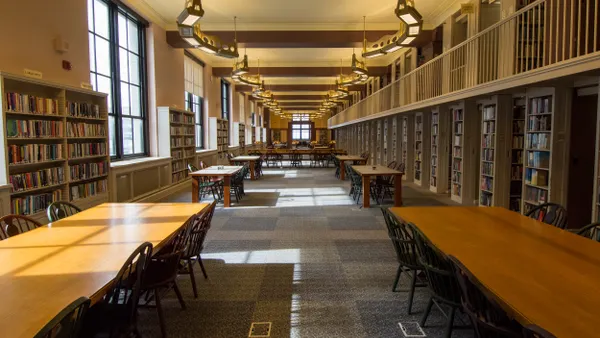
However, maintenance and repair issues are keeping libraries from carrying out those missions, the report finds. Elevators, HVAC systems, flooring and roofs are most often flagged for replacement or repair — especially in older library buildings, which also are less resilient to natural disasters and extreme weather. The report estimates that 47% of the nation’s libraries are over 60 years old.
For the most part, larger cities are aware of the issues with their library facilities, Marroni said.
“But we did hear in many cases that smaller and medium-sized municipalities didn’t have a detailed account of the state of their library building because the people working there aren’t facilities managers — they’re librarians,” he said. “We heard anecdotally from smaller and medium-size libraries that they are more or less able to get by, but when something does break, that becomes a large issue because they don’t have the budget” to fix it.
Although the large majority of libraries rely on local funding for maintenance and repairs, some federal financing is available, the report notes, including money from the American Rescue Plan Act, a U.S. Department of Agriculture program for rural libraries and National Endowment for the Humanities funding for historic buildings. The biggest source of federal funding for libraries — the Institute of Museum and Library Services— provides grants for library programs and services but not for building construction or repairs.
Marroni said libraries can also seek state, territorial or tribal funding and money from nonprofits and foundations that specialize in cultural institutions.