Dive Brief:
- New York’s congestion pricing program for Manhattan, in effect for over 18 months, had little impact on parking availability in the tolling zone, according to a New York City Department of Transportation report.
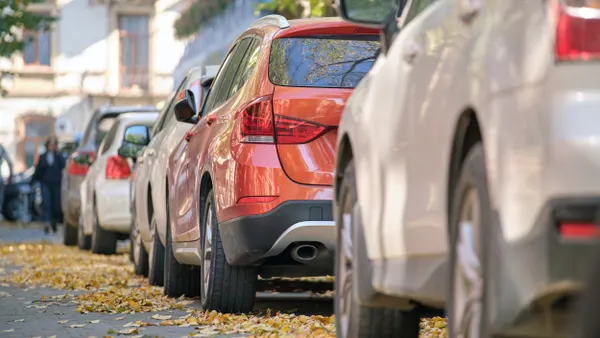
- Parking occupancy increased by five percentage points in all time periods in areas adjacent to the tolling zone and near transit stations outside the zone in Manhattan, Brooklyn, Queens and the Bronx.
- The study did not find a noticeable increase in “park and ride” activity, where commuters could park their cars outside the tolling zone and continue to their destination by bus or subway.
Dive Insight:
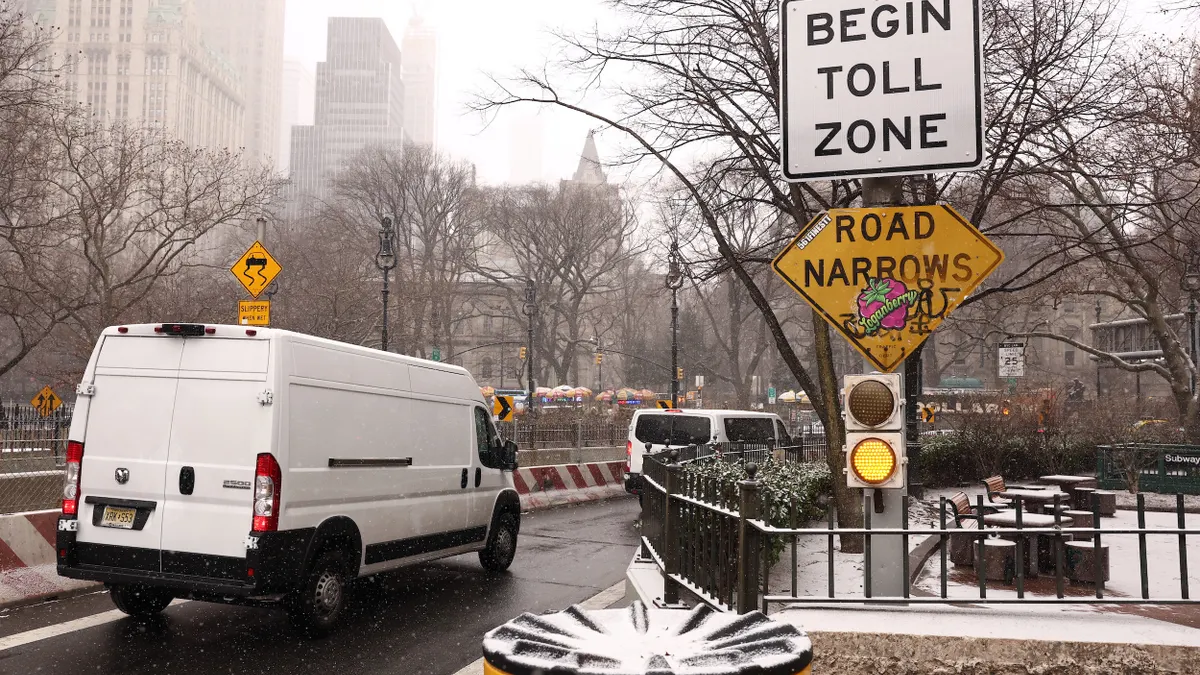
New York State implemented the nation’s first congestion pricing program to reduce traffic congestion in Manhattan and generate revenue for the New York Metropolitan Transportation Authority. A June 2025 Regional Plan Association report found it had reduced congestion and traffic collisions.
Most vehicles are tolled when they enter the congestion zone, which begins below 61st Street in Manhattan and excludes certain highways and tunnel connections. The NYC DOT report found it was difficult to find parking near and outside the tolling zone before and after congestion pricing.
“This study highlights a consistently high parking occupancy across study areas, reflecting conditions that largely predate the program,” the report states. “These occupancy levels continue to be driven by the mismatch between demand for curb space and its supply.”
The report found a difference in parking space occupancy between free and metered spaces. Free spaces, largely in residential areas, often saw near-100% occupancy, while metered spaces were often below 70% occupancy.
“NYC DOT’s analysis found little evidence that congestion pricing has meaningfully affected parking availability or demand in neighborhoods in and near the tolling zone, reinforcing what we’ve seen after the program’s first year: less traffic, faster bus trips, more reliable travel times, and no widespread spillover impacts,” Regional Plan Association Executive Vice President Kate Slevin said in a statement.
The report concluded that increased parking use, where it occurred, was likely due to economic growth. In the 18 months congestion pricing has been in effect, citywide employment grew 3%, daily office visits increased from 67% to 76% of pre-pandemic levels and tourism increased by 1%, the report states.