

More local governments are embracing preapproved housing designs to address surging housing construction costs, an analysis by The Pew Charitable Trusts found.
Preapproved housing plans can reduce permitting timelines by months and trim builders’ overall development costs by around 1% to 2%, or as much as $10,000 per $500,000 single-family home, according to the May 13 report.
South Bend, Indiana; Jackson, Michigan; Hawai’i County, Hawai’i; Seattle and Claremore, Oklahoma, saw meaningful preapproved housing design production after adopting such policies, Pew found.
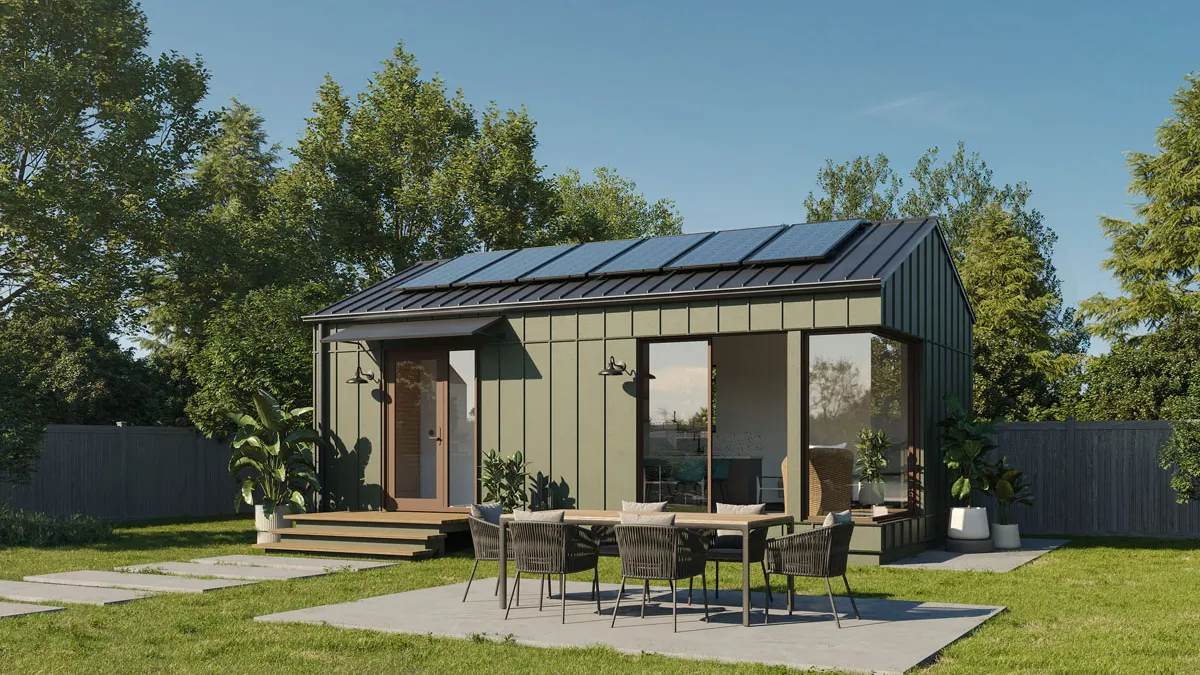
Among the approximately 40 jurisdictions with preapproved housing designs, a majority focus on smaller homes, such as accessory dwelling units — an increasingly popular solution to address the affordable housing shortage — as well as single-family homes and duplexes, according to the report.
After Seattle published seven preapproved ADU designs in 2019, its ADU permitting more than doubled, eventually outpacing single-family home production in the city, according to the report.
In 2023, California mandated that local governments adopt preapproved ADU designs by 2025 and developed a gallery of around 80 ADU designs they could purchase and license. New York City in March unveiled its “ADU For You” program, which also featured a preapproved library of designs.
Hawai’i County’s library of 56 preapproved single-family and two-unit home designs led to 225 new units being permitted between 2021 and 2024, or 6% of all such housing permitted in that time period, the report states. Jackson, Michigan, also used preapproved single-family home designs for its 2023 “100 Homes Program” on city-owned vacant land.
“Though these plans are promising, they are not a substitute for more sweeping reforms, such as allowing houses on small lots, eliminating parking mandates, allowing apartments on commercially zoned land, or modernizing building codes for small apartment buildings,” the report states.