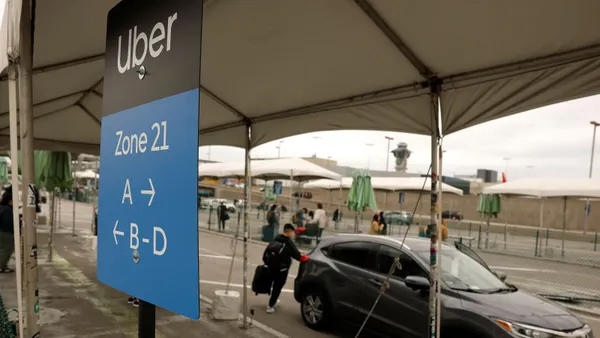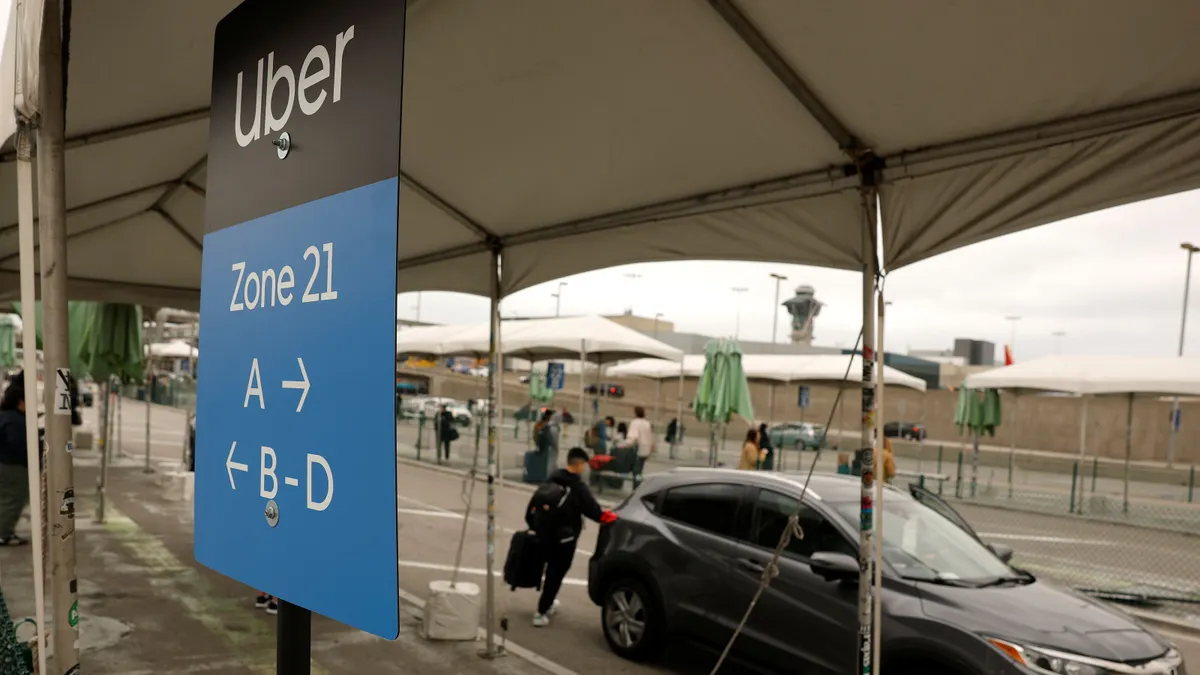
Uber announced in early September that it would lay off 10% of its workforce, or about 3,300 people. That came amid reports that the ride-hailing company may invest some $10 billion in robotaxis, committing $7.5 billion to procuring autonomous vehicles and potentially over $2.5 billion in equity investments in Lucid, Rivian and other companies, according to the Financial Times.
Uber’s layoffs have nothing to do with its core business, Spencer Penn, CEO of AI procurement operating system LightSource and a former executive with Tesla and Waymo, said in an email interview. “A company that never owned a car now has more than $7 billion in vehicle purchase commitments, its own depots, and a double-digit stake in Lucid.”
The competition in traditional ride-hailing services from robotaxi providers is heating up. “Uber is at significant risk of disruption,” Penn said. Waymo captured about a quarter of the ride-hailing business in San Francisco in about 20 months after it entered the city, Penn said.
Waymo now operates in 15 cities. Zoox is open to public rides in Las Vegas and has a waitlist for riders in San Francisco when it gets its necessary permits. Tesla offers public rides with its Model Y vehicle in multiple Florida and Texas cities and began operating its purpose-built Cybercab in Austin, Texas, on Sept. 4.
Waymo and Uber, once collaborators, are becoming competitors. Waymo is expected to end its partnership with Uber in Atlanta and Austin in 2028, according to multiple media reports. Waymo robotaxis have been available in those cities through the Uber app since 2025. The two ride-hailing companies dissolved their three-year partnership in Phoenix in May, according to the Financial Times. Uber offers autonomous rides in Dallas through Avride and Las Vegas with Motional.
Uber entered an agreement with electric vehicle maker Rivian to deploy 10,000 fully autonomous vehicles for itself and its fleet partners, with an option to purchase up to 50,000 robotaxis by 2030, Rivian announced in April. Uber is also partnering with Lucid and autonomous-driving technology developer Nuro to provide a minimum of 20,000 robotaxis.
The Lucid robotaxis may begin public rides in the San Francisco Bay Area and Los Angeles this year, Uber CEO and Director Dara Khosrowshahi said during the company’s Q2 2026 earnings call. The Rivian vehicles will roll out in San Francisco and Miami in 2028, according to a press release.
Any robotaxi company that wants to have a presence in multiple markets by 2030 needs to be getting everything ready now, Frank Reig, CEO of fleet-charging company Voltera, told Smart Cities Dive. It can take three or more years to establish the infrastructure to support a large autonomous vehicle fleet, he said. Voltera, in a merger with Revel, provides the infrastructure and charging networks for robotaxis.
Robotaxi depots charge, clean, maintain and store vehicles when not in use, Reig said. “You need enough power for one of these sites,” he said. Then there’s zoning and permitting issues to deal with. “Even if the zoning and the permit and utility stuff matches up, do you have a landlord willing to actually sell or lease to you for 30 years?”
The race is on. “All these AV platforms are looking to scale and commercialize because the technology is ready,” he said. “They are all setting up pretty aggressive expansion plans through 2030.”
Who wins? Penn said everything has to go right — the software, hardware and permits — for Uber to come out ahead. Waymo has the lead now, “but no head start is safe in a competitive technology space,” he said.
“Waymo is betting on safety and experience, Tesla on price, Uber on availability,” Penn said. “The answer depends on how quickly driving quality stops being something a passenger can feel, and none of these companies gets to set that clock.”