Dive Brief:
- Uber will invest more than $10 billion in robotaxis, the Financial Times reported today, committing $7.5 billion to procuring autonomous vehicles and potentially over $2.5 billion in equity investments in Lucid, Rivian and other companies, according to FT.
- Uber’s shift from relying on driver-owned vehicles to making large capital investments in robotaxi fleets appears to come in response to Waymo’s growing presence in U.S. cities and the ramp-up of Amazon’s Zoox purpose-built AVs in more locations, the newspaper reports.
- Uber expects to have robotaxis in 15 cities by the end of this year, CEO Dara Khosrowshahi said during the company’s Feb. 4 earnings call.
Dive Insight:
Waymo, an Alphabet subsidiary that began offering autonomous rides in 2017, now operates in 11 U.S. cities and says it provides more than half a million electric AV rides weekly.
Khosrowshahi said on the call that Uber intends to carry the largest share of AV trips globally by 2029. He urged automakers “to start ramping [up] capacity” to meet the coming demand.
“The asset-light model was genius for its era, but autonomy rewrites the economics,” Nexar CEO Zach Greenberger said in an emailed statement. “By taking equity stakes in AV developers and locking in fleet supply, Uber is trading margin simplicity for structural control of the next decade of mobility.” Nexar develops technologies for autonomous vehicles and advanced driver-assistance systems.
Uber employees began taking test rides aboard Lucid electric vehicles in the San Francisco Bay Area this week and began testing autonomous rides in Los Angeles on April 8, with a public launch expected later this year, it said in a post on X.
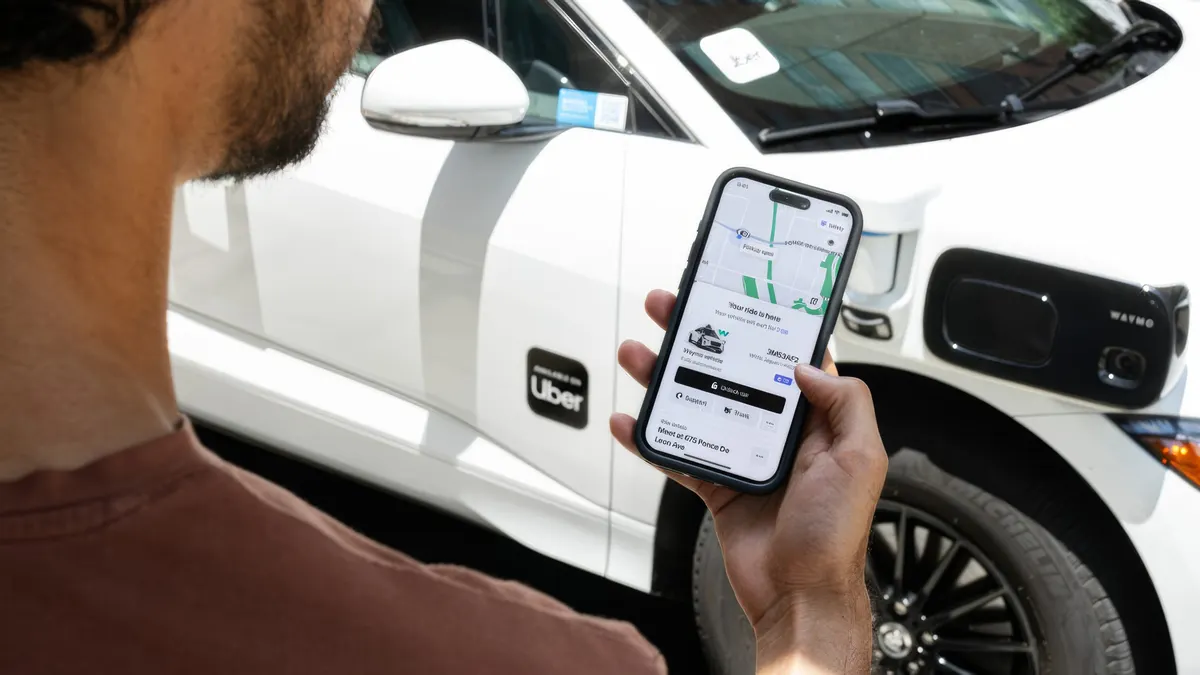
Uber riders in Atlanta and Austin, Texas, can take a robotaxi through its partnership with Waymo in those cities and in certain areas of Las Vegas in collaboration with Motional.
Uber did not reply to a request for comment in time for publication.