Dive Brief:
- The transit bus manufacturing industry in the U.S. contributed $5.1 billion to the national gross domestic product and generated $1.1 billion in federal, state and local tax revenue in 2025, according to an Oxford Economics report released this month.
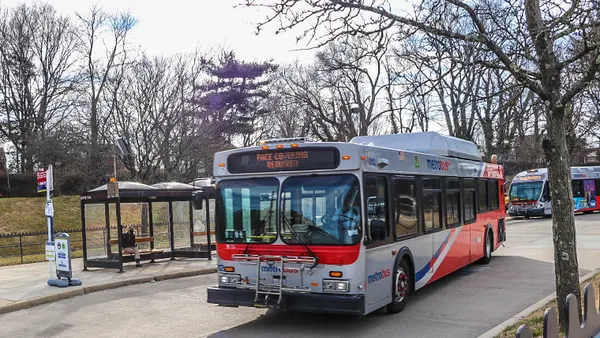
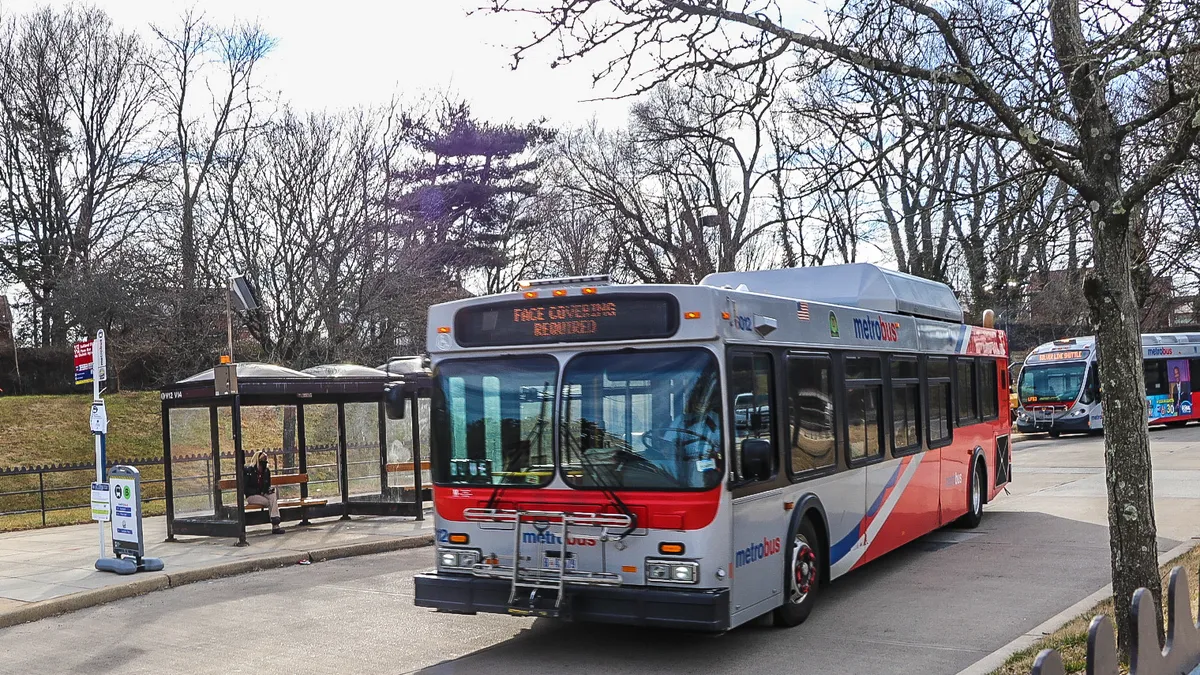
- U.S. public transit agencies operate over 65,000 heavy-duty transit buses, according to the report. Nearly two-thirds are standard 40-foot buses and the rest are articulated buses, commuter buses used in public transit, double-decker buses and other transit buses 30 feet or longer that are operated by public transit agencies.
- Domestic transit buses carried more than 10 million people on an average day last year and accounted for approximately 3.8 billion passenger trips.
Dive Insight:
Transit bus manufacturers employed about 4,700 workers in 2025, with suppliers supporting another 15,900 jobs, according to the report. California, Alabama, Illinois, Indiana, Michigan, Minnesota, New York, Pennsylvania and Texas benefited the most from the presence of manufacturers and suppliers.
The report also calculated the indirect broader economic impact of the transit bus industry, with wage-funded household spending equaling about 13,500 jobs. “The industry’s economic footprint extends well beyond the firms that assemble transit buses,” the report says.
The majority of transit buses delivered to buyers in 2025 came from Gillig and New Flyer, according to the report. Other suppliers included ElDorado National, Solaris and BYD. Battery-electric buses made up about 20% of deliveries in the 2023-2024 period, with diesel-powered vehicles accounting for 55%.
About 21% of the national transit bus fleet, or some 13,700 transit buses, are more than 12 years old. That’s the expected useful life of such vehicles, according to the Federal Transit Administration. Transit bus production ranged from about 4,000 to 4,800 annually from 2020 to 2025, down from over 6,000 in 2017 to 2019. COVID-19-era supply chain challenges, worker shortages and financial issues crimped bus production.
New Flyer expects continued strength in the market, driven by the need to replace older buses, parent company NFI Group CEO, President and Director John Sapp said on the company’s Aug. 7 earnings call.