

Dive Brief:
- The number of U.S. cities with starter homes valued at $1 million grew to 242 this year, nearly tripling from 80 such cities in February 2020 and up from 226 cities in 2025, a recent Zillow analysis found.
- New York and New Jersey are the fastest growing states for cities with $1 million starter homes, adding a combined 15 in the past year. The vast majority of such cities are concentrated in California, which has 105.
- Cities with million-dollar entry-level homes now span 26 states, up from nine mostly coastal states before the pandemic.
Dive Insight:
National housing inventory has been unable to meet a huge wave of demand for housing following the pandemic, pushing home prices to record highs in recent years.
Nationwide, the typical starter home — defined by Zillow as a home in the lowest third bracket of home values in a region — is valued at $198,649, a 1.7% uptick from 2025.
The million-dollar starter home, while on the rise, is “still the exception,” Zillow senior economist Kara Ng said in a news release. “More inventory, slower price growth and a narrowing rent-versus-buy gap mean buyers who are financially prepared are generally in better shape than in recent years,” Ng stated.
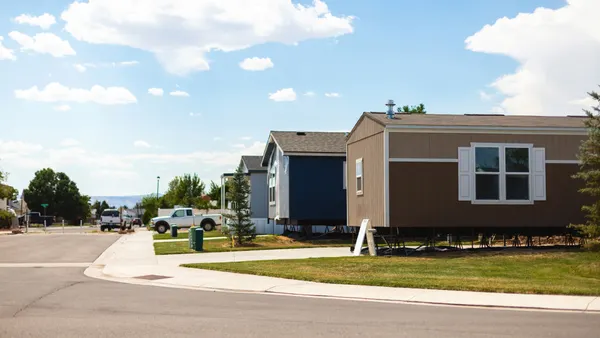
More entry-level housing options are also in sight. Homes under 1,800 square feet, which made up 23% of single-family home completions in 2022, accounted for 31% of completions in 2024, and lot sizes are also shrinking, according to a recent Harvard Joint Center for Housing Studies report.
“It is encouraging that there are glimmers of progress with respect to starter home production, but we have a long way to go,” Stockton Williams, executive director of the National Council of State Housing Agencies, said during a panel discussion last week following the JCHS report’s release.
Starter homes used to be 30% to 35% of what builders would bring to market every year, Williams said.
“Now it's less than 10%,” Williams said. “In terms of existing listings, starter or entry-level homes were 60% of what would be typically available in the market, say 10 years ago. Now it's maybe 30% of what you can find, and of course it costs much more.”
The Home Buying Institute cites strict zoning regulations and high construction and local fees as contributing factors to the starter home’s decline.