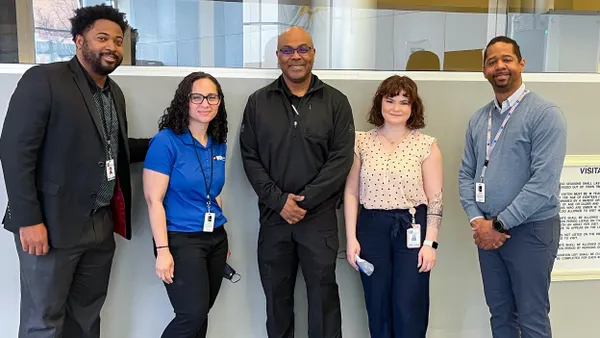
Mary-Claire Burick is president of the Rosslyn Business Improvement District. Kate Ange is deputy director of Arlington Economic Development.
U.S. real estate developers are experiencing tough market conditions, rising costs and stalled capital, which in some cases has led to paused redevelopment projects and vacant ground-floor retail. At the same time, community demand for connection, belonging and everyday places to gather is only getting stronger. To address both problems, communities must actively manage the interim conditions on sites awaiting reinvestment or redevelopment.
In Arlington, Virginia, we turned such a site into an interim “third space.” Sociologist Ray Oldenburg coined the term “third place” in his 1989 book “The Great Good Place,” defining it as a place that isn't home and isn't work. These are the other everyday places, like cafés, bars or libraries, where people naturally come together, relax, talk and feel a real sense of connection and community.
Third spaces are essential infrastructure that sustain daily activity and help neighborhoods remain competitive and connected. They contribute to the vibrancy that attracts visitors and elevates the amenities available to major employers located there. While establishing permanent third spaces as anchors to a neighborhood is a key long-term strategy, it’s equally important to seek out ways to create temporary spaces that can sustain quality of life and economic momentum. When located in commercial centers, these spaces enhance culture and belonging while creating daily experiences for workers and residents.
An effective third-space strategy balances long-term capital investment with temporary and interim solutions. Bringing third spaces to life requires communities to be strategic, collaborative and intentional to ensure buy-in and clear regulatory hurdles. When business improvement districts are empowered and regulatory hurdles cleared, communities see a more immediate positive impact while building toward lasting outcomes.
The Arlington example
Like many communities, Arlington has been facing real estate development challenges, with aging commercial buildings in its urban mixed-use centers awaiting redevelopment. The Rosslyn neighborhood in Arlington is an example of where local stakeholders have taken action to create temporary third spaces as an economic and community development strategy. .
Rosslyn, a 17-block, mixed-use hub, just across the Potomac River from Washington, D.C., served by three lines of the Metro subway system, is home to over 16,000 residents and 25,000 employees. According to the Rosslyn Business Improvement District’s 2025 annual perception survey, people place high value on spaces that encourage connection with welcoming environments, green space and informal gathering spots.
Nearly half of survey respondents in 2025 reported a strong sense of belonging, but there’s room to deepen connections. More than 60% of the 1,093 respondents expressed a desire for more parks and outdoor gathering areas. Respondents were seeking spaces that support everyday use, repeat visits and a stronger sense of place.
This need is especially strong in dense high-rise settings like Rosslyn, where shared spaces often act as community backyards. As vertical living emerges and hybrid work reshapes daily routines, mixed-use neighborhoods must offer places that encourage people to spend time, connect and return, supporting the district’s economic vitality.
The NOW park
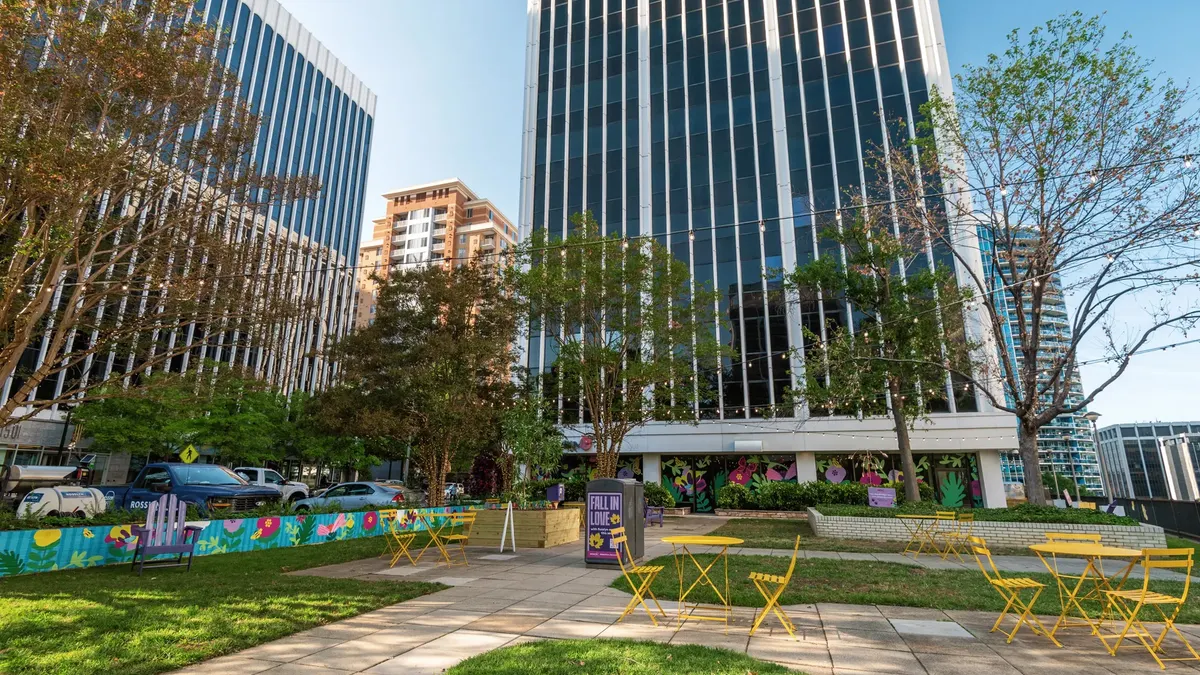
In response to community feedback, the Rosslyn BID and other stakeholders created Rosslyn’s NOW Pop-Up Park, which transformed an underutilized terrace into a vibrant third space featuring green areas, a dog park and space for education and programming.
The park was intentionally designed as an interim solution for a vacant commercial office building awaiting redevelopment, meeting immediate community demand while supporting longer-term planning. This approach reflects the reality that communities don't need to wait for new developments to deliver connection and quality of life.
Large employers in the area, including Nestle, CoStar and Deloitte, increasingly seek ways to support employee engagement but can lack internal resources to create those experiences. Third spaces like the NOW help address that gap by offering passive and programmed opportunities, ranging from informal gathering to hands-on activities such as urban gardening, that enhance the daily experience of workers and residents.
The survey found that individuals who participate in Rosslyn events and activations are twice as likely to report a strong sense of belonging, which is associated with longer visits, repeat use and increased foot traffic. These factors support retail and restaurants while strengthening tenant retention and Rosslyn’s appeal as a mixed-use district.
The NOW has become a regularly used space that demonstrates how interim third spaces can quickly become part of neighborhood life while delivering measurable impact.
A model for collaboration
Delivering a temporary third space required navigating systems designed for traditional real estate development, from permitting to operational approvals.
The project was made possible through close collaboration between the Rosslyn BID, Arlington Economic Development and other county staff. While BIDs are well-positioned to lead creative placemaking and respond quickly to community demand, municipalities play a critical role in ensuring regulatory, and zoning frameworks allow these projects to move forward effectively and efficiently.
AED worked closely with its county partners in planning, zoning and environmental services departments to help forge an accelerated path forward. We sought ways to creatively adapt existing processes to ensure public standards were upheld while allowing flexibility for interim uses. This systems-level, collaborative approach created a foundation for future interim placemaking efforts, making it easier to deliver more immediate impact while supporting longer-term planning.
At the same time, Rosslyn BID led community engagement, stewardship and activation, demonstrating how BIDs can translate public input into tangible, on-the-ground outcomes. Together, this partnership created a model where interim solutions complement long-term capital investment. It’s an example of building trust, testing ideas and sustaining momentum while awaiting future developments.
Advice for other municipalities
The collaboration between Rosslyn BID and AED offers several lessons for cities seeking to strengthen community connection and neighborhood vitality through interim third space strategies:
Plan for both interim and permanent efforts. Permanent third spaces are critical investments, but interim solutions allow immediate response to community demand while waiting for longer-term projects to advance.
Clear the path, not just the site. Flexible zoning, permitting and operational frameworks can unlock creative use of underutilized space without compromising standards.
Leverage BIDs as delivery partners. BIDs are uniquely suited to lead placemaking and steward public spaces.
Invest in care and management. Keeping the space welcoming and safe is as important as launching it, thus regular cleaning, safety and maintenance are essential.
With thoughtful planning, collaboration and community engagement, temporary third spaces can deliver immediate value. Cities that embrace these strategies will be positioned for long-term success in supporting mixed-use neighborhoods.