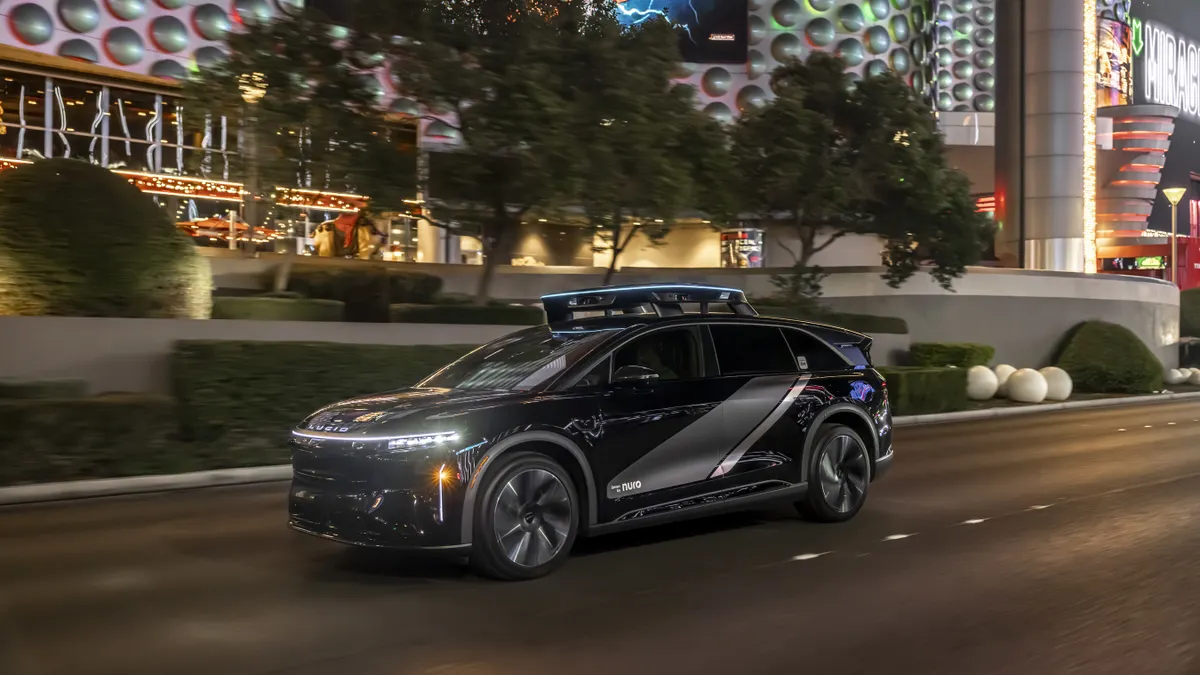
Uber, Lucid and Nuro, which have partnered to manufacture and deploy robotaxis, said they would bring self-driving ride-hailing services to Houston in 2027. Nuro, an AI company developing autonomous driving technology, is testing with safety operators in the Texas city, according to a press release.
Houston will be the second market for the partners’ program. Uber CEO Dara Khosrowshahi told investors in May that the company plans to begin public rides in the San Francisco Bay Area later this year. Nuro announced on May 8 that it had received its California Public Utilities Commission permit to begin testing AVs with passengers and a safety driver.
Last year, Uber invested $300 million with Lucid to produce up to 20,000 Gravity robotaxis for its ride-hailing platform over six years in dozens of global markets, starting in the U.S. In April, Lucid announced that Uber increased its investment with an additional $200 million, upping the target to at least 35,000 robotaxis.
Lucid, which produces the Gravity and another electric vehicle, sold 3,093 vehicles in the first quarter of 2026 and 3,953 vehicles in the second quarter. It manufactures the vehicles at a factory in Casa Grande, Arizona. Electric vehicle sales have slowed in line with reduced consumer demand, according to industry experts.
The publicly traded company raised concerns last week following an executive shake-up and disclosed it had hired AlixPartners, a consulting firm, raising rumors of a potential bankruptcy, according to The Wall Street Journal.
“Lucid is not considering bankruptcy or a transaction to take the company private. Those reports are false,” Lucid CEO Silvio Napoli said in a LinkedIn post yesterday. He added that work with outside advisors aims “to improve operational performance and execution.” Napoli became CEO on June 1.
Regarding the partnership with Uber and Nuro, Lucid Technologies President and Chief Digital Officer Kay Stepper said in a statement that progress toward the launch of their robotaxis “showcases how Lucid's technology and engineering are ideally suited to power the future of autonomous mobility.”
Uber did not reply to a request for comment about its partnership with Lucid.