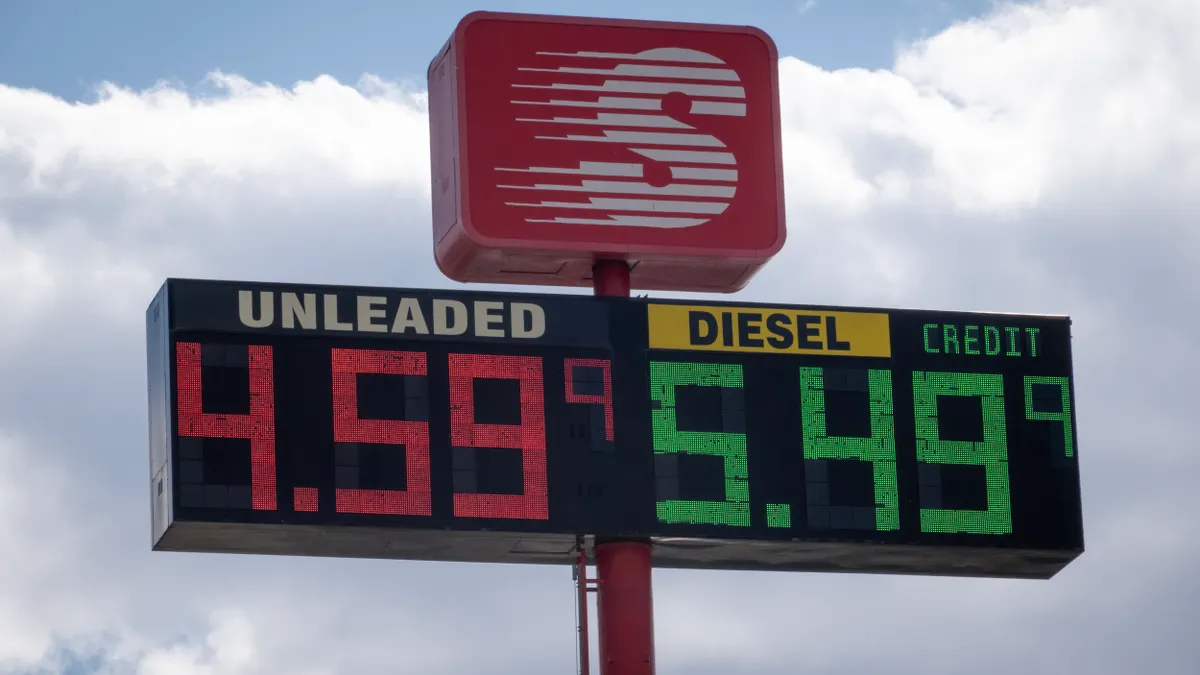
Almost two-thirds of transit buses in the U.S. run on diesel, a fuel whose price has jumped 60% since this time last year, according to the Bureau of Transportation Statistics. But many commuter railroads and public transit agencies have fuel hedging programs in place, Jeffrey LeMunyon, founder and principal at Linwood Capital, told Smart Cities Dive.
Agencies that hedged their fuel positions before the Iran war “are in good shape,” he said. Typically, they hedge at least 12 months ahead on a rolling basis, he explained. In most situations, the hedge covers only the fuel cost, not any state or federal excise taxes on fuel. The exceptions are states like California, Connecticut, Illinois, Indiana and Michigan, which charge a sales tax on diesel fuel.
Most U.S. airlines no longer hedge their fuel costs, LeMunyon said. They can increase ticket prices, which public transportation agencies are loath to do.