Dive Brief:
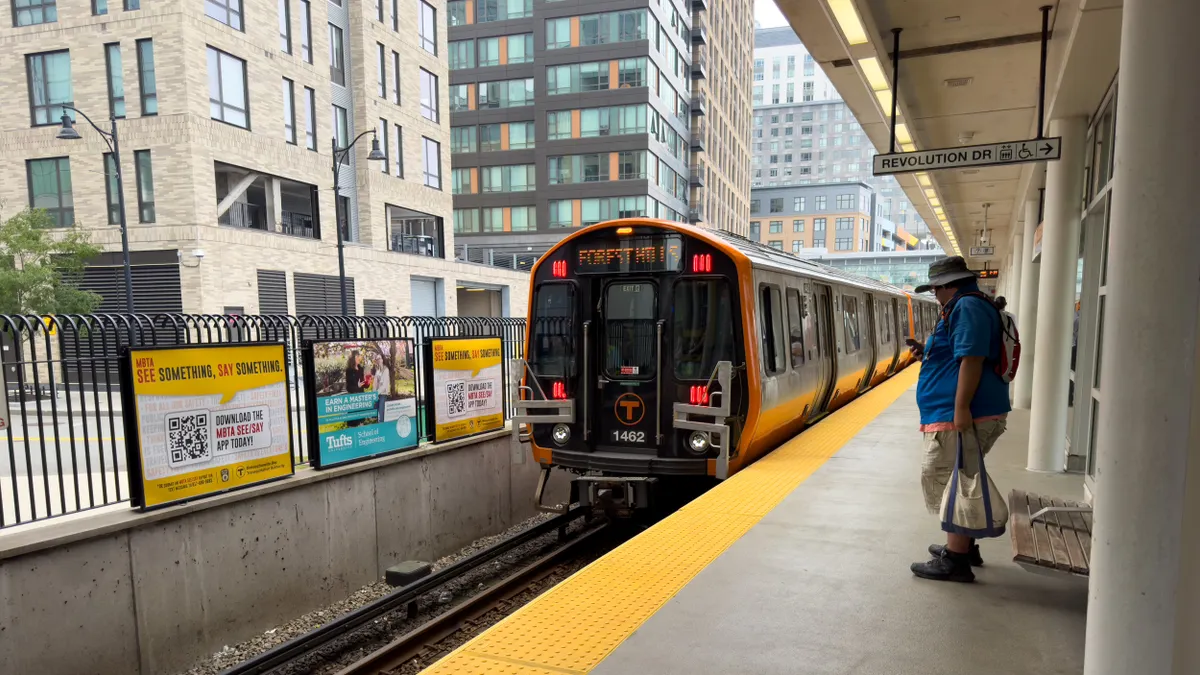
- Transportation Secretary Sean Duffy proposed eliminating the Highway Trust Fund’s mass transit account, which provides funding for public transportation, in a July 22 letter outlining the administration’s priorities that was sent to six senators serving on committees with influence over the next surface transportation legislation.
- Duffy also proposed cutting funding for Complete Streets activities that focus on safety for pedestrians and bicyclists, bicycle lanes and grants for electric vehicle charging infrastructure. A competitive grant program to fund solutions to traffic congestion in U.S. cities would eliminate public transit system improvements and tolling programs from eligibility.
- None of the members of the House Committee on Transportation and Infrastructure, where the legislation was drafted, were copied on Duffy’s letter.
Dive Insight:
The draft House bill authorizes $87.6 billion from the mass transit account of the Highway Trust Fund over fiscal years 2027 to 2031, an increase from $69.8 billion allocated in the Infrastructure Investment and Jobs Act.
The DOT’s proposal to do away with the mass transit account, which was established by Congress in 1982, would put more than 85% of federal public transit and passenger rail funding at risk, according to an emailed statement from the American Public Transportation Association.
The administration’s key transportation goals include improving transit safety and security, supporting development of autonomous vehicles, ensuring freight railroad safety and building or expanding interstate highways, according to the letter. Duffy proposed creating a voluntary AV pilot program “with preemptive authority to avoid a patchwork of State laws,” the letter said.
The DOT’s policy would give priority to motor vehicles over bike lanes. “We urge Congress to restrict competitive and formula grant funding for bicycle lanes and other bicycle infrastructure that reduce travel throughput for motor vehicles and support removal of existing bike lanes that contribute to congestion,” Duffy said in the letter. The Federal Highway Administration recently removed bike lanes from its safety measures list.
“My No. 1 priority is that we don’t backslide from the funding levels in the bipartisan infrastructure law,” Rep. Rick Larsen, D-Wash., told Smart Cities Dive earlier this year. “Transit and rail are going to be important.” Larsen is the ranking member of the House Committee on Transportation and Infrastructure, where he has served for 25 years.
Duffy also requested an additional $1 billion toward its $8 billion project to modernize New York Penn Station, which drew a response from Rep. Jerry Nadler, D-N.Y. “The administration has dodged oversight at every turn — refusing to issue a single public correspondence or congressional briefing on the issue,” he said in a statement. “As the Congressman representing Penn Station, I have repeatedly warned that the Trump administration is weaponizing the Surface Transportation Reauthorization to strip local authorities of control over Penn Station at New Yorkers’ expense.”
The administration is also funding modernization of Washington Union Station.
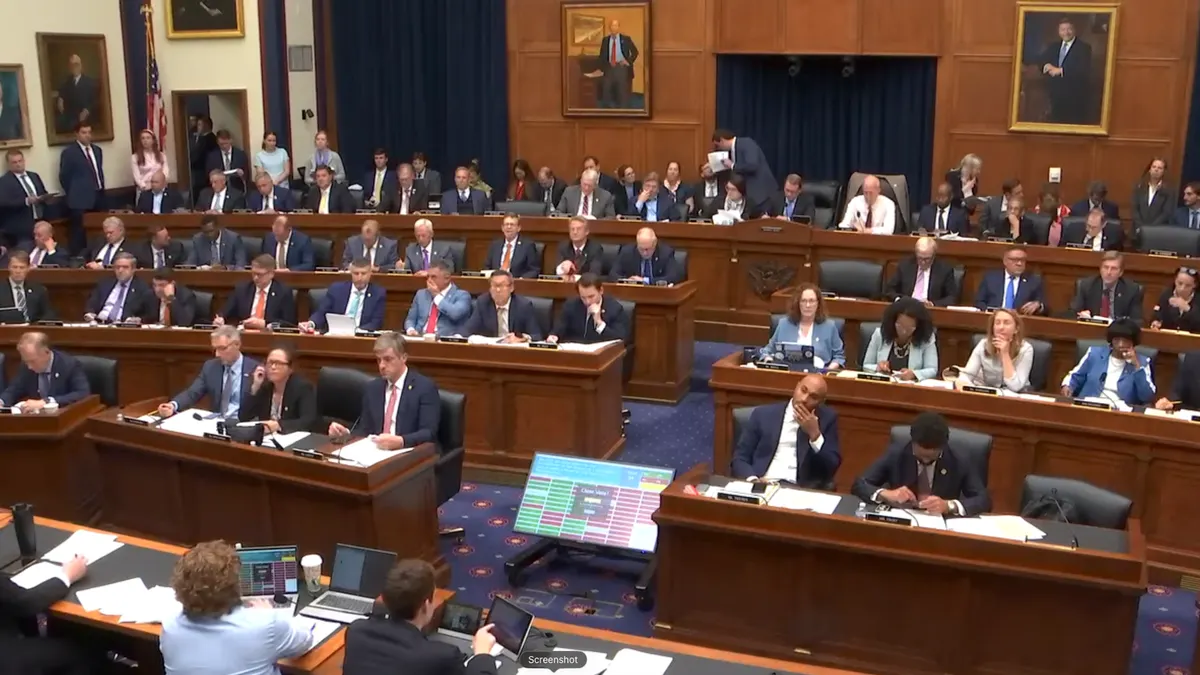
The House transportation committee passed a bipartisan surface transportation bill on May 17. Committee Chairman Sam Graves, R-Mo., said the bill “makes smart and targeted reforms to our surface transportation programs, focuses on strengthening our core infrastructure system, drives innovation, bolsters safety, ensures states have the flexibility they need, and cuts red tape to get projects built faster.”
The Senate has yet to propose a surface transportation bill, Bipartisan Policy Center Managing Director of Housing and Infrastructure Andy Winkler said during a July 14 Alliance for Innovation and Infrastructure webinar. Experts said during the webinar that they doubt the Senate will pass legislation before the current act expires on Sept. 30.