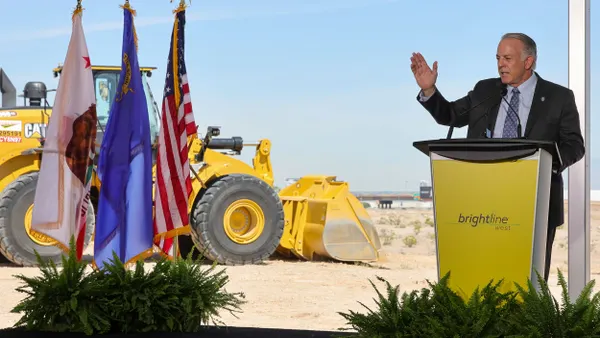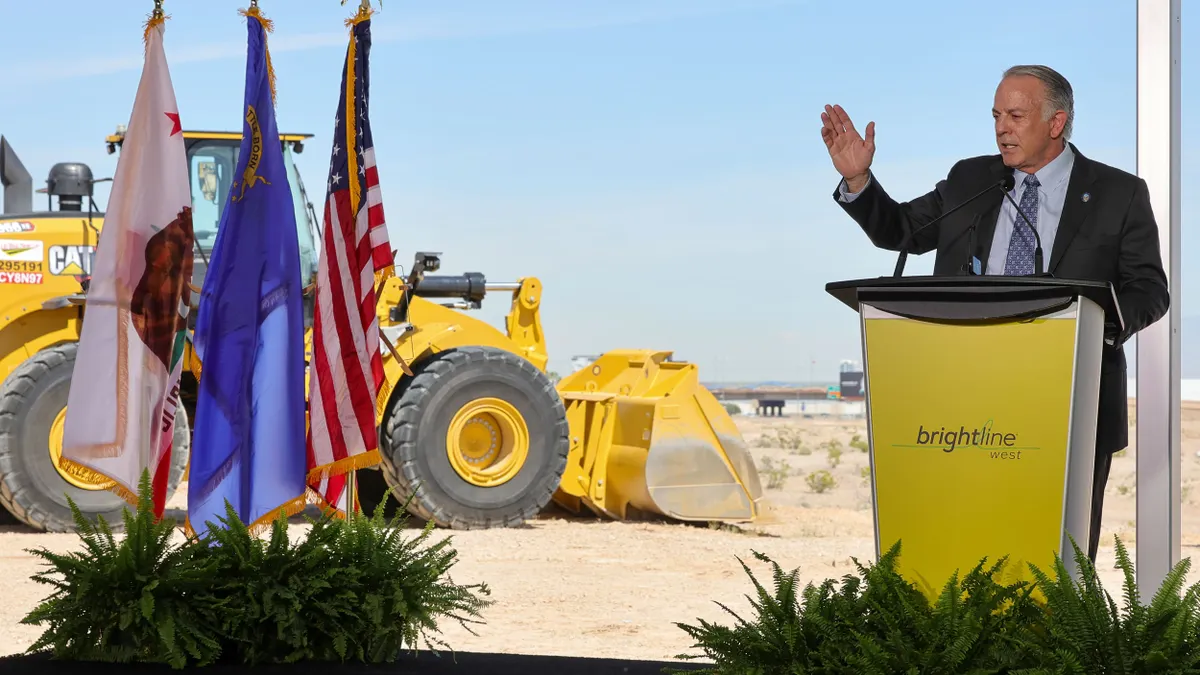
Brightline West, the proposed high-speed rail line between Las Vegas and Southern California, has until Nov. 2 to make a $400 million equity investment in the project, according to The Bond Buyer. The project had promised to raise the funds by March 31, 2026, but failed to do so, according to Bloomberg.
Brightline West has tapped into $3.5 billion of tax-exempt private activity bonds from the U.S. Department of Transportation and was awarded a $3 billion grant from the Biden administration.
It hopes to receive a $6 billion Railroad Rehabilitation and Improvement Financing loan by late October, according to The Bond Buyer. These are low-interest loans for railroad infrastructure, with repayment periods of up to 35 years. The loan may be the “key to the project's future” in the eyes of investors, The Bond Buyer reported. The project’s cost estimate has risen from $12 billion in 2024 to $21 billion.
Brightline West’s sister company, Brightline Florida — both backed by Fortress Investment Group — has repeatedly delayed making required bond payments and may face bankruptcy. It was initially promoted as a private-sector project but came to rely on municipal bonds issued by Florida Development Finance Corp.
“Private-sector plans aren’t really workable, and I expect Brightline West to pivot to expecting even more federal funds,” New York University Marron Institute fellow in the transportation and land use program Alon Levy told Smart Cities Dive in a June 22 email.
Yet, that’s where the California High-Speed Rail Authority is placing its bet to fund future construction. It entered a co-development agreement in June with a consortium of high-speed rail, infrastructure and investment firms in hopes of attracting outside investors. The group will spend the rest of 2026 “identifying viable strategies” to fund construction beyond the current 119-mile Merced to Bakersfield, California, initial phase. The $25 million agreement comes with an initial term of 30 months.
The authority needs $126 billion to complete the full San Francisco to Los Angeles project, according to its 2026 business plan. It has $39.3 billion currently available, authorized or in projected future funding through 2045, leaving an $87 billion gap.
The authority may run out of money by December 2027 if it cannot borrow against the expected $1 billion per year funding from the state’s cap-and-invest program through 2046, according to a July 31 report from the Office of the Inspector General for the California High-Speed Rail Authority.