Dive Brief:
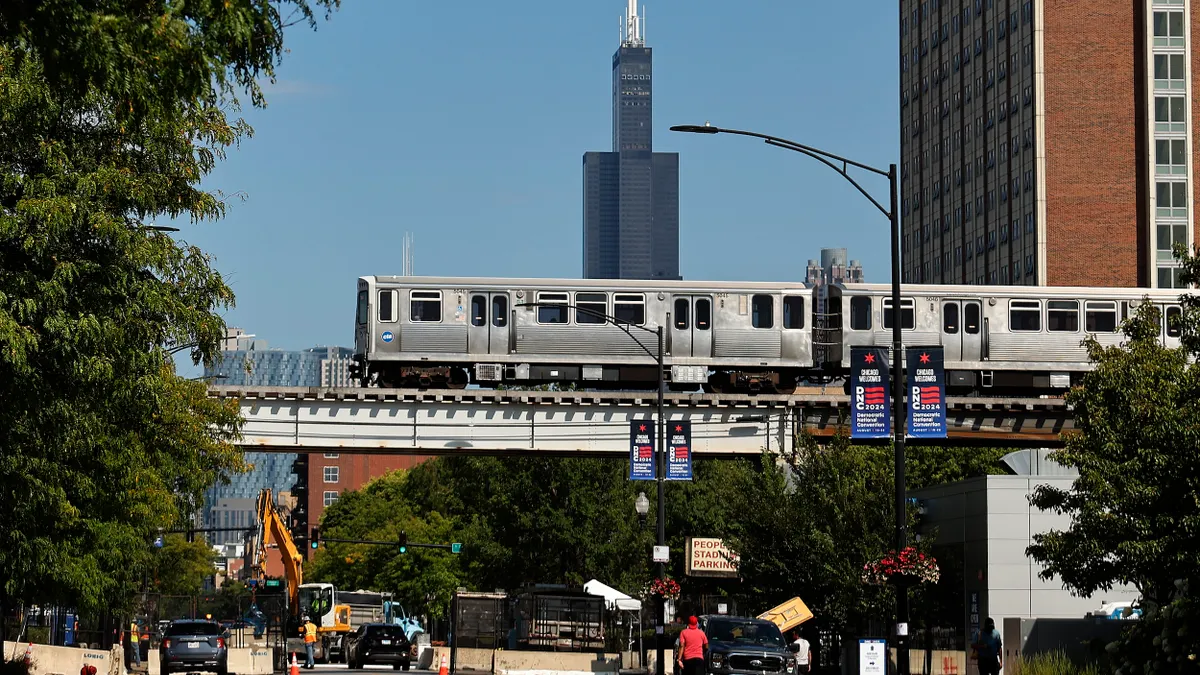
- The Northern Illinois Transit Authority today takes control of the Chicago Transit Authority, Metra commuter railroad and Pace suburban bus service, replacing the previous Regional Transportation Authority.
- The change came in response to growing deficits that threatened service cuts and fare increases. In November, the Illinois state legislature restructured the Chicago region’s transportation authority, providing $1.5 billion in funding for public transportation agencies and support for transit-oriented development.
- All previous services will continue, with no change in who operates the buses or trains, NITA said in a press release.
Dive Insight:
The RTA warned in 2022 that the agency would hit a fiscal cliff this year as federal COVID-19 pandemic relief funds run out and fare revenues couldn’t cover operating expenses. By last year, the RTA projected a 2026 budget gap of over $770 million, growing to $1.2 billion in 2027 without additional funding.
“A year ago, our state’s transit was facing a doomsday scenario, with service cuts and fare hikes that would have left riders stranded,” Illinois Gov. JB Pritzker said in a Tuesday statement. “Together with our partners in the General Assembly, we stepped up to support riders, keep transit affordable and improve services.”
The legislation contained over $1 billion in new operating funds, supported by a quarter-percent sales tax hike in the six-county NITA region and a portion of the state’s gas tax revenues. Combined, the two sources are expected to generate over $1.3 billion annually for the new transit authority.
The new 20-member NITA board includes five members appointed by the governor, five by the Chicago mayor, five by the Cook County Board president and five by the county chairs of DuPage, Kane, Lake, McHenry and Will counties.
The new authority said it would enhance transparency and accountability and prioritize investments based on system needs and clear performance criteria. It also promises simpler and more affordable fares, with fare-capping and expanded reduced-fare programs.
To address public safety concerns, NITA said it will develop a region-wide transit ambassador program and coordinate efforts among the transit operators, law enforcement and social-service partners.
“From my perspective, averting the transit fiscal cliff was about far more than balancing a budget — it was about protecting a fundamental human right: the right to mobility,” W Robert Schultz III, a campaign organizer at the Active Transportation Alliance, wrote March 3 in Elevated Chicago. “We must align housing and transit policy to ensure that affordable, accessible homes are located near reliable service.”