Michael Birzer is a professor in the School of Criminal Justice and director of the Undergraduate Research and Creative Activity Hub at Wichita State University. Before he entered academia, he served in law enforcement, retiring at the rank of lieutenant.
Cities across the U.S. are struggling to recruit skilled workers, modernize government and prepare the next generation of public servants. Too often, they overlook one of the most powerful partners they already have to accomplish those goals: their local university.
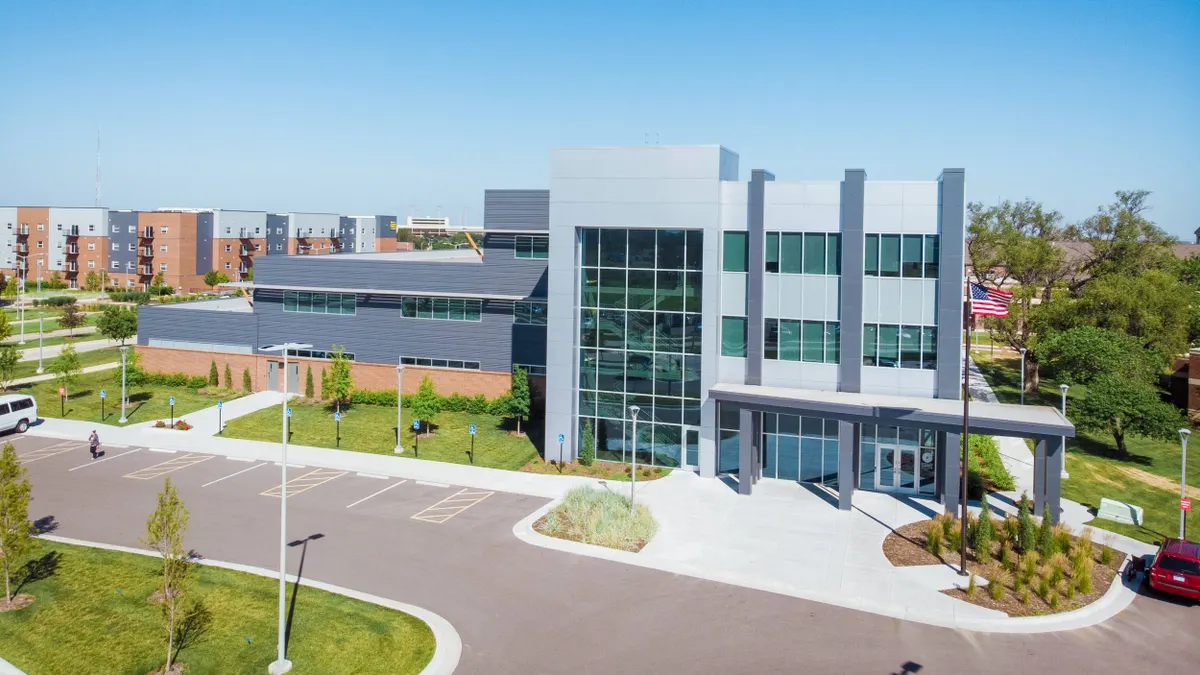
The Wichita-Sedgwick County Law Enforcement Training Center is a case in point. Eight years ago, during a leg-stretching pause in a meeting between representatives from Wichita State University and the city of Wichita to select a new police chief, our city manager brought up the need for a new police academy. I saw an opportunity that would benefit Wichita State students, local law enforcement and the community.

The training center is a collaborative effort between the university, the local police department and the sheriff’s office. It functions as both a training ground and a venue for recruits and officers pursuing their required annual continuing education and certification. One floor is dedicated to the University’s School of Criminal Justice, which includes faculty members who are former law enforcement officers and experts in fields such as criminal forensics, cybercrime and domestic violence.
By integrating academic and practical environments, the program addresses the need for current and relevant training for both new police recruits and active law enforcement officers. Trainers in law enforcement benefit from one of the nation’s most advanced simulated environments. In addition, they leverage data from criminal justice researchers to make informed hiring decisions and utilize ongoing job analysis data to ensure promotions are more objective.
Our faculty members engage in applied research to develop and sustain evidence-based practices in areas such as law enforcement operations, program assessment and evaluation, bias-based policing, computer forensics, digital evidence, statistical analysis techniques and the review and validation of promotional tests for law enforcement officers.
The co-location significantly transformed recruitment, enhancing internship opportunities that allow students to gain practical experience in law enforcement careers. Shortly after the training center was established, the police chief at the time noted a 150% increase in applications. He attributed this surge to the training center’s presence on campus.
Following the success of the training center, the Kansas Bureau of Alcohol, Tobacco, Firearms and Explosives moved to campus to collaborate within the Crime Gun Intelligence Center, a joint effort between local law enforcement, the ATF and the university. Utilizing cutting-edge technology, the CGIC enables law enforcement to analyze shell casings from crime scenes and conduct further tests, aiding in the resolution of gun-related crimes. This initiative has also generated numerous internship opportunities for students, many of whom have subsequently secured positions at the CGIC.
Partners in applied learning
Our story exemplifies innovative ways universities and community partners can engage, fostering relationships and making the tangible benefits of higher education visible. At the same time, we’re equipping students with the best preparation for meaningful careers.
The transition toward applied learning — where classroom theory is applied in real-world work settings — is especially vital given business and industry leaders’ expectations for their workforce. Studies have shown that employers increasingly value candidates who can apply knowledge practically in real-world situations. In one survey, 88% of employers said students should have the skills and competencies required to successfully complete an applied learning project, and 66% said students should undertake such a project before graduating.
Collaboration between local governments and universities ultimately results in graduates who are more thoroughly prepared for the workforce — and that benefits everyone.