Dive Brief:
-
A federal court on Monday ruled the Federal Emergency Management Agency’s attempt to withhold or cancel more than $200 million in public safety grants unless states and local governments agreed to alter how they run elections is unlawful.
- A coalition of cities and counties sued the Department of Homeland Security in August after FEMA issued a notice of funding opportunity that threatened to withhold 20% of Urban Area Security Initiative and State Homeland Security Grant Program grants if states and “high-risk urban areas” didn’t verify the citizenship of poll workers and registered voters and transition from electronic voting systems to hand-marked paper ballots, among other conditions.
-
Judge Amir Ali of the U.S. District Court of the District of Columbia ruled that the statute Congress used to create the grant program in 2002 “gives FEMA the authority to fund projects proposed by states and high-risk urban areas; it does not give FEMA authority to use the possibility of grants to induce states or high-risk urban areas to carry out the federal government’s preferred projects at their own expense.”
Dive Insight:
Columbus, Ohio; the Metropolitan Government of Nashville and Davidson County, Tennessee; El Paso County, Texas; and Harris County, Texas, filed the lawsuit in U.S. District Court for the District of Columbia. They argued the loss of HSGP funds would require them “to divert human and budgetary resources to prepare for and adapt to the immediate withholding” of funds, undermining their capacity to safeguard residents from terrorism and other catastrophic events.
The court vacated the election administration conditions and FEMA’s implementing guidance memo based on the plaintiffs’ claims that they violated the Administrative Procedure Act and exceeded the agency’s authority.
“The conditions relating to election administration issues — such as the form of ballots, auditing and reconciliation rules, and the eligibility of voters and poll workers — fall well outside of preparing for or responding to ‘acts of terrorism,’” Ali wrote.
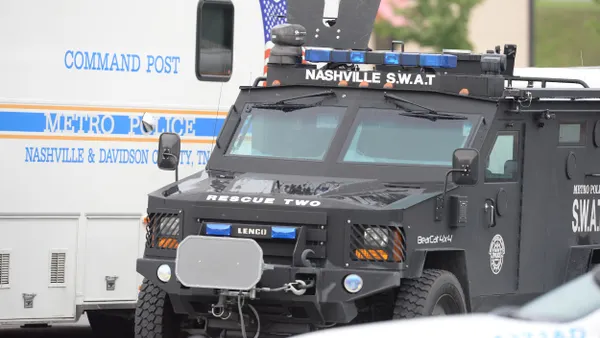
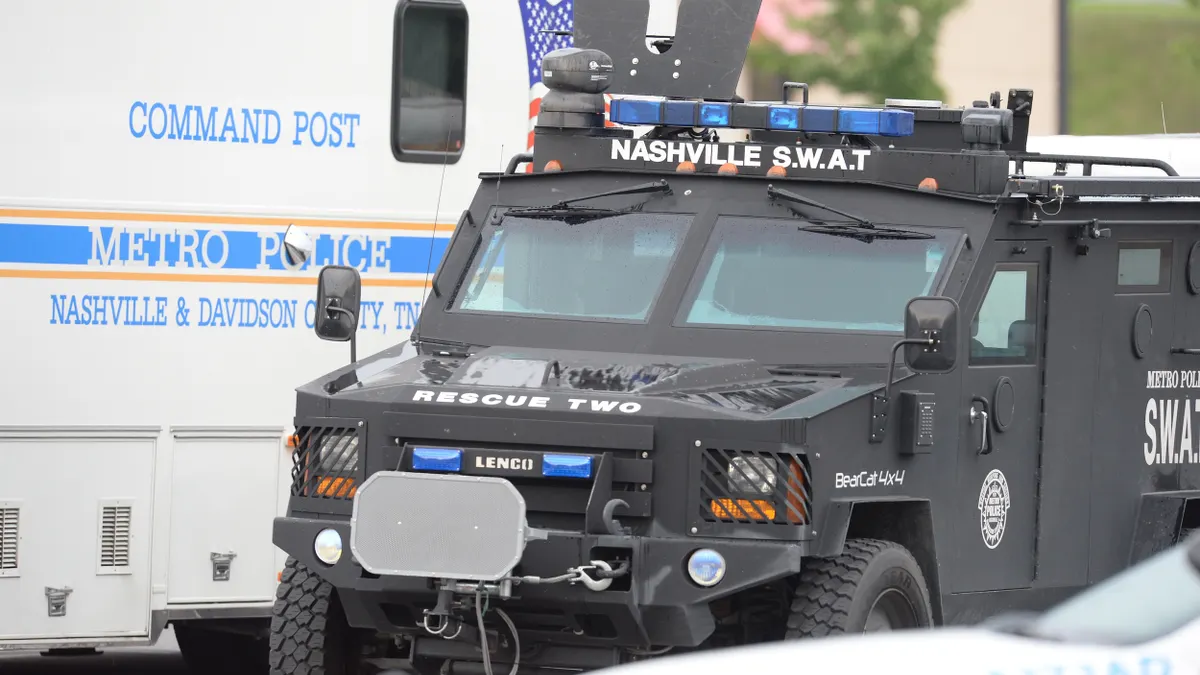
Congress has allocated between $1 billion and $2 billion annually for HSGP grants since it created the program in 2002. For fiscal year 2026, Nashville is slated to receive approximately $3.8 million for its SWAT team, bomb squad and helicopter rescues; Harris County expects approximately $23 million for first responder training and equipment; and Columbus anticipates approximately $3.6 million for anti-drone equipment and public safety preparation for the 2028 Olympic Games.
“Thanks to the court’s decision, Columbus’s law enforcement agencies will now see this funding with no political strings attached, as Congress intended,” Columbus City Attorney Zach Klein said in a statement.
Harris County Attorney Abbie Kamin said in a statement that the victory “is the result of cities and counties standing together against blatant federal overreach that jeopardized public safety.”
“FEMA is reviewing the court’s decision and will comply with the court’s order,” Victoria Barton, associate administrator for FEMA’s Office of External Affairs, said in an email to Smart Cities Dive. “The ruling does not affect FEMA’s broader mission to support state and local partners in preventing, preparing for, protecting against, and responding to terrorism, including through eligible physical and cybersecurity investments that protect election infrastructure.”