Dive Brief:
-
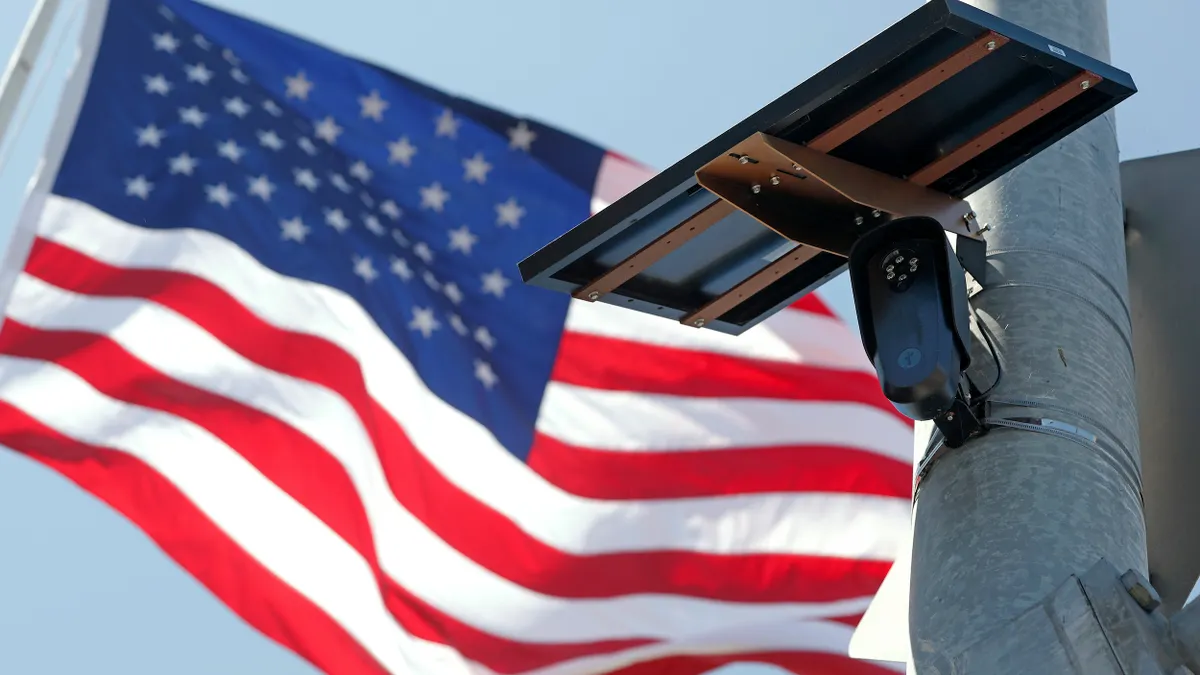
Connecticut Gov. Ned Lamont on Friday called for a review of increasingly ubiquitous safety cameras and automated license plate readers in the state and urged municipalities to immediately pause their installation until more guidance is in place.
-
In a letter to the Connecticut Police Officers Standards and Training Council, Lamont said citizens are “justifiably concerned” about how and where the technology is being deployed and the data it is collecting. Lamont asked the council to develop guidance for state and local police departments within 30 days.
-
As resident backlash against the technology has grown in the past year, more than 50 U.S. cities and counties have cut ties with Flock Safety, which says it has partnered with more than 7,000 law enforcement agencies. Vandalism against ALPRs has been reported across the country.
Dive Insight:
In May, Lamont signed Public Act 26-14, legislation intended to address privacy concerns around ALPRs, which requires clarification about how data collected by the devices is being stored and used and calls for local and state agencies to create confidentiality provisions before installing the technology.
While the legislation “went a long way in addressing and appropriately balancing” privacy and safety concerns, Lamont said in his letter, “questions remain about what type of technology is being deployed, where these cameras are being installed, and how the data is being used and shared.” Because parts of the law don’t go into effect until Oct. 1 or Dec. 1, he is asking the standards and training council to provide guidance to state and local police within 30 days.
“I am in agreement with the many residents across Connecticut who are seeing this technology being implemented by their towns and are wondering what types of privacy protections are being implemented for ordinary people who are just going about their lives,” Lamont, a Democrat, said in a statement. “I understand that this equipment is intended to keep our towns and roads safe — and that’s a good thing — but we must have clear policies in place regarding what is happening with this data, who has access to it, and how it can be used.”
Lamont’s letter follows a Wednesday announcement by two Democratic state senators calling for cities and towns to voluntarily pause installation of all new ALPRs and Flock cameras and pledging to introduce legislation tightening how Connecticut regulates the technology next year.
“We’ve led the country in protecting people’s privacy, and we’re not going to stop now,” State Sen. James Maroney said in a statement. “When we see towns rejecting these cameras and questioning whether they need this kind of surveillance at all, that tells us the public is ahead of the law.”
A Flock spokesperson said in an email to Smart Cities Dive that the company “welcomes Governor Lamont’s directive to conduct a review of public safety technology.”
Public Act 26-14, “one of the strongest ALPR laws in the country,” provides “a clear framework and demonstrates how safety and privacy are not competing priorities,” Holly Beilin, chief of staff to Flock’s chief communications officer, said.