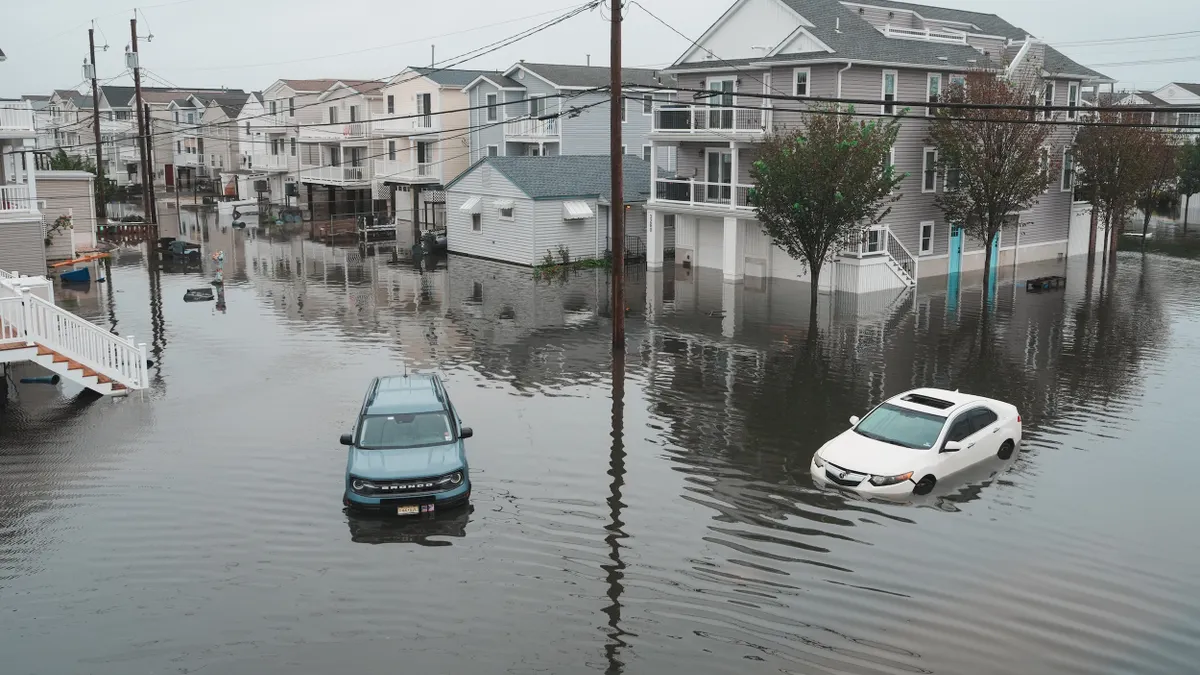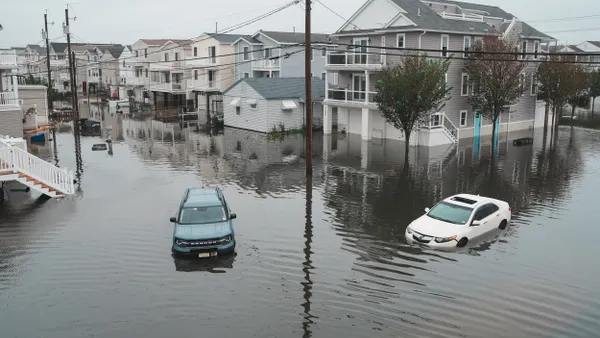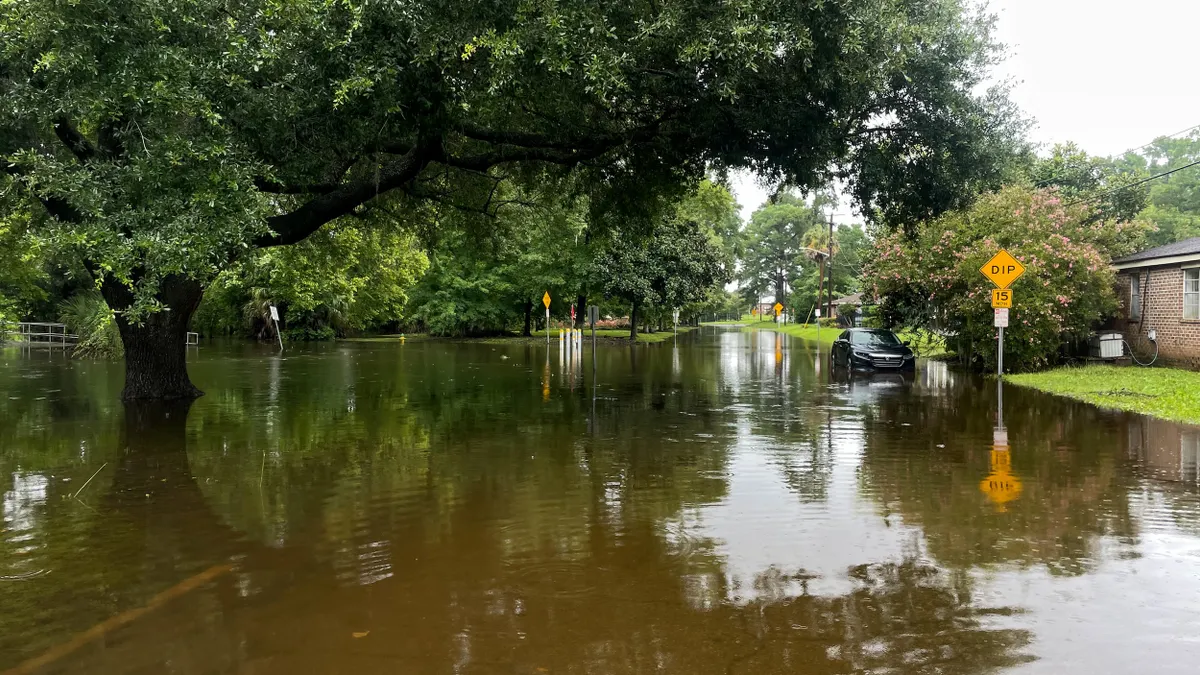
For many residents of East and West Savannah, Georgia, downpours leaving driveways and living rooms under water were not news — they were a regular occurrence.
But Federal Emergency Management Agency flood models, which power engineering maps and steer where federal mitigation money goes, kept showing their neighborhoods as safe from flooding.
“We relied on engineers without recognizing that the engineers were not the subject-matter experts,” Savannah Mayor Van R. Johnson II told Smart Cities Dive. “The subject-matter experts were those who were living in those communities who could tell you exactly where it floods.”
In 2024, Bloomberg Philanthropies selected Savannah as one of 25 cities to join Bloomberg American Sustainable Cities, a three-year program designed to leverage federal funding to build low-carbon, resilient and economically thriving communities. The city was also selected to participate in the Bloomberg Philanthropies Innovation Team program, which provides funding and expertise to establish a multidisciplinary unit, known as an “i-team,” to help design solutions to pressing local challenges.
Flooding in neighborhoods that municipal data wasn’t capturing was one of the first challenges the Bloomberg Philanthropies i-team took on.
“FEMA maps were showing so many of these neighborhoods and driveways and community spaces as dryland places that didn’t flood, even as neighbors were standing knee-deep in water,” James Anderson, who leads the Bloomberg Philanthropies’ Government Innovation program, said. “The innovation team said, ‘Wow, there’s a real disconnect between where FEMA says floods are happening and the actual experience of residents in this city.’”
The team went straight to the source — the flood-prone neighborhoods — where it hosted more than 40 community events, gathered more than 1,500 survey responses and walked the streets with residents who pointed out where flooding was chronic.
“It was really a new data-driven approach with residents leading the way,” Johnson said.
“We were sitting directly with folks in their living rooms, understanding these issues from their perspective,” said Manny Dominguez, the city’s senior director of economic development, who was appointed to direct Savannah’s i-team in 2024. “After that research phase, we went back to those same residents and stakeholders to design some of the solutions. We generated over 200 different ideas to address the issues we talked about.”
One such solution was StreetWise FloodMap, a crowd-sourced map of Savannah flooding based on time-stamped photographs from residents’ phones, flood-sensor readings and 311 reports layered with topographic and soil data. During heavy rainfall events — which have become far more frequent and intense — the map helps city staff prioritize where to send stormwater crews.
Anderson called it “a new bottom-up view on where communities are flooding, who floods first, who floods most, who floods fastest.”
Not only does the map dictate how the city responds to serious floods, “but also how it is preparing resilient infrastructure to strengthen these communities and their ability to remain high and dry in the wake of more and more floods,” he said.
“It allows stormwater crews to be more data-driven and a lot more proactive in how they address and maintain our stormwater infrastructure and how they respond to clogged drains and ditches,” Dominguez said. Residents’ 311 calls about flooding automatically go into the StreetWise app, which indicates whether they’re in a neighborhood that floods frequently, has poor soil retention or has only one way to get in and out, he said.
“A huge political gamble”
In 2023, FEMA awarded the city a $30 million grant to widen a canal and rebuild drainage in two flood-prone Savannah neighborhoods through its Building Resilient Infrastructure and Communities program. But in April 2025, before the funds could be dispersed, the agency eliminated the program.
Nine months later, the i-team helped the city administration build support for a stormwater utility rate ordinance expected to raise $2 million “to address high-demand community drainage,” according to the Savannah Agenda.
The i-team also helped city officials canvass “neighborhoods that have largely been left out, left behind and let down by government,” explaining to residents why the fee was necessary and how it would help their neighborhood, Johnson said.
The Savannah City Council narrowly approved the stormwater fee on a 5-4 vote.
“This was a huge political gamble,” the mayor said, “but we got it passed.”
“It’s a huge deal for the city because it finally provides some direct funding for stormwater infrastructure,” Dominguez said.
Responding to residents’ requests to be part of the solution, the i-team created Sponge Block, which gives residents credits against the stormwater fee for installing solutions that reduce stormwater runoff from their properties — things like rain gardens, rain barrels, bioswales, trees and native plantings.
“The fact that the city is also willing to provide incentives for rain gardens and rain barrels — that’s a big deal as well,” Dominguez said. “It’s essentially a block-by-block approach to addressing stormwater at the neighborhood level.”
Giving residents opportunities to help capture stormwater in their own neighborhoods allows them to see the difference they can make and “provides a really important support to the much larger infrastructure that the city takes on,” Dominguez said.
“It’s creating this virtuous cycle,” Anderson said. “You have residents who, for a long time, felt that their needs were not being recognized. They get brought into a city hall process … and it’s actually changing the way resources are allocated.”