

Dive Brief:
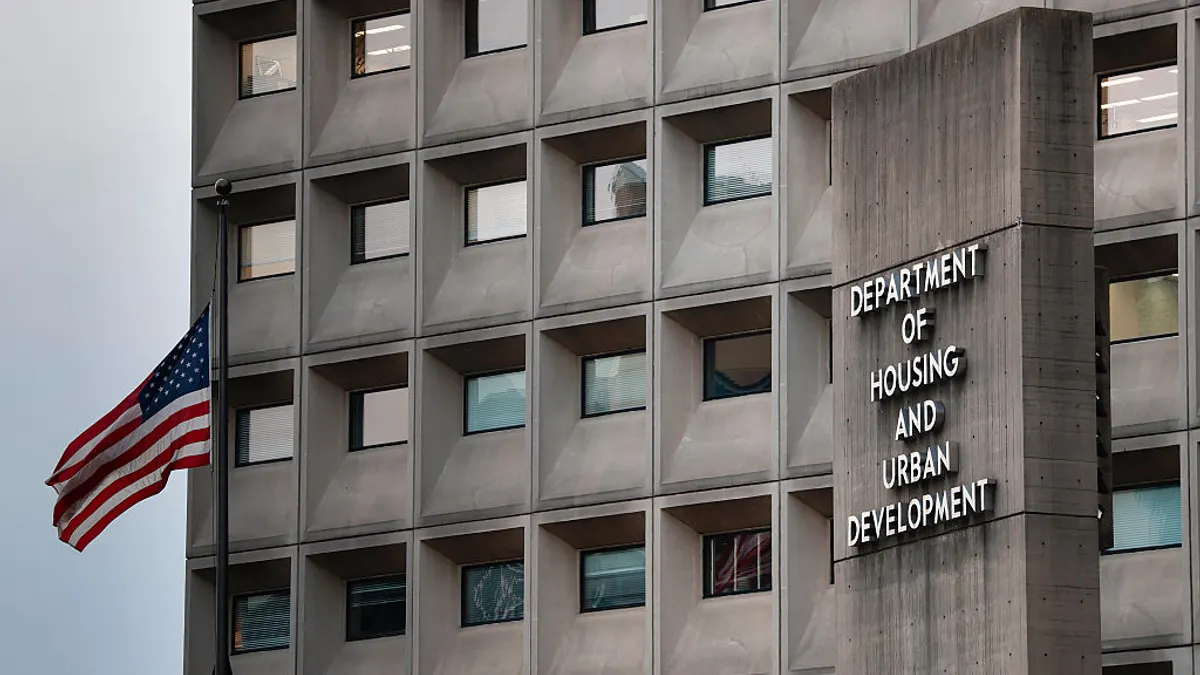
- The U.S. District Court for the District of Rhode Island on Friday blocked the U.S. Department of Housing and Urban Development’s new criteria for who is eligible to receive $4 billion in homeless grants for fiscal year 2026.
- District Judge Mary McElroy issued a summary judgment ruling that the agency violated the Administrative Procedure Act by failing to offer a required “public notice-and-comment process” when it issued its fiscal year 2026 notice of funding opportunity for Continuum of Care grants in June.
- The new HUD funding stipulations deemphasized longstanding “housing first” initiatives that the Trump administration has deemed ineffectual. The ruling did not grant a plaintiff request to bar HUD from enacting such changes in the future.
Dive Insight:
Several Trump administration attempts to enforce an ideological shift in how homelessness is addressed in the U.S. have been hampered by technicalities.
The latest ruling marks the third HUD notice of funding opportunity for homeless aid to be blocked by a court for APA violations in less than a year.
HUD changed tactics for its fiscal year 2026 NOFO. Instead of attempting to cap available renewal funds for “housing first” programs as it had in two prior funding rounds, HUD’s fiscal year 2026 NOFO “set aside” $1.3 billion to prioritize new programs geared toward temporary housing and treatment programs, according to the court.
The plaintiffs, including the National Alliance to End Homelessness, nonprofits and several local governments, assert that such changes could leave some 97,000 people homeless.
HUD Secretary Scott Turner has pledged to shift funding away from “housing first” approaches, alleging that such funding has been misused. “HUD will promote treatment, recovery, and self-sufficiency,” Turner said in a press release in April.
Local government leaders who were plaintiffs in the lawsuit celebrated the Aug. 7 summary judgment.
“This ruling protects the progress King County has made in providing stable housing and services for thousands of our most vulnerable neighbors through proven solutions, such as permanent supportive housing,” King County, Washington, Executive Girmay Zahilay said in a press release.