

The U.S. Department of Housing and Urban Development joined other federal agencies this month in unveiling a “Treatment First” Toolkit for local leaders.
The playbook comes as the Trump administration works to encourage localities to shift away from longstanding “housing first” approaches in addressing the nation’s homelessness crisis, an approach HUD Secretary Scott Turner has criticized as ineffectual but that some homeless advocacy organizations have described as essential.
The tool kit is billed as a resource to provide communities with strategies that aim to “help Americans transition from homelessness and addiction to recovery and self-sufficiency.”
The tool kit was a joint project developed by HUD, the White House Office of National Drug Control Policy and the Department of Health and Human Services.
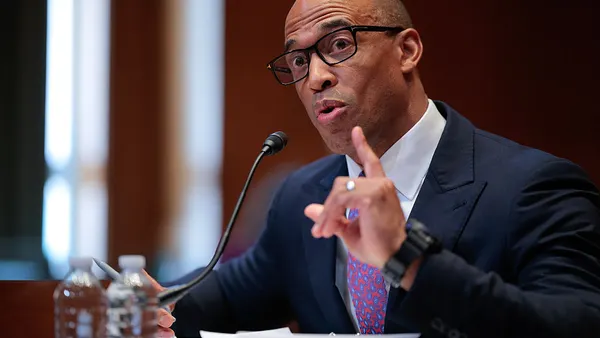
“Housing is essential, but housing alone is not enough,” Turner said in an Aug. 12 press release. “This toolkit gives communities a practical playbook designed by experts across the country to put treatment first and help more homeless Americans achieve lasting recovery, stability, and independence.”
The tool kit does not provide a single model for addressing homelessness and addiction. It lays out a number of what it deems best practices for localities in addressing homelessness and addiction in communities, prioritizing self-sufficiency and urging accountability for those experiencing homelessness and addiction by utilizing services. It also encourages localities to mandate substance-free living spaces.
Measures of success must be defined by “meaningful progress toward long-term recovery-oriented outcomes,” according to the playbook, “... rather than by service utilization alone.”
The Disability Rights Education and Defense Fund criticized the tool kit, calling it a “blueprint for conditioning shelter on compliance.”
The tool kit embraces a “whole-of-community” approach, encouraging local leaders to work closely with organizations within the communities they serve to coordinate homeless and addiction services. It also emphasizes working with faith-based organizations.
It introduces a five-phase approach in which programs can measure outcomes for those experiencing homelessness and addiction. The phases go from crisis, stabilization, treatment and early recovery to “thriving,” which the tool kit characterizes as long-term abstinence from addiction, mental health stability, full-time employment and living in non-subsidized housing.
Concerning encampments, the guidance highlights the Homeless Outreach Services Team, a model used by LA County Homeless and Housing. Its street-based multidisciplinary outreach program cleared more than 1,500 encampments with no arrests, use of force or litigation, according to the playbook.
The program deployed specialized law enforcement teams, homeless outreach and housing navigation services, substance use and mental health treatment providers, public works and environmental remediation teams and community-based organizations.
“Rather than reacting once a crisis occurs, the model emphasizes repeated outreach, trauma-informed engagement, and deliberately planned pathways off the street,” the tool kit states.
The U.S. recorded an overall 3% decline in homelessness last year after seeing a record spike the year prior.