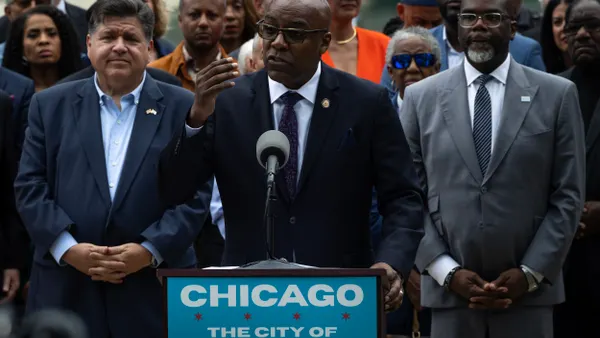
Economic and workforce development is U.S. mayors’ top priority, according to the National League of Cities’ State of the Cities 2026 report released Friday. But as key federal funding initiatives are set to expire, infrastructure is a close second, followed by housing and public health and safety.
The 2026 report is based on 173 survey responses from U.S. mayors and 60 ”state of the city” mayoral addresses. Key findings include:
1. Economic development is mayors’ top concern.
The report calculated top priorities based on how much of mayors’ state-of-the-city speeches were devoted to a topic. Economic development was the topic they collectively focused on the most, accounting for 31% of their speeches, followed by infrastructure at 27%.
While over 80% of survey respondents say their cities’ economic situation is acceptable, good or excellent, that’s down from 85% in 2025. Also, compared with 2025, the percentage of mayors concerned about poverty increased by 3 percentage points, while concerns about underemployment/unemployment and inequality in their cities grew by 6 percentage points.
Cities’ top economic challenges remain the same this year as in 2025, the report found. Sixty percent of mayors cite attracting businesses as a key issue, followed by insufficient federal investment (45%), insufficient private investment (37%) and a shortage of childcare providers (36%).
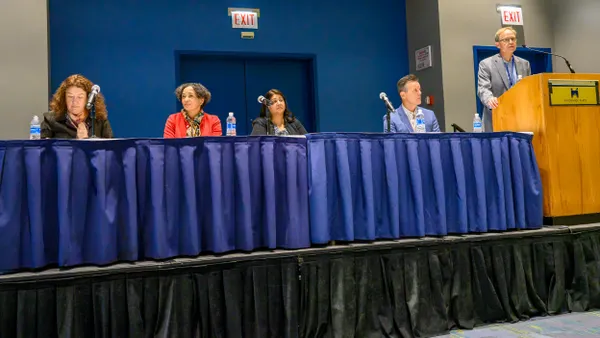
The report also found that cities are increasingly relying on public-private or multi-government partnerships to boost economic development. During a Friday press conference announcing the report, Rochester, Minnesota, Mayor Kim Norton described a program involving the city’s largest employer, the Mayo Clinic, as an example.
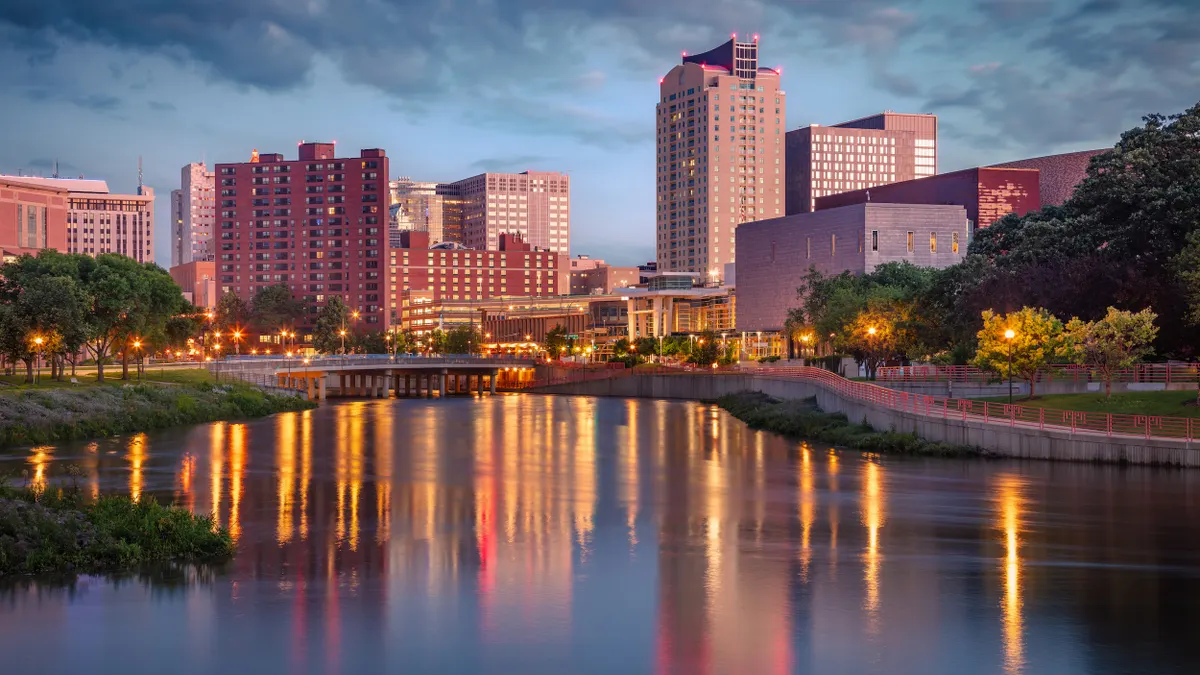
The Mayo Clinic “wanted to grow but also wanted to make sure the city grew around them, and … we didn’t have the revenue to do that,” Norton said. So the state earmarked $385 million, the city expended $128 million and the county put in “a tiny bit” to redevelop downtown Rochester, including upgrading water and sewer systems, repairing roads and building a bus rapid transit line, Norton said. In response, Mayo announced a $5 billion expansion of its campus in downtown Rochester, she said.
2. As two federal infrastructure initiatives end, cities will feel the impact.
Infrastructure investment was the second-most prevalent topic of state-of-the-city speeches. Eighty percent of mayors said losing American Rescue Plan Act and Infrastructure Investment and Jobs Act funding this year will negatively impact their infrastructure spending.
The mayors cite transportation and public utility systems as their top infrastructure priorities. Resilience was another infrastructure concern: Only 25% of mayors said their city was “very prepared” to handle a natural disaster’s effects on local infrastructure.
3. More than half of mayors are concerned about mental health.
Public health and safety and health and human services were the third-most prevalent subjects in mayors’ state-of-the-city addresses. Within that category, more than 50% of mayors surveyed said they are very or extremely concerned about mental health, followed by substance abuse at 38%.
4. Three-quarters of mayors say high housing costs are a major challenge.
While housing was mentioned in only 11% of mayors’ state-of-the-city addresses, 71% of surveyed mayors said their cities don’t have enough housing and 75% say housing costs are a challenge. Affordable housing is also a key issue — 55% of mayors said housing attainability in their city is poor or very poor.
Rochester, Minnesota is using the Coalition for Rochester Area Housing to address its housing issues, Norton said. This partnership between the city, county, Rochester Area Foundation and the Mayo Clinic has invested more than $20 million since 2020 in housing-related projects and has created or preserved 1,154 homes, Norton said.