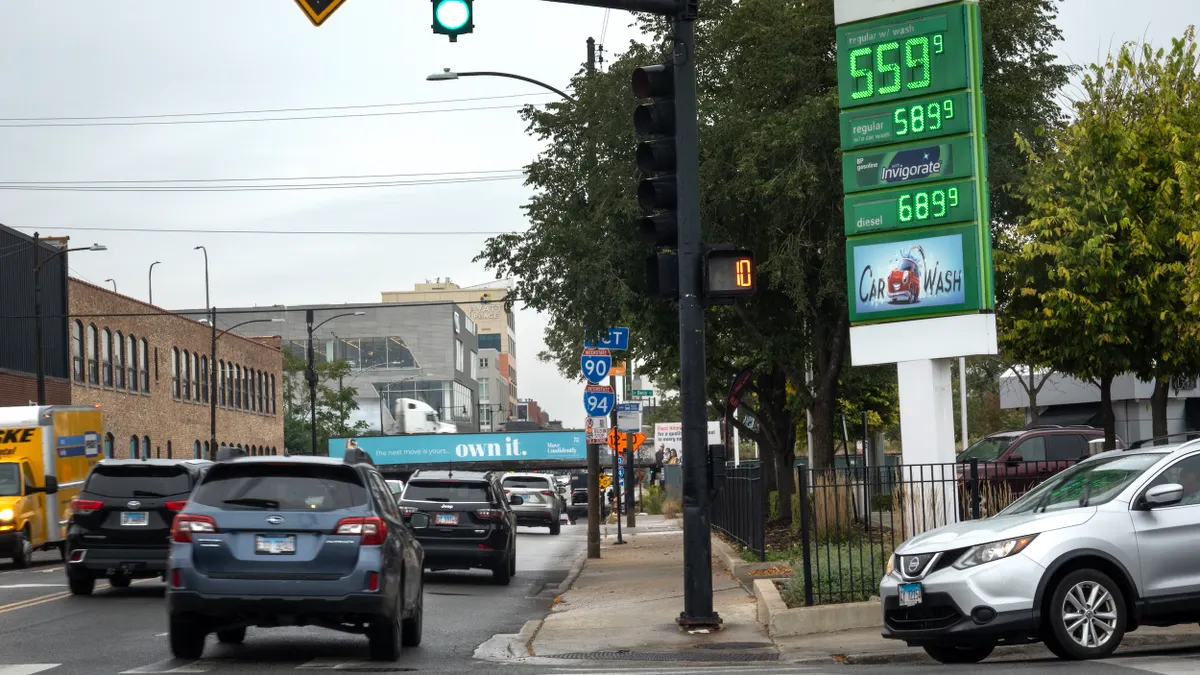
Increasing transportation costs account for more than 35% of inflation in the U.S. as of September 2026, according to the Bureau of Transportation Statistics. The consumer price index for transportation, which represents the average cost of transportation across all U.S. cities, was up 7.9% in September over the same month last year on an unadjusted basis.
“Rising transportation costs can change how, when, and where people travel, even when they don’t stop driving altogether,” Gary Hallgren, president of transportation analytics firm Arity, said in a written response to Smart Cities Dive. “People may reconsider where they go, combine trips, or make certain trips less frequently.”
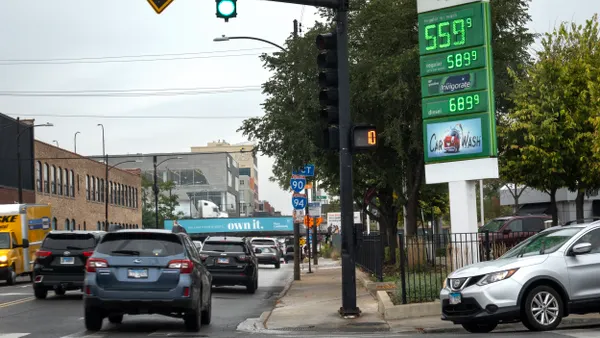
The average price for gasoline in the U.S. in September rose 7.3% over the prior month and 37.6% over the same period last year, according to the BTS. “High fuel prices are driving overall inflation and squeezing household budgets and increasing the cost of everyday goods and services,” Yagiz Sullu, founder and lead analyst for Sullu Strategic Advisory, told Smart Cities Dive.
Diesel fuel prices were up 15.2% month-over-month in September and 67.8% over the same month last year. “Larger movements in the price of diesel [are] starting to show up in the price of consumer goods,” Babson College Assistant Professor of Finance Luke Stein told Smart Cities Dive. Diesel fuel impacts the cost of truck transportation, agricultural equipment and fertilizer, he said.
Jet fuel prices increased 84% in August over the same period last year. Domestic airline fares and the cost of vehicle maintenance and repair have risen. The average transaction price of a new vehicle is over $50,000, according to Kelley Blue Book. Hallgren said Arity data shows that every 1% increase in weekly gas prices led to fewer trips to grocery stores, restaurants and other retail locations across nine states from March 2 through April 20.
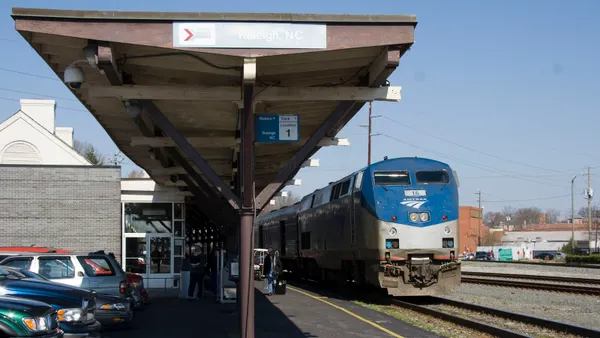
Inflation is also pushing up public transit fares. The New York Metropolitan Transportation Authority raised subway and bus fares by 10 cents in January and increased ticket prices on its commuter rail lines by up to 8%. The North County Transit San Diego Railroad and San Diego’s Metropolitan Transit System increased fares on Oct. 1. Transit fares in Miami-Dade County will go up in January, and the Washington Metropolitan Area Transit Authority is proposing an 11% fare hike next year.
“Transit agencies face increasing operating costs, and we will see this effect more on households that are low to middle income and are more dependent on affordable public transportation,” Sullu said.
Even so, households could save $12,000 to more than $18,000 a year by using public transportation instead of personal vehicles, depending on the city, according to an American Public Transportation Association report released last week. “When you add up gas, insurance, repairs, and parking, the savings can be significant,” APTA President and CEO Paul Skoutelas said in a statement.
Holiday travelers may budget more tightly and avoid air travel this year, a PwC survey showed, but higher-income households will spend more freely, according to travel research firm Future Partners. Those with annual household incomes of $200,000 or more are likely to spend 6.8 times more on travel than those with household incomes under $49,000, it said.
“For cities, that’s why I think it’s important to look at these things together,” Hallgren said. “Price is one data point. Transit is another. Driving behavior is another. When you start connecting those signals, you get a much clearer picture of how people are moving and how that could change.”