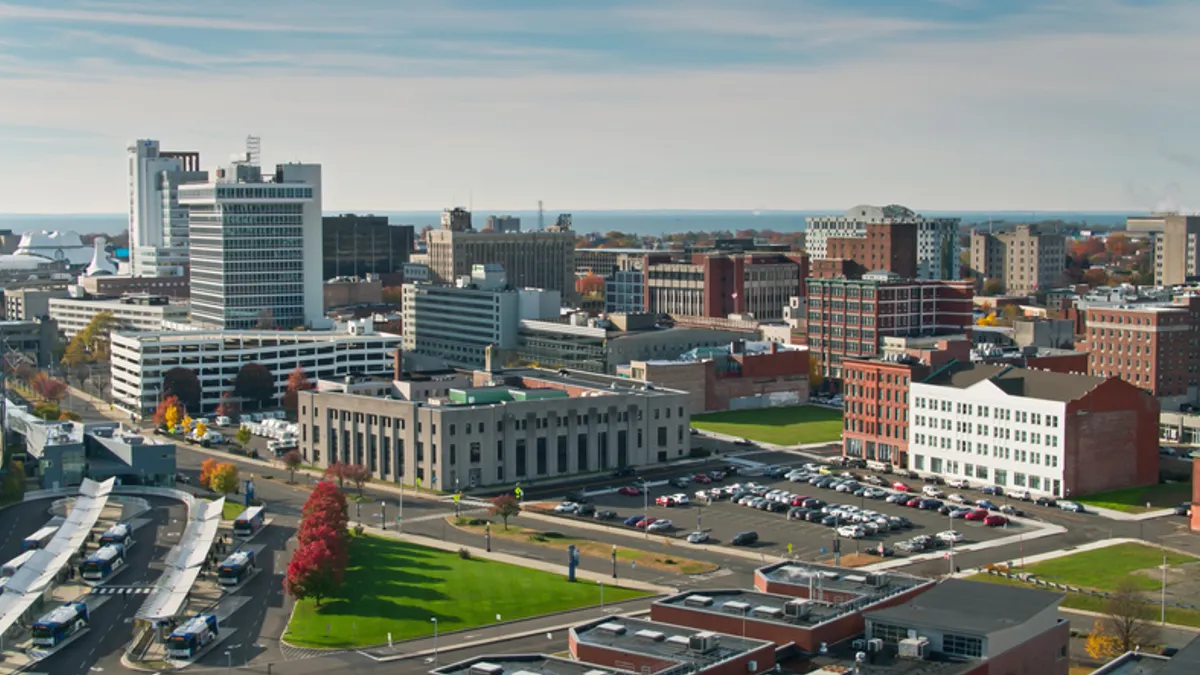

El Paso, Texas is proud of its business-friendly atmosphere and ability to attract and sustain world-class companies. In fact, El Paso has been actively working to grow its advanced manufacturing sector and ranks fifth in North America for manufacturing hubs with the highest employment.
Partnering with energy technology partner Schneider Electric is one part of El Paso’s long-term vision to develop a community where both local companies and residents flourish.
A legacy of successful public-private partnership
El Paso has the skilled workforce needed to build specialized products, partly thanks to its top-notch engineering schools. That has attracted major companies to El Paso County, including Schneider Electric, which has been part of the El Paso community since 2001. The company’s El Paso manufacturing campus is Schneider Electric’s largest manufacturing footprint in the U.S., with more than 2,500 employees.
A fifth plant currently under construction will create 300 new jobs as part of Schneider Electric’s push to modernize and expand its electric equipment manufacturing facilities. Expanding the company’s existing campus in El Paso to keep up with growing demand for switchgear and power distribution products is a key component of that investment.
Municipal infrastructure modernization initiative
In January 2025, El Paso County and Schneider Electric launched a sweeping municipal infrastructure modernization initiative across 30 county facilities. Under the leadership of Chief Administrator Betsy Keller, a 2026 Smart Cities Dive Public Service Award winner, these improvements are slated to deliver increased energy and cost efficiency, reduce carbon emissions and improve the lives of El Paso County's residents.
Construction is expected to be completed in 2027. This multi-phase project will begin by addressing critical infrastructure needs, including:
- Upgrades to the mechanical plant at the Courthouse
- Enhancements to the building automation system at the Courthouse
- Water efficiency improvements at the Jail Annex and Downtown Detention Center
- County-wide installation of energy-efficient LED lighting
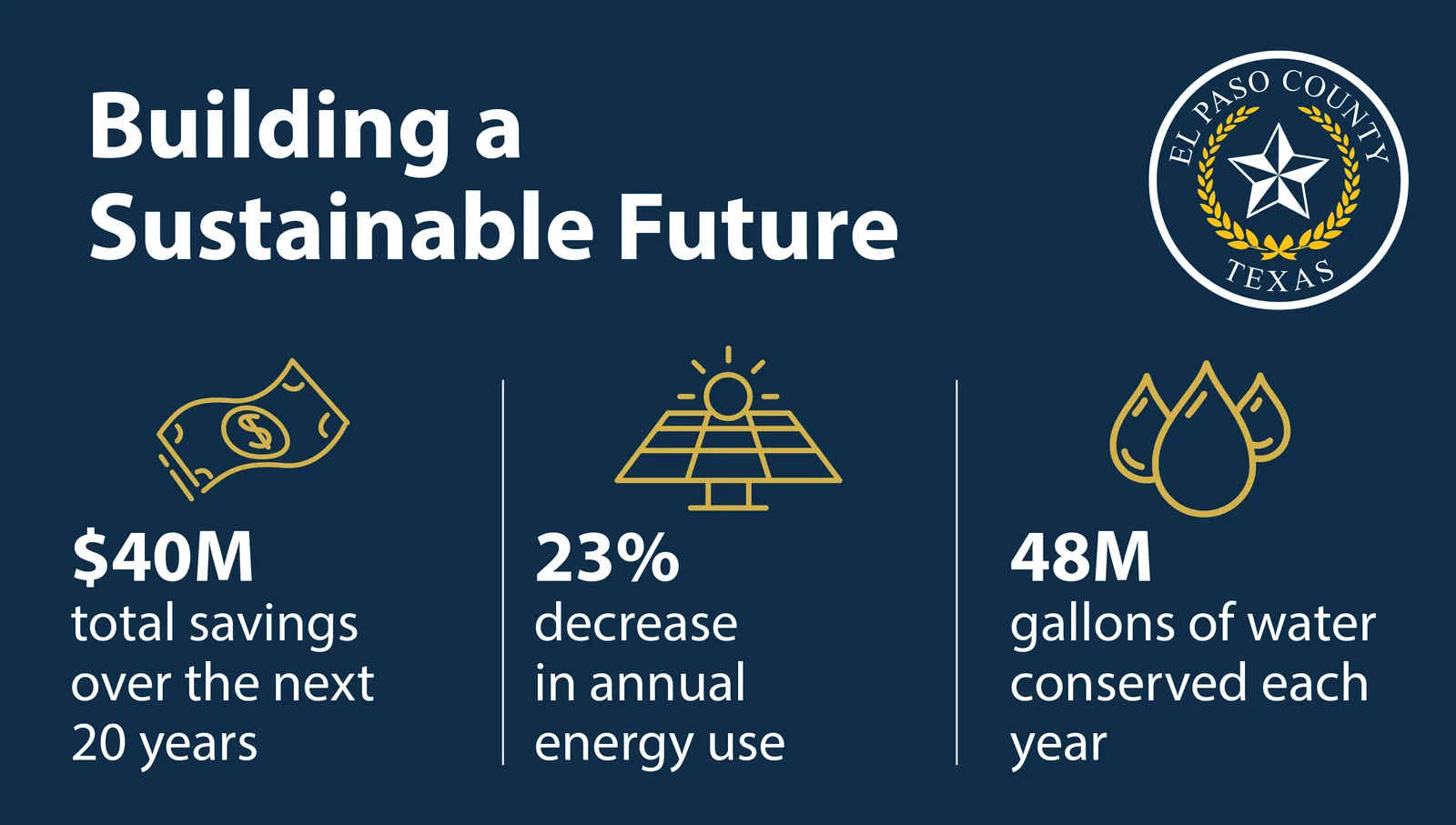
Through this innovative partnership, the projected annual savings in the first year alone are expected to be over $1 million, reaching $40 million over a 20-year span. These savings will be strategically reinvested into the county to support its long-term goals.
Positive economic and environmental impact
Energy and water conservation were major priorities for El Paso County, forming the foundation of initial project development efforts. After working together to complete a comprehensive facility audit, Schneider Electric and El Paso County identified key opportunities to significantly reduce resource usage. In the first phase, El Paso County is projected to reduce annual energy use by 23% and save 48 million gallons of water every year, reducing water waste by 25%.
This initiative is also expected to cut CO2 emissions by 11,872 tons annually. That’s the equivalent of:
- Taking 2,698 cars off the road every year
- Planting 3,670 acres of trees annually
Ultimately, the project will lead to significant reductions in energy and operational costs and provide financial savings that create new revenue streams for El Paso County. One of the reasons this project gained momentum is that it required minimal initial capital outlay, preserving county funds for other critical areas without incurring debt.
Additionally, the project prioritizes partnerships by using county-approved local contractors and suppliers to keep investment in the community. This approach both supports area businesses and ensures the county achieves the best long-term value.
A playbook for other cities
The El Paso projects illustrate how trust-based collaboration between Schneider Electric, El Paso County and the broader community has enabled large-scale investment, creative financing and visible community impact across jobs, infrastructure and regional identity. By aligning economic development goals with municipal modernization, El Paso has leveraged private sector investment and community partnerships to generate both immediate and lasting returns.
Other cities can replicate this model by collaborating with private sector partners to identify infrastructure upgrades, implement cost-saving strategies and foster stronger ties with local institutions. El Paso’s success shows what’s possible when local governments and industry leaders work together toward a shared vision.