Daniel Walsh, senior technical advisor at LaBella Associates, is a geochemist with over 30 years of experience regulating environmental protection in cities. He founded and operated the NYC Clean Soil Bank, the first urban soil bank in the U.S. He is also an adjunct senior research scientist at the Lamont Doherty Earth Observatory and The Climate School at Columbia University.
Cities need clean soil and other fill materials for earthworks projects, ranging from large-scale flood protection in waterfront areas to urban green infrastructure and community gardens, but the high cost of clean fill, limited supplies and uncertain chemical quality can obstruct this important work. Studies show that excavation during urban construction produces large quantities of clean soil that is a valuable but often overlooked natural resource in cities. With basic planning to promote a circular soil economy, this soil can be retained within the city and used as a low-cost fill to supply urban earthworks.
In urban areas, soil is excavated to make room for underground parking and basements and often disposed of at commercial facilities located outside the city at a high cost. At the same time, public and private construction projects within the city are purchasing clean fill to reshape or elevate urban land — also at high cost and often from the same commercial vendors that take exported soil. Without local policy in place, this regional commercial marketplace maximizes construction costs, truck transportation, fossil fuel consumption, greenhouse gas and other pollutant emissions, and traffic congestion.

Soil banking is an innovative way to retain and reuse surplus soil within cities to create a low-cost supply of fill material that can lower construction costs, assure chemical quality and improve availability. Soil banking can also direct soil reuse to government earthworks projects, at low- or no-cost to the city, to reduce taxpayer costs for new construction.
The country’s first clean soil bank, which matches public and private developers that generate soil with developers that need it, was established in New York City in 2013. In that model, environmental professionals vet the chemical quality of the donor’s soil before the logistics of soil transfer are worked out. Typically, polluted shallow soil must be removed first and properly disposed of. The pristine, deep soil below is circulated through the soil bank. Clean soil is excavated and its quality is vetted again as it is loaded onto trucks to be transported to the receiving site.
Proof in practice
Studies show that about 1.5 million tons of clean soil are generated during construction in NYC every year. That’s enough soil to fill the ballfield at a professional baseball stadium to a height of about 30 feet. Despite its high quality, about 95% of this surplus soil is exported out of the city at a cost of tens of millions of dollars every year. In contrast, all of the soil in the Clean Soil Bank is retained and reused within the city, reducing soil transportation mileage by about 80%.
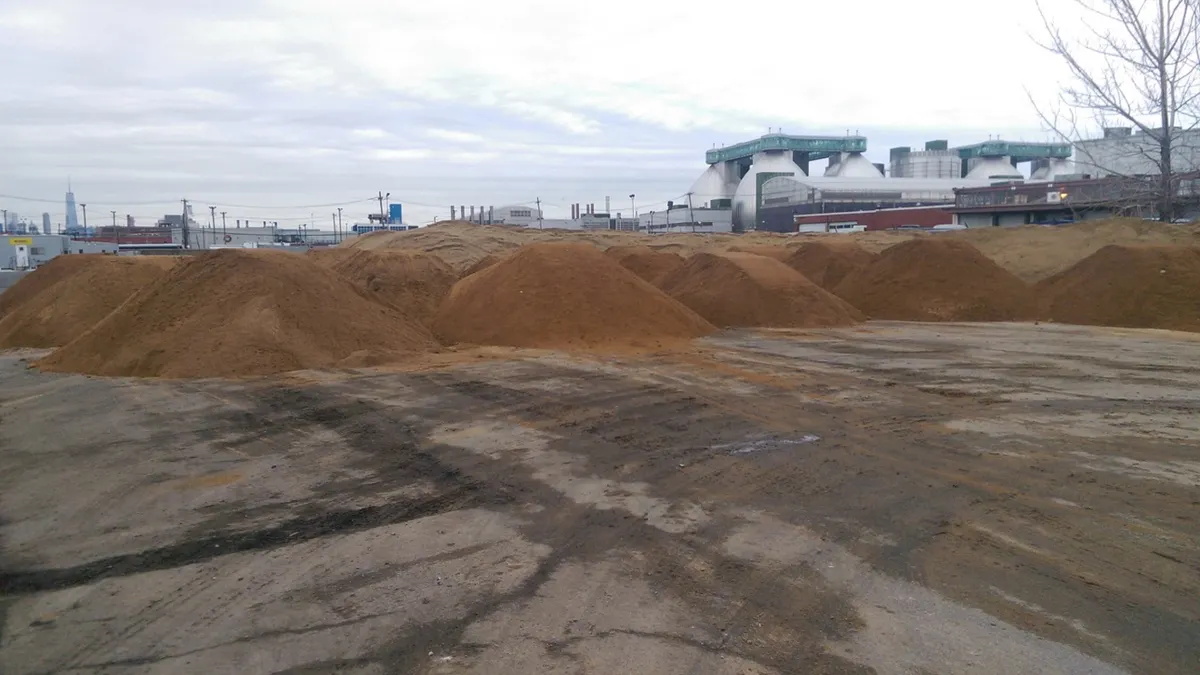
The Mayor’s Office of Environmental Remediation operates the NYC Clean Soil Bank as part of efforts to promote a circular economy. The nonprofit program costs nothing to use. Donors pay to ship the soil but save about 67% on soil disposal costs compared to commercial disposal outside the city. Recipients receive the soil for free. Over the first three years, 26 soil donors saved $220,000 per project and 40 recipients saved $256,000 per project, with overall soil-management savings estimated at $16 million. Because the program is run out of City Hall, government construction projects get first dibs on soil to lower taxpayer costs. This source of clean soil has been used for many purposes, including elevation of flood-prone land, construction of waterfront berms, tidal and freshwater wetlands, and other green infrastructure to build flood resilience and use as a protective cover layer on polluted land.
A steady supply of clean soil at very low cost can create opportunities for many innovative programs. The Clean Soil Bank enabled establishment of PURE Soil, a program that improves soil quality in urban community gardens. A foot or more of clean soil, amended with municipal compost to improve fertility and facilitate vegetative growth, is used to cover existing gardens built on degraded urban soil. The program has also established a publicly available stockpile that provides free clean soil to residents.
How to build a soil bank
An urban soil bank requires technical expertise to set up and run. Differentiating polluted shallow soils from clean soil below to ensure the soil is safe for its intended use requires technical rigor. Soil excavated during construction is regulated in many states as “solid waste,” so establishing a soil bank may require approval from state environmental regulators. Soil testing to confirm quality is recommended and may be required in many states.
The technical nature of the program should not be a disincentive to its use. While most cities do not have the staff expertise to perform these tasks, a soil bank can be built and operated under contract with qualified environmental professionals from the private sector. Urban materials banks can also be developed for other secondary materials, such as recycled concrete, brick, masonry and asphalt with similar benefits.
Because soil banking can be used to service municipal construction projects, savings for soil disposal or purchase can fully offset the cost of operating a soil bank and result in significant net savings to the city. The Clean Soil Bank prioritized government construction projects to receive soil and saved about $1.1 million per year over the first three years, with program operations costs of about $20,000 per year. With advance planning and thoughtful program design, these savings can be used to fully fund all soil banking activities, including government contracts with the private sector for program design and operation.