


Dive Brief:
- The Suisun City, California, City Council declared a state of emergency Saturday after malicious software forced the city to shut down its entire IT network, including critical public safety operations such as 911 routing, police and fire dispatch, records and city services.
- The city transferred its dispatch operations to the Solano County, California, dispatch center and said it is working with federal, state and regional authorities to maintain emergency services and restore its systems. The City Council called an emergency meeting Tuesday morning to discuss a demand received from “the person or persons” responsible for the incident.
- In the wake of the incident, Gov. Gavin Newsom on Monday launched a state AI cyberdefense program designed to better detect and defend against emerging cyberthreats.
Dive Insight:
Cybersecurity incidents are proliferating among municipalities, a spike some experts say is the result of artificial intelligence enabling more efficient attacks.
Earlier this year, another California municipality, Foster City, had many of its city services knocked out for weeks following a ransomware incident. In recent weeks, municipal water systems have also been the target of cyberattacks.
As of Monday, public safety services and response remain active in Suisun City, which has a population of around 30,000, but some services are limited or closed to the public. Online city services and internal operations are still unavailable.
Bhavesh Vadhani, partner and the global leader of consulting firm CohnReznick Advisory’s cybersecurity and digital trust, said evolving technology has “lowered the barrier to entry” for attackers.
“Local governments hold large volumes of sensitive citizen data and are responsible for essential services such as public safety, utilities, and transportation, making operational disruption highly impactful,” Vadhani told Smart Cities Dive in an email. “Attackers often perceive municipalities as more likely to pay ransoms or experience prolonged outages if systems are compromised.”
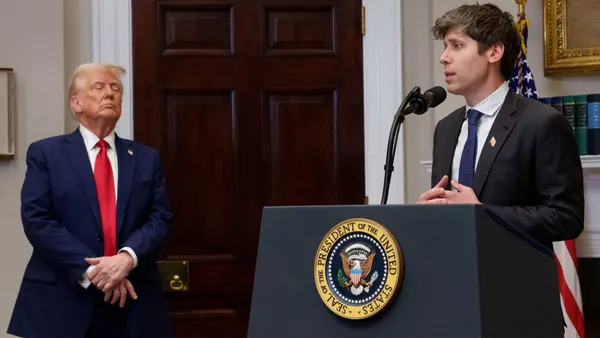
Newsom, who has embraced AI partnerships in state services, introduced a cyberdefense program that instructs state agencies to expand AI-enabled defenses for critical infrastructure and local governments and improve preparedness for AI-enabled cyberattacks.
“Attacks are faster, more sophisticated, and more frequent, putting at risk the basic systems families count on,” Newsom said in a news release. “California can either wait for the next crisis, or we can build the kind of defenses this moment demands. We are choosing to build.”
Newsom’s office called out the Trump administration for scaling back federal funding for state and local government cybersecurity.
The Trump administration last year nixed federal support for a longstanding partnership with the Multi-State Information Sharing and Analysis Center, a service many local government leaders described as critical to their cybersecurity operations.