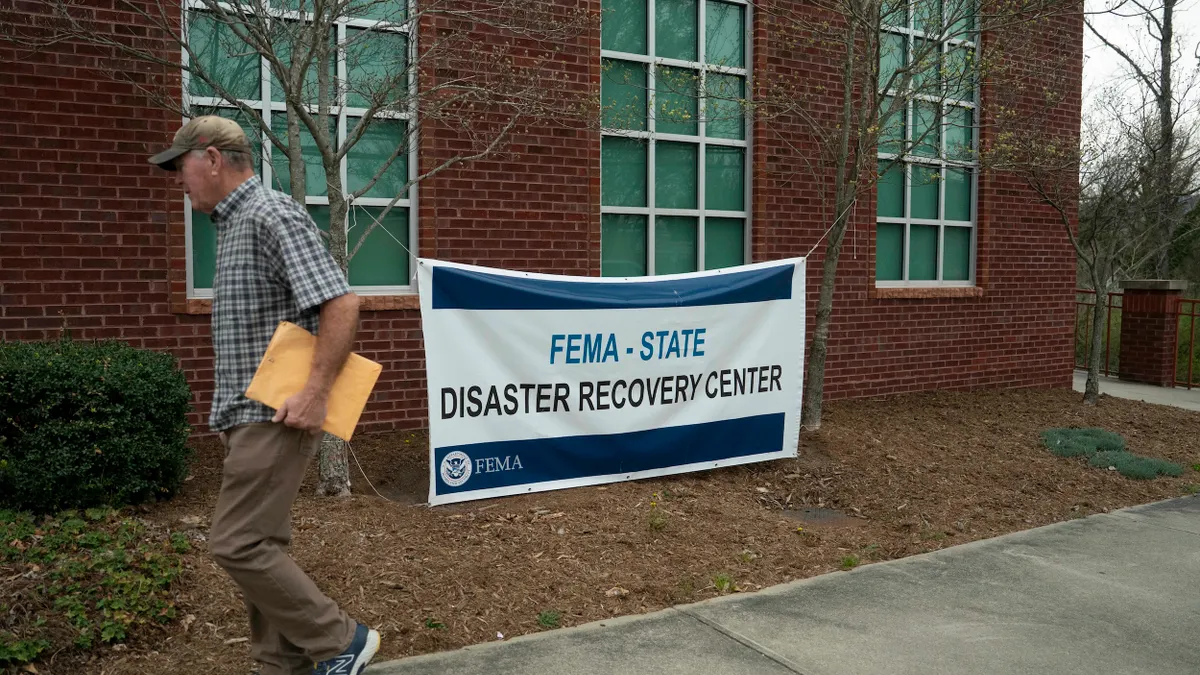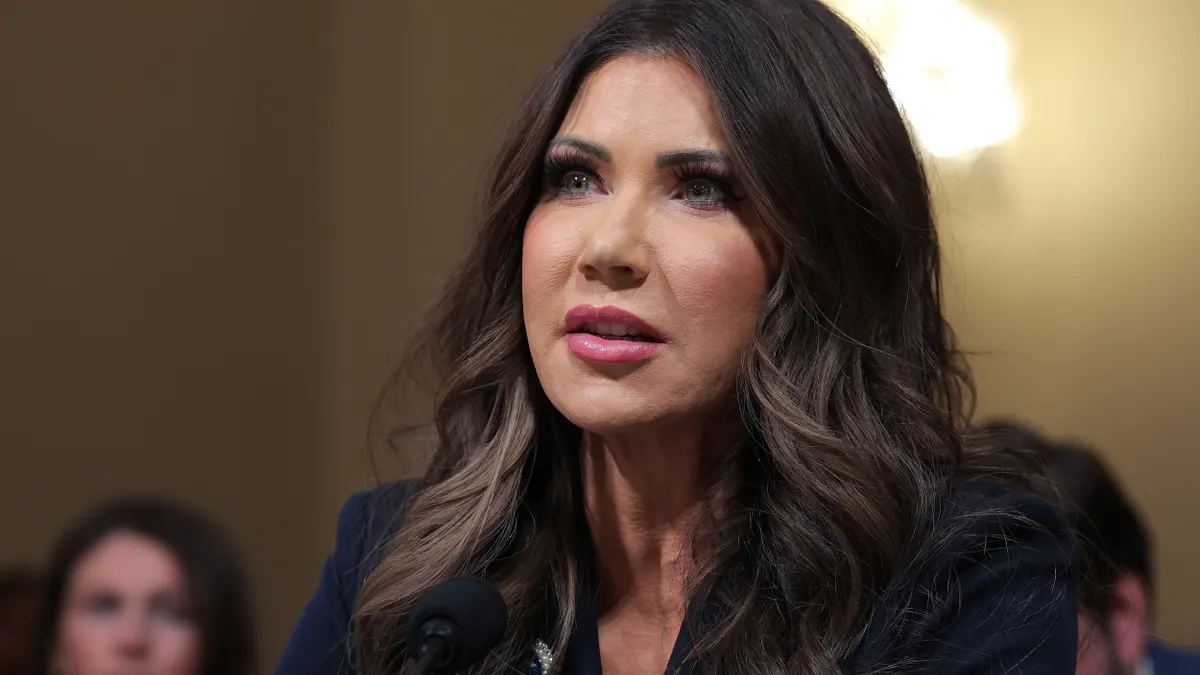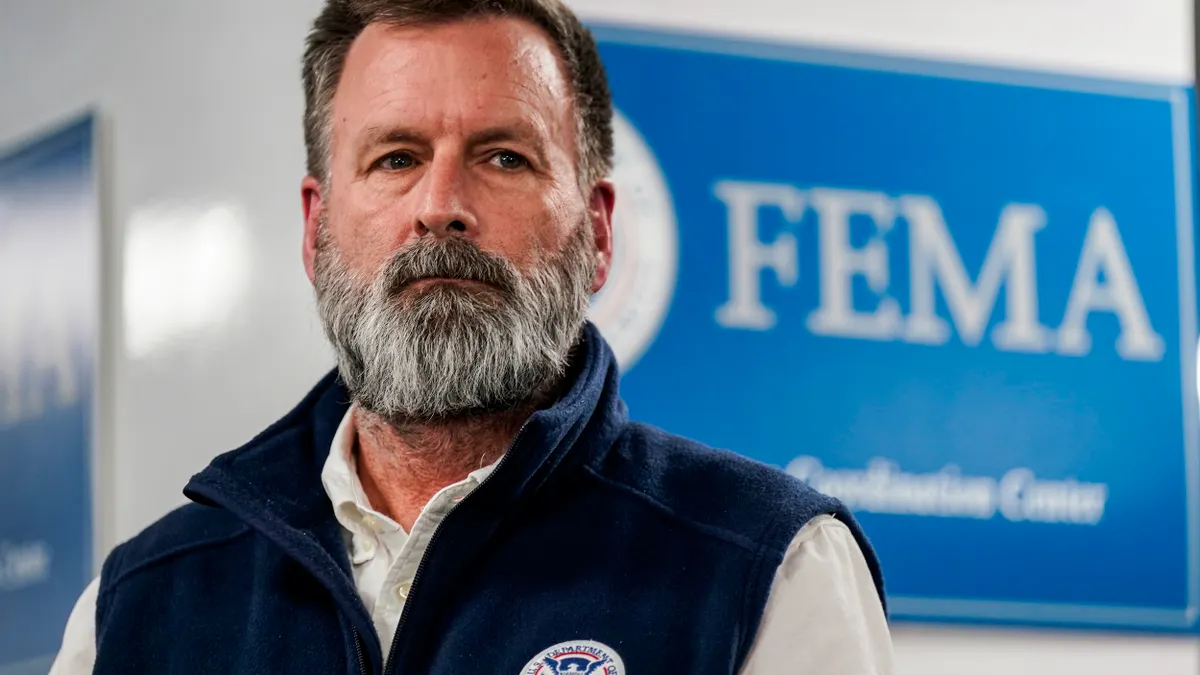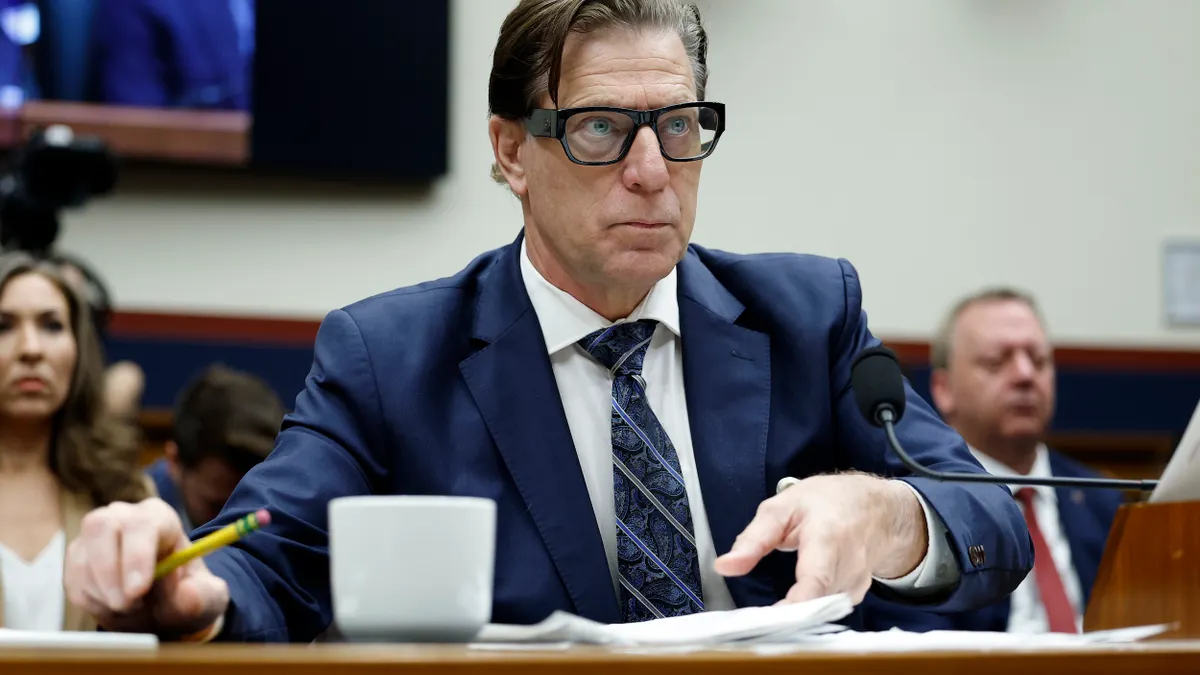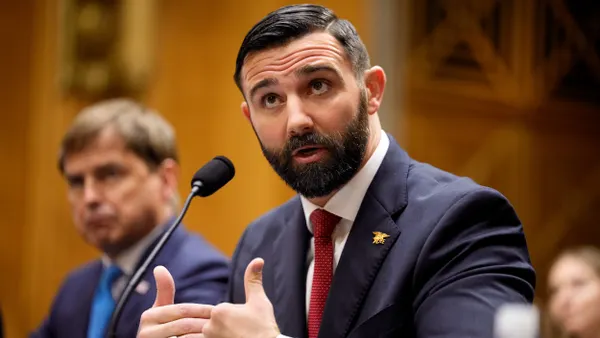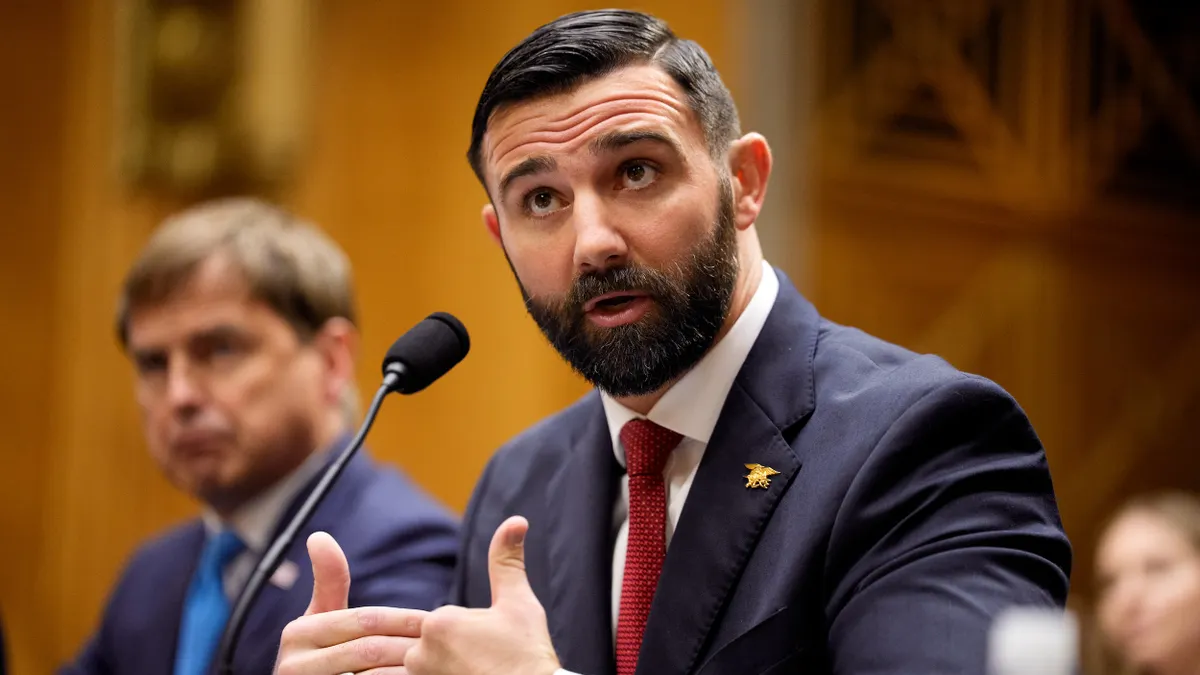
Federal Emergency Management Agency Administrator Cameron Hamilton told emergency managers that states should prepare to respond to disasters without federal help in as soon as six months, Politico reported this week. But two recent federal government reports indicate that funding and staffing challenges at state and local emergency management agencies could make that difficult.
Politico obtained a recording of Hamilton’s remarks during the National Emergency Management Association’s annual conference in Little Rock, Arkansas. He said states will need to have “the appropriate financial reserves” and other abilities “to ensure that recovery efforts can start immediately and not necessarily be held up simply because of the federal [disaster] declaration process,” Politico reported.
“This obviously sounds wonderful in theory,” meteorologist Alan Gerard, CEO of Balanced Weather, wrote in a Substack post Wednesday. But it will be much more difficult to achieve in practice, he said, because states, cities and counties “have very uneven levels of resources, hazard vulnerabilities, and experience with disasters.”
An Urban Institute report released last year found that only five of the 31 states that received federal disaster response and recovery resources in 2019, the most recent year with data availability, had enough resources set aside in their budgets to cover the cost of disasters.
Understaffed and underfunded
Hamilton’s remarks come on the heels of a FEMA-funded study released Oct. 16 that found local emergency management agencies are typically understaffed and underfunded. “This finding reinforces the vision outlined in President [Donald] Trump’s America First Resilience Strategy, which calls for state and local governments to develop and maintain capacity to effectively manage incidents affecting their communities,” FEMA stated in a news release.
In the report, state emergency managers said insufficient staff and funding were their biggest challenges, and many noted that local agencies within their states lack the staffing needed to focus on anything beyond basic tasks. This makes it difficult for local agencies to take advantage of state-offered training, technical assistance, planning and exercises, the state managers said.
The study found that more than half of local emergency management agencies have one or fewer full-time employees and “a notable percentage” of local emergency management directors are volunteers. Heavily reliant on local taxes for funding, the emergency managers said they face significant challenges including lack of funding, insufficient staffing, competing community priorities, stakeholder confusion about the role of emergency management and low pay.
Just over half of local agencies say they are completely or mostly meeting their community’s needs, and 19% said they are only slightly or not at all meeting community needs.
Budgets vary widely
Anticipating FEMA reforms, the Congressional Research Service released a report in September exploring states’ capacity to absorb more responsibility for disaster preparedness, response and recovery. The report notes that both the Fixing Emergency Management for Americans Act currently moving through Congress and Trump’s FEMA Review Council recommendations, released in May, “suggest that states should take on additional responsibilities pertaining to disaster preparedness, response, and recovery.”
But emergency management operating budgets vary widely from state to state — from $390,000 in New Mexico to $700 million in Illinois for fiscal year 2026 — and states’ reliance on federal funding for emergency management ranges from zero to 99.4%, CRS found.
States’ rainy day funds, designed to cover gaps when revenues are insufficient to meet spending demands, “may be limited by statute in when and how they can assist disaster-related budget shortfalls,” the CRS report states. The 2025 Urban Institute report found that state rainy day fund balances vary from $240 million in South Dakota to more than $20 billion in Texas.
Because nearly all state governments are required to balance their operating budgets, they will have to find ways to offset increased spending on disasters and may need to adjust their emergency management programs and capabilities, which could require changes to state law, according to the report.
“Some states and territories may be better positioned to perform more emergency management responsibilities should federal involvement diminish, while other states and territories may struggle to adjust to the proposed changes,” the report concludes. “As with any change in federal policy, states will likely request time (often months to years) to adapt to the policy shift in order to adjust their own laws, policies, and programs.”
California Gov. Gavin Newsom released a statement Wednesday accusing the Trump administration of “abandoning FEMA’s mission and telling Americans in states across the country to fend for themselves.”
“In the growing absence of the federal government,” he said, California is coordinating with local communities, procuring flood-fighting supplies, inspecting levees and water infrastructure, and helping coastal communities reduce flood, landslide and coastal hazards ahead of anticipated El Niño storms this winter.