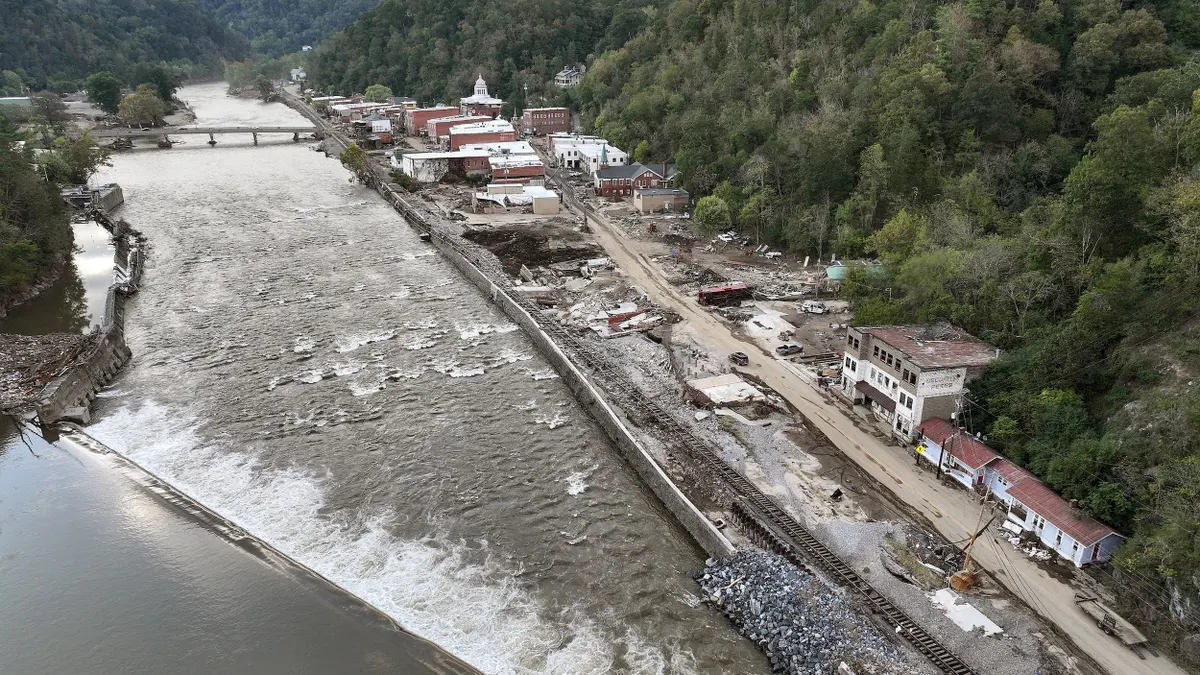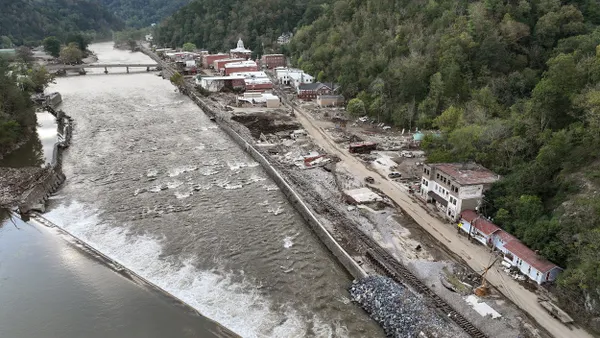
The phrase “climate havens,” used to describe places perceived as safer than others from escalating wildfires, flooding, extreme heat, drought and hurricanes, is “somewhat controversial,” Justin D’Atri, founder of Adaptify, which provides guidance to help families relocate to climate-resilient regions, told Smart Cities Dive. “Because nowhere is necessarily perfectly a haven.”

“I think it's just a useful term with no better option up to this point,” D’Atri said, but he believes the concept itself is sound. He recently contributed to a University of Michigan School for Environment and Sustainability research project that offers an evaluation framework for prospective migrants and the leaders of potential climate havens assess whether a place meets the definition and build on geographic advantages to create durable resilience and long-term prosperity.
Smart Cities Dive asked D’Atri to explain how local governments can best position themselves to become climate havens and which cities show the most promise.
The following interview has been edited for brevity and clarity.
SMART CITIES DIVE: What makes a place a genuine climate haven as opposed to simply a place that has fewer hazards than somewhere else?
JUSTIN D’ATRI: The promise of a haven is to bring more people there because these places don't need to become walled gardens. They need to actually be the new beacons of where development and society and growth happens. There should be some steering and intention to where the growth should be happening, where it can benefit the most people over the long term. During the interview process [for the research paper], someone said you could call some random place in Saskatchewan a climate haven, but there's no real economy there. There's no real social network or economic engine. Remoteness doesn't necessarily make it a haven. Combined with relatively low hazards, they also need that institutional capacity to grow in a sustainable way. They have to have some social and economic prosperity to start with.
How does your framework come into play?
Many individuals are waking up to think, where should I go? And this is a map for where an individual or a family or someone that's young and thinking about starting off in their life can look, but it’s also a rubric for the cities, the policy makers, the planners in cities about where they start. Just calling themselves a climate haven doesn't help. They need to know what type they are and where their weaknesses are and focus on those, boosting their strengths along the way.
What steps should city leaders start taking to strengthen their capacity?
The successful places are moving institutionally, setting up offices for resilience or sustainability. It might be different terms depending on where you're at, but I do think some sort of office that is mandated to care about these topics matters, and to do so beyond just the decarbonization path. And it shouldn't be a little niche siloed office but should have some connection into the other departments, because that's actually where the action happens — in housing, planning, parks and recreation, water management — that's where the actual real work is done. But there does need to be some sort of empowered coordinating function thinking about the future resilience of a place.
What metrics should cities be looking at?
What's the food resilience of this place? Not that the city necessarily needs to grow all of its food, but it should be doing everything it can to support the regional agriculture. Because over the long term, the more food you can have closer to home, the better.
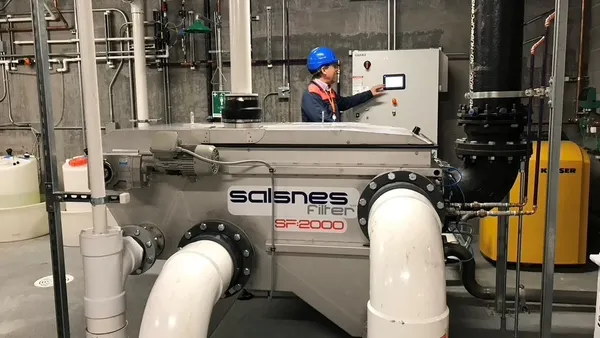
And then water resilience — water scarcity issues or maybe too much water. Especially as more people move to these places, that's where the strain is going to show up first. Stormwater, drinking water and then just dealing with drought in general because it seems like, especially this year, everywhere is basically experiencing drought in the northern hemisphere. The sponge city concept where you try to make cities more impervious helps limit this climate whiplash of too much water or too little. That is a good low-hanging fruit that is addressable for a city planner.
The more renewable energy and storage that you can have locally, the less dependence you have on a really large grid infrastructure. That local sovereignty angle plays in. And it just so happens to have a lot of decarbonization benefits too. And public transport could fit into that category because there's a little bit of an assumption that in the future, energy prices will likely be higher and supply chains are going to be more strained. There's a little bit of less of everything to go around.
How should city leaders address growth?
Being pro-housing growth is important. There's such a housing shortage just about everywhere to begin with, and it's going to even be more pronounced in these places. And they could easily turn into enclaves to block everyone out. So, that's where some of the advice is difficult, because if you tell a place it's a climate haven, it might be like, “Oh, wow, we're lucky. Let's lock down immediately.” There is kind of that human nature angle to it.
If a place wants to be growing and competitive and thriving over the longer term, being a little more pro-growth is helpful, but rapid boom growth typically doesn't turn out well for the environment. So, you don't want to hurt your advantage through growth, but you can't block it all the way. It's a hard needle to thread because growth should be managed, but none or a lot can both be a problem.
What types of cities show the most promise as climate havens?
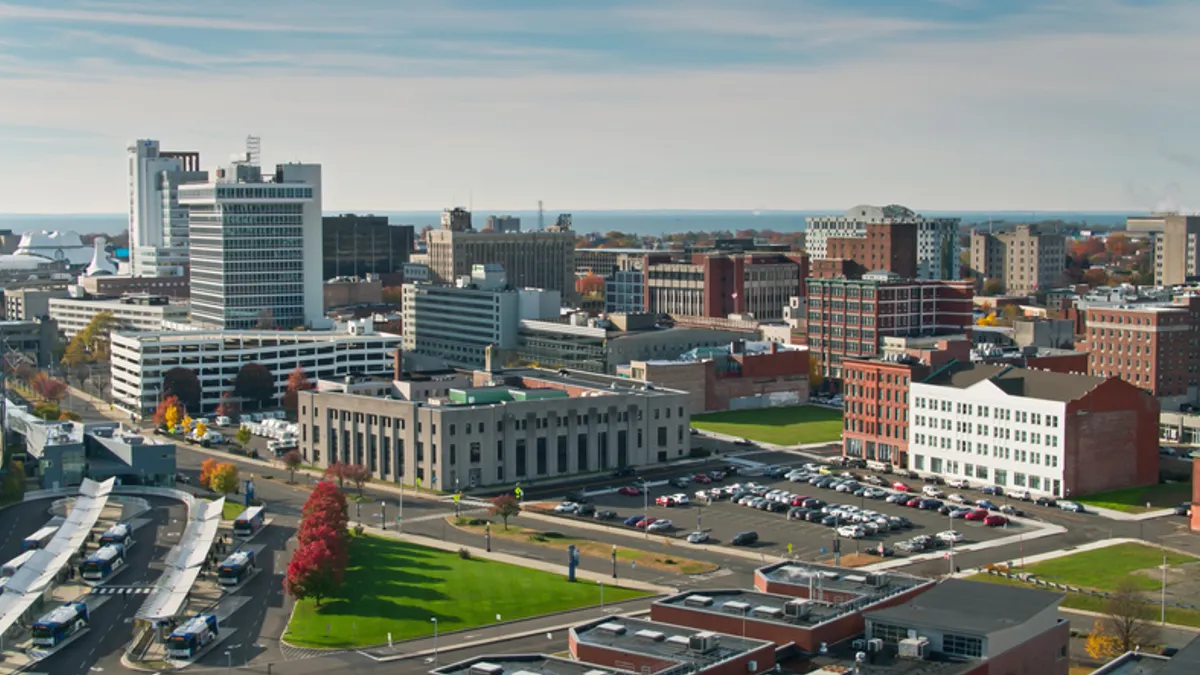
I'm not sure if anyone's really embraced the idea of becoming a receiver region yet. Cincinnati is really the only example, and Duluth [Minnesota] kind of did this. But a lot of places could wake up soon to realize, hey, we are in a relatively well-off position. There are medium-sized, not-so-big-name towns across a lot of the Midwest that would fit in that category of unintentional enclave.
Ann Arbor [Michigan] and Madison [Wisconsin] have that thriving social economic support, all the institutional capacity from universities and the pleasant Midwestern Great Lakes hazard level. I think in some ways they know that they're climate havens without saying it yet, because they're trying to do a lot of this stuff that might be more due to their progressive values.
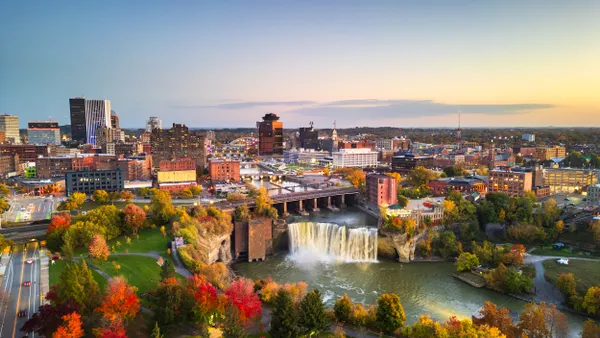
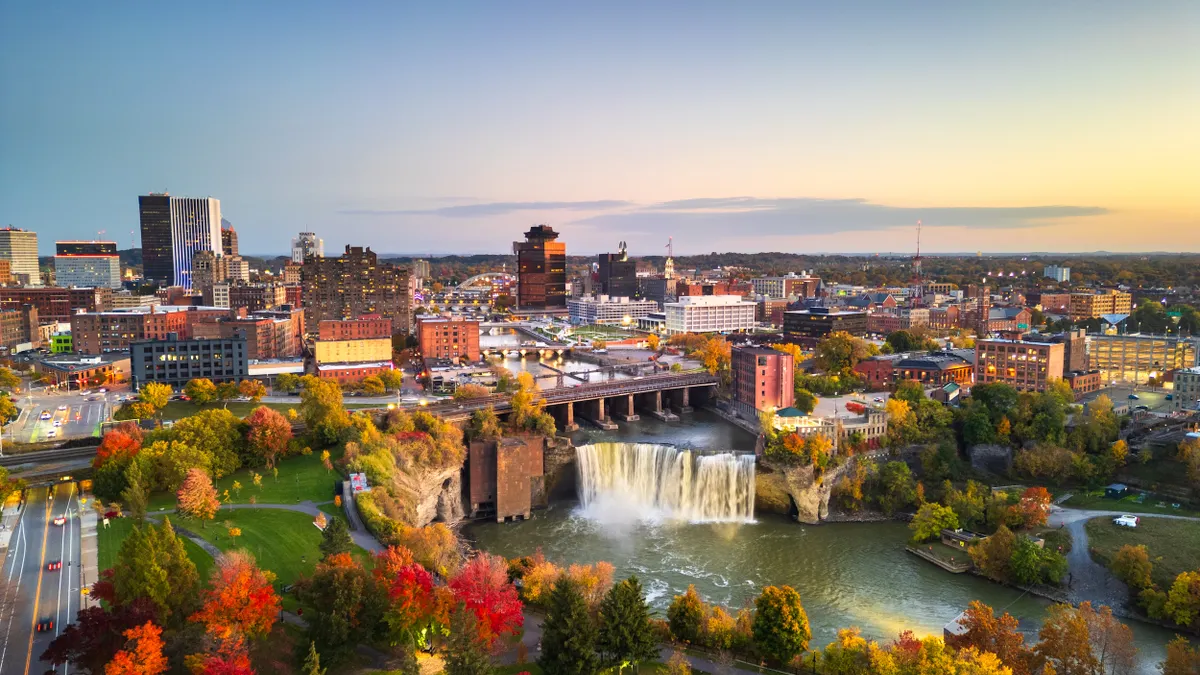
You hear people calling Rochester, New York, a top choice. These medium-sized or small cities dotted near the Great Lakes have a lot of potential to hold a heck of a lot more people. Those places’ water security mixed with access to agriculture and a little bit less wildfire danger than most makes those interesting long-term cases.
Is it fair to say climate haven is more of a process — something that needs to be actively worked on — than a geographic designation?
That's true. You can come in the door a little bit more lucky than others, but the work afterwards is the long-term differentiator.