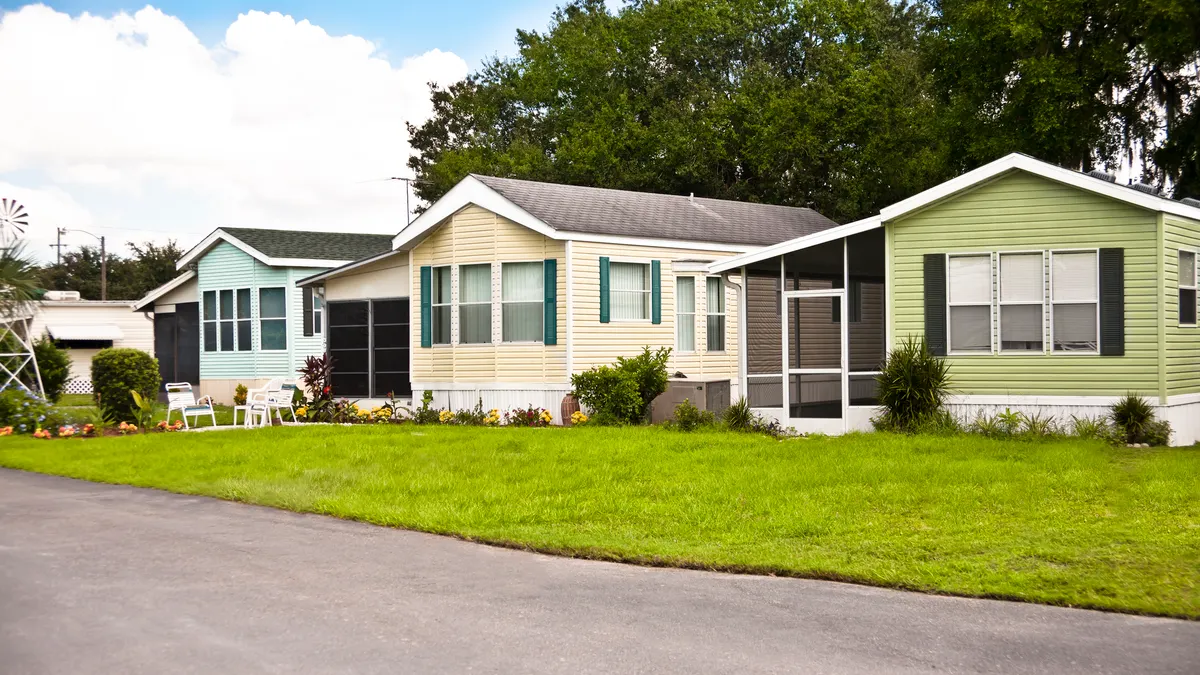


Institutional investors own about 3% of all single-family homes in the U.S., but they’ve been on an accelerated buying spree in Jacksonville, Florida, for the past several years.
Between 2018 and 2024, Jacksonville saw a surge of institutional investor home purchases — a 145% increase, or 8,000 homes — and today institutional investors own more than 20% of single-family rental homes in the city of nearly 1 million residents.
That caught the eye of the Local Initiatives Support Corp. Jacksonville, a community development nonprofit. The group recognized a contributing factor: Homes were getting passed down from one generation to the next without a will or formal estate transfer.
“There’s people living in homes who are acting as formal owners without formal ownership rights,” Kristopher Smith, LISC Jacksonville senior community development program officer, told Smart Cities Dive. “They can't access housing finance markets, they can't access home equity in the home. So then, when they need equity to address a particular issue, they can't tap that in a real manner.”
Some institutional investors began taking advantage of these gaps by tracking probate filings, tax delinquencies and neighborhood turnover to find houses they could purchase, according to LISC. Longtime residents who thought a house was theirs can learn that someone else now holds the title.
In an effort to head off such purchases, LISC teamed up with the Duval County Property Appraiser's Office in 2023 to create an AI-powered early-warning system to help vulnerable residents keep their homes. The initiative is a recipient of a 2026 Smart Cities Dive Community Project Award.
How it works
Through Project Guardian, LISC uses Duval County data to track the same gaps that institutional investors do, then it helps recipients of heirs' property — land or homes that have been passed down without any formal legal documentation — to get their legal filings in order so they can stay in their homes.
“We met with LISC and brain-stormed what data we currently have that could be used to possibly identify heirs’ properties,” Duval County Chief Appraiser Keith Hicks told Smart Cities Dive in an email. The teams spent “a significant amount of time discussing data options that could be used to refine or improve the potential leads.”
Once they identified the relevant data, LISC Jacksonville worked with Smart North Florida to develop a platform that integrates parcel-level records — such as deeds, probate filings, tax certificate activity and code violations — with census tract and county-level indicators to identify areas showing signs of vulnerability.
“You have all this data that's not harnessed in a way that allows it to compete with market forces, and market forces are there to do what market forces do, and that's to make money,” LISC Jacksonville Executive Director Irvin PeDro Cohen told Smart Cities Dive. “And so we were trying to find a way to harness all of this in a way that allowed us to at least compete with those things that were out to sort of disaggregate communities.”
The model uses AI to synthesize multiple signals to unearth ownership patterns, financial strain and neighborhood changes that indicate risk, according to LISC.
Once areas vulnerable to homeownership loss are identified, it’s boots-on-the-ground work, with LISC staff engaging with residents in those priority neighborhoods to build trust and offer education and assistance.
“If you're talking about folks who are facing tax loss, it is the immediate, ‘We got to put the fire out,’ and then we can talk about your budgeting and financial plan,” Smith said. “But you can't get there if you don't solve the immediate issue. In some cases, we're the fire department; in other cases, we're the smoke detector.”
Receptive residents are connected with LISC’s estate planning and legal service partners, who can help them navigate everything from obtaining a clear title to a home inherited without a will to probate cases to property tax debt to creating an estate plan or will.
Results to date
The initiative has resulted in the resolution of 2,200 estate plans and 180 probate cases so far, preserving nearly $54 million in home value, according to LISC.
Hicks said he was “genuinely surprised” by the volume of heirs’ properties in Duval County when they first began digging into the data.
“After the Property Appraiser's Office witnessed the success that LISC was experiencing and the volume of people assisted, it made us proud to serve the community in a different capacity than our traditional functions,” he said.
Concerns about institutional investors buying up housing amid a wide-reaching housing crisis have received national attention. The 21st Century ROAD to Housing Act passed this summer by Congress aims to limit how much housing large institutional investors can purchase.
Cohen said other municipalities across Florida are leaning into initiatives that prioritize affordable housing. “But when you think about it, the most affordable house is the house that someone's already in,” he said. “In 99.9% of our cases, someone is already in the house and they have an interest in remaining in that house.” Establishing a clear title can also unlock unused equity for homeowners, he noted.
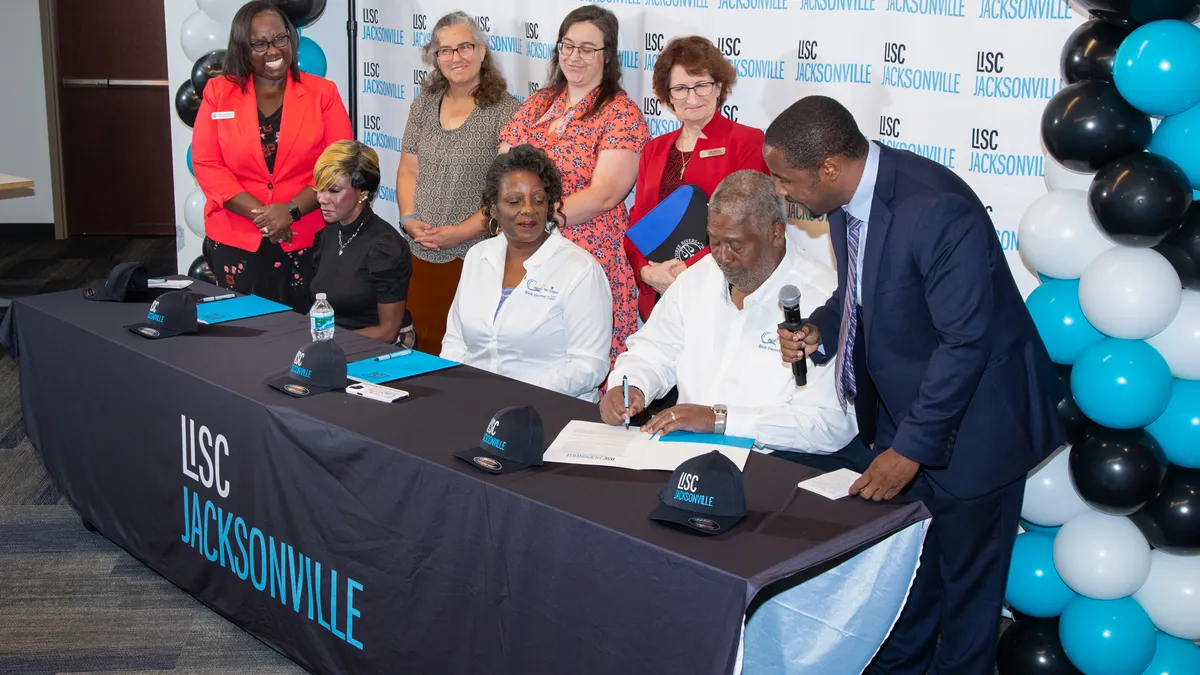
The county continues to supply periodic data concerning vital statistics, veterans exemptions and senior exemptions to generate new leads for Project Guardian, said Hicks. His office has provided witnesses for deeds and notaries for several LISC estate plan “signing days,” organized events where residents can come to finalize their estate plans.
“It is very satisfying seeing residents relieved that their affairs are now in order and the assets they have worked so hard for preserved for the family,” he said.