Like in its neighbor Detroit, the economy in Rochester Hills, Michigan, is driven by the auto industry. Local businesses make parts for vehicles assembled in the U.S. and Canada using materials from Southeast Asia, Mexico and beyond, Mayor Bryan Barnett told Smart Cities Dive. “Four out of five businesses in our city get something from somewhere else,” he said.
An uncertain federal tariff policy — including the latest announced tariffs between the U.S. and Canada — is causing the majority of Rochester Hills’ businesses to cut back, according to an informal survey of 40 to 50 local businesses conducted earlier this year, Barnett said.
“Almost 70% said they were cutting new capital investment in 2026. What that means to me is they’re not hiring, they’re not building a new line, they’re not investing in products and/or plants,” Barnett said. “From a local community’s perspective, this is about investment and job creation of our largest industry. This has shaken us to the core.”
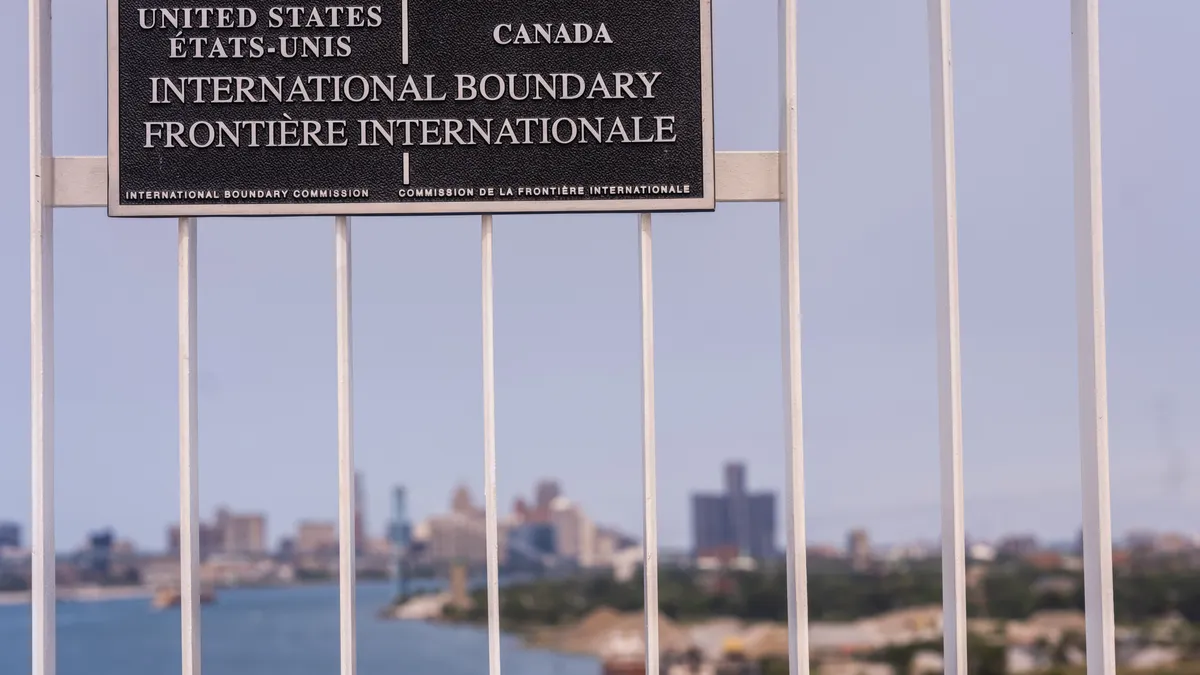
New tariff spats between the U.S. and Canada will compound the issue, Barnett said. Located just 12 miles from the Canadian border, his city of about 80,000 people has strong personal and professional relationships with its northern neighbor.
“Our biggest trading partner by far is Canada. We have people who work on both sides of the border. We get Canadian TV. We’re in Canada as much as we’re in Ohio,” Barnett said. “We’ve always grown up with Canada being such a great friend and ally. The consternation and frustration with Canada that’s felt at the national level is not felt here.”
Barnett is one of the border city members of the U.S. Conference of Mayors urging the U.S. and Canada to end the “escalating cycle of tariffs and retaliation” and “move quickly toward a negotiated solution that reduces tariffs and restores predictability to our trade relationship.”
“Mayors across America know the consequences of trade disputes are felt directly at the local level, in higher costs for small businesses, strained municipal budgets, and residents who feel the squeeze at the register and at the gas pump,” USCM President and San Diego Mayor Todd Gloria said in a statement.
The ”massive uncertainty” around tariffs is the death knell for most businesses,” Barnett said. “How can you price a part that’s going into [new vehicle] models six to nine months in advance without knowing what the president’s direction on tariffs will be? It’s a very prescribed, to-the-penny industry.”
Barnett, a Republican, said he hopes to “tell the president what’s happening at the local level” with tariffs — particularly Canadian tariffs.
“A lot of good businesspeople on both sides of the river are making solid business decisions to take care of their employees and their customers. Our sincere hope is Washington and Ottawa will come together and solve this quickly for the betterment of both nations,” he said.