

Dive Brief:
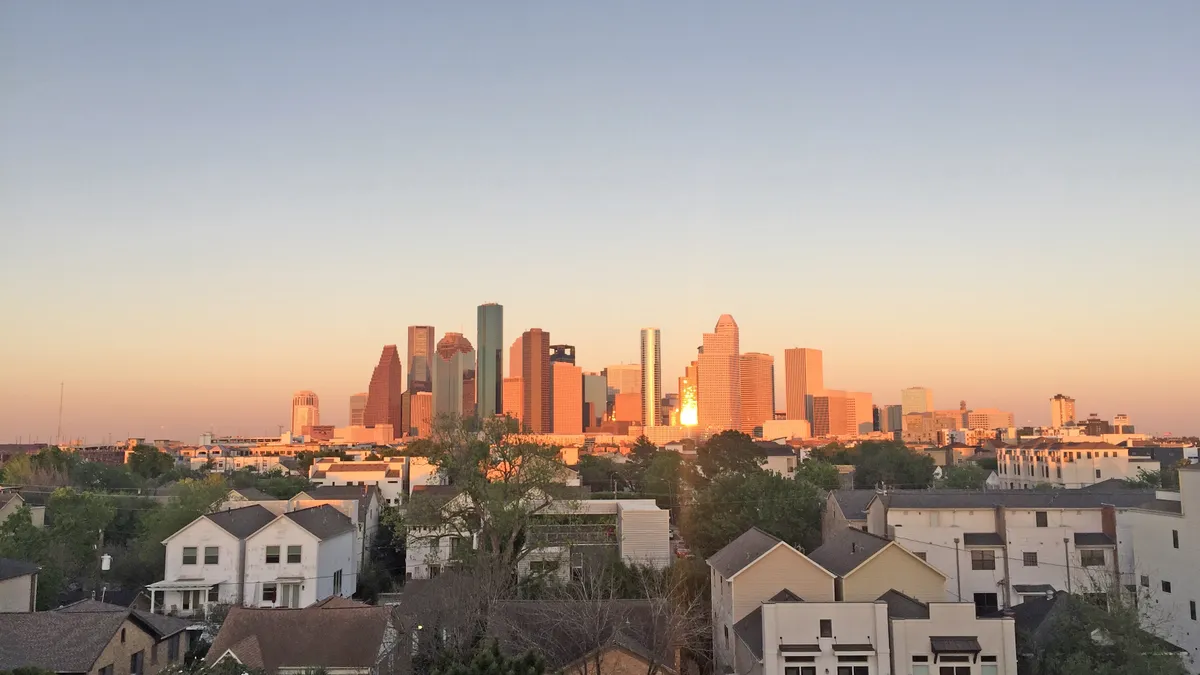
- Rising home insurance premiums are contributing to housing instability for low- and medium-income households across Texas, a recent study by the Kinder Institute for Urban Research at Rice University found.
- Home insurance costs consume a growing share of median household income in the state, jumping from 2.93% in 2009 to 4.65% in 2024, according to the report.
- Nearly 65% of Texas homeowners, more than 7 million, could not afford a median-value home in their county without becoming cost-burdened in 2024, and a 10% increase in home insurance premiums would price out nearly 50,000 additional households.
Dive Insight:
The number of cost-burdened U.S. homeowners — those who spend more than 30% of their income on housing — grew to a record 20.7 million in 2024, and experts have pointed to soaring home insurance premiums as a contributing factor.
“Homeowners insurance has become an increasingly important part of the housing affordability conversation because median insurance costs have increased at a higher rate than home purchase prices,” Steve Sherman, associate director of research at the Kinder Institute's Center for Housing and Neighborhoods, said in a news release.
Average monthly home insurance premiums surged 72% between 2019 and 2025, according to the Harvard Joint Center for Housing Studies. The impacts of climate change play a role in the uptick, as more than 72 million U.S. homes are at risk of environmental hazards, according to JCHS.
In Texas, homeowner insurance premiums are rising faster than general inflation, according to the Kinder Institute. Between 2009 and 2024, home insurance premiums in Texas increased 74%, far outpacing an 11% median household income growth during the same period. That gap widened even more in the past five years, with premiums surging 30%, compared with a 3% median income growth.
On a housing panel in June, JCHS Managing Director Chris Herbert called for more federal and state investment in shoring up housing to account for new climate realities.
“This is an issue where we have to recognize that there's real risks, that the insurance companies are facing losses, and those losses are concentrated in certain areas,” Herbert said. “We need to make the houses more resilient, so the risk to the insurers is less, but then we have to get insurers to recognize when those houses have had those investments and charge less premiums.”