Dive Brief:
-
In a new U.S. Conference of Mayors survey, 96% of mayors said residents are very or extremely concerned about affordability, and the crisis is affecting nearly every area of their constituents’ lives.
-
Unsustainable housing costs are the biggest concern, 96% of the mayors said, followed by the cost of groceries (55%) and utilities (40%).
-
Nearly 93% of respondents said the cost of living in their cities has risen in the past year, negatively affecting cities’ ability to grow their economies because residents have less disposable income to spend at local businesses.
Dive Insight:
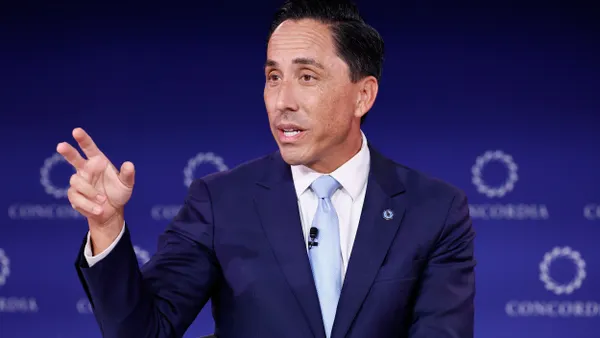
Affordability concerns have grown steadily in the past two years, Todd Gloria, mayor of San Diego and president of USCM, told Smart Cities Dive. While people understandably tend to focus on grocery and gas prices when it comes to affordability, he said, “the truth is, the rent eats first.”
Rent “is a fixed price that has a monthly deadline that is unavoidable, and so when you’re talking about the affordability crisis, you’re going to pay your rent, and as that price goes up, that means you have less for groceries, utilities, healthcare, childcare — and all those prices are going up as well,” Gloria said.
That impacts an entire city, the survey indicates. Fifty-six percent of mayors report increased homelessness and evictions, and 31% report more uninsured or under-insured residents.
The federal government can run a deficit, but cities can’t, Gloria said. As a result, mayors face tough choices. In San Diego, he has made “some not insignificant reductions to library hours [and recreation] center hours,” he said. “It’s not popular, but we don’t have an alternative” for closing revenue gaps.
Some cities are leaning on nonprofit organizations for help. Philadelphia is pointing residents to BenePhilly, which helps them access federal, state and local benefits, according to the report. Other places are creating affordable-housing initiatives. Kansas City, Missouri, and Fresno, California, established housing trust funds, for example.
More than half of the mayors surveyed — 56% — said resolving the Iran war to lower gas prices would go a long way toward alleviating the affordability crisis, while 77% said restoring and expanding Supplemental Nutrition Assistance Program benefits would help.
“Our federal government’s chief executive has represented that affordability is a hoax,” Gloria said. “I think this survey shows that city chief executives know that this is real, that it’s serious and that it needs action. I think we’re all frustrated [that]…Congress is in recess at a time when we could use their legislative action to provide relief to Americans.”
USCM members are kicking off a nationwide affordability tour today. The initiative will highlight the report's findings and efforts to address the country's affordability crisis.