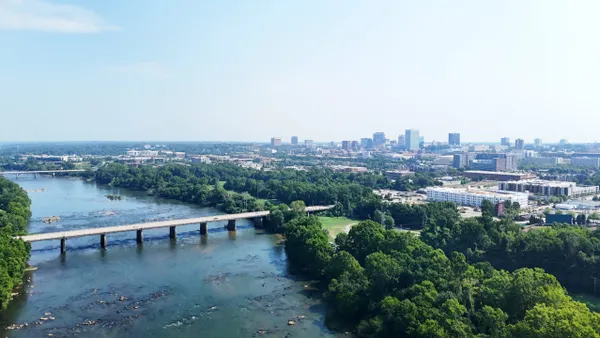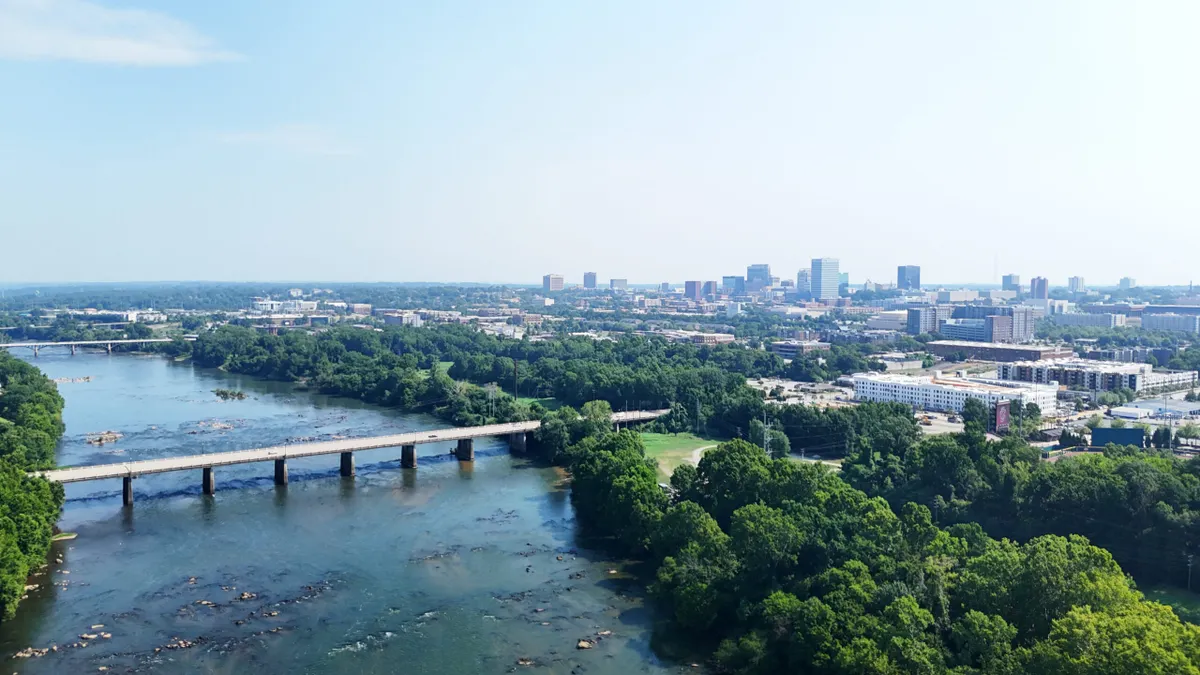
In early October 2015, Hurricane Joaquin tracked far to the east of the United States but sent a plume of tropical moisture toward South Carolina’s Richland County, causing what the Weather Channel called “one of the most prolific rainfall events in modern U.S. history.” The resulting 1,000-year flood hit Columbia, South Carolina, hard, breaching dams along the Columbia Canal — the largest source of the city’s drinking water.
Clint Shealy was six weeks into a new job as the water works superintendent at the Columbia Canal when “it started raining and just kept raining,” he told Smart Cities Dive. As chunks of the canal’s earthen embankment washed away, his team had to act fast to protect the drinking water supply for the city of about 150,000 people. They built a rock dam to isolate the breach and created a finger lake to hold and pump the water — an interim measure that’s still in place. “We’ve been operating in kind of a diminished capacity ever since,” he said.
“We don’t sleep well when we think about this thing happening again,” said Shealy, who is now assistant city manager, Columbia water. “We need to be protected.”
River city resiliency
City officials have responded to the disaster with an ambitious initiative to restore and modernize the Columbia Canal system. It is collecting bids for a $12 million project to repair the 12 headgates damaged during the storm and nearly half finished with a $63.8 million project to install a new water supply intake with a capacity for 80 million gallons per day from the Congaree River.
“We’re a little better off than we were in 2015,” Shealy said. “But that thing that happened in 2015 is still in the back of our minds. So, we started pursuing a resiliency project pretty early on.”
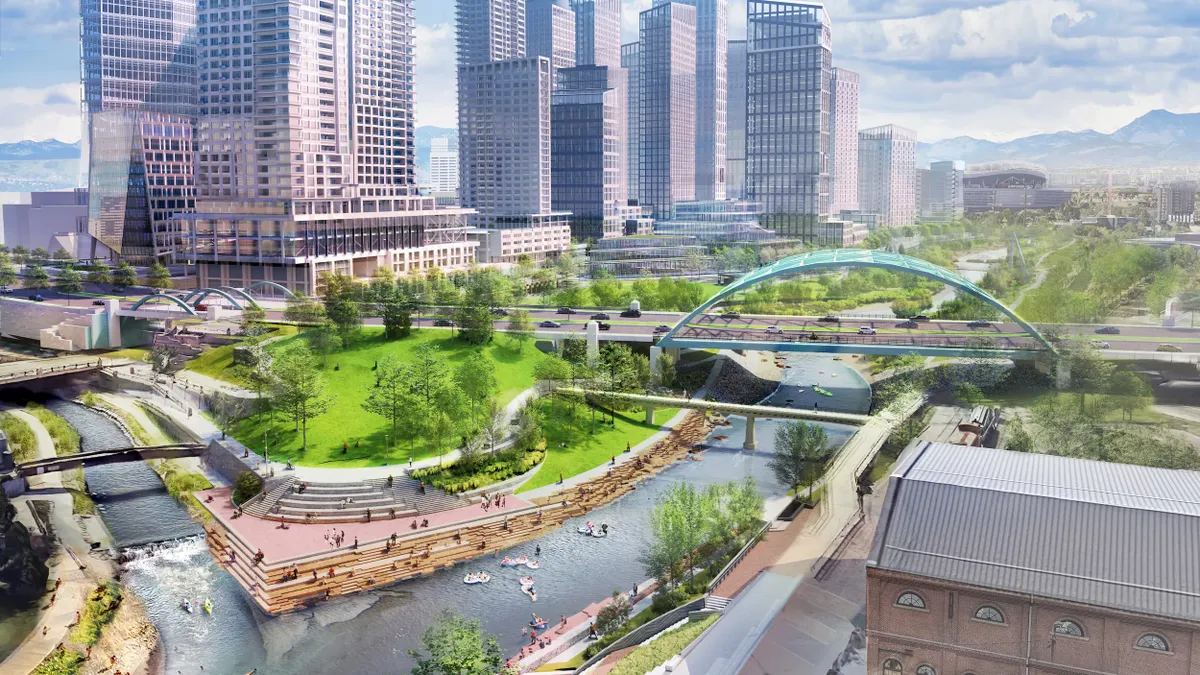
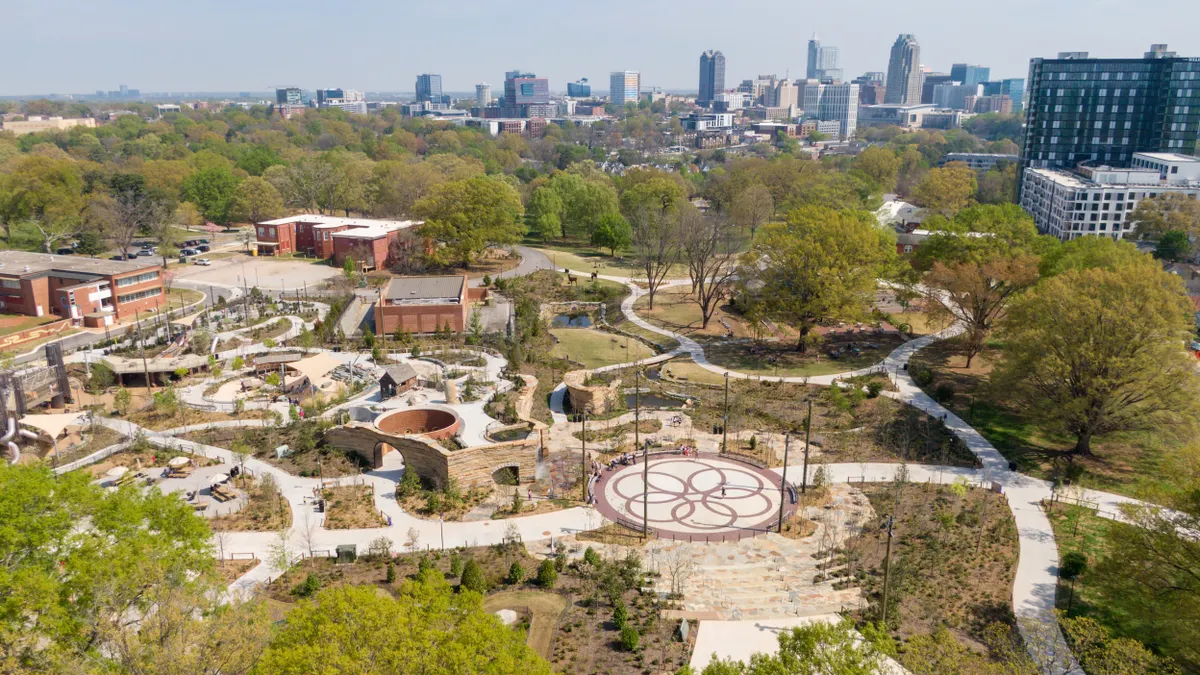
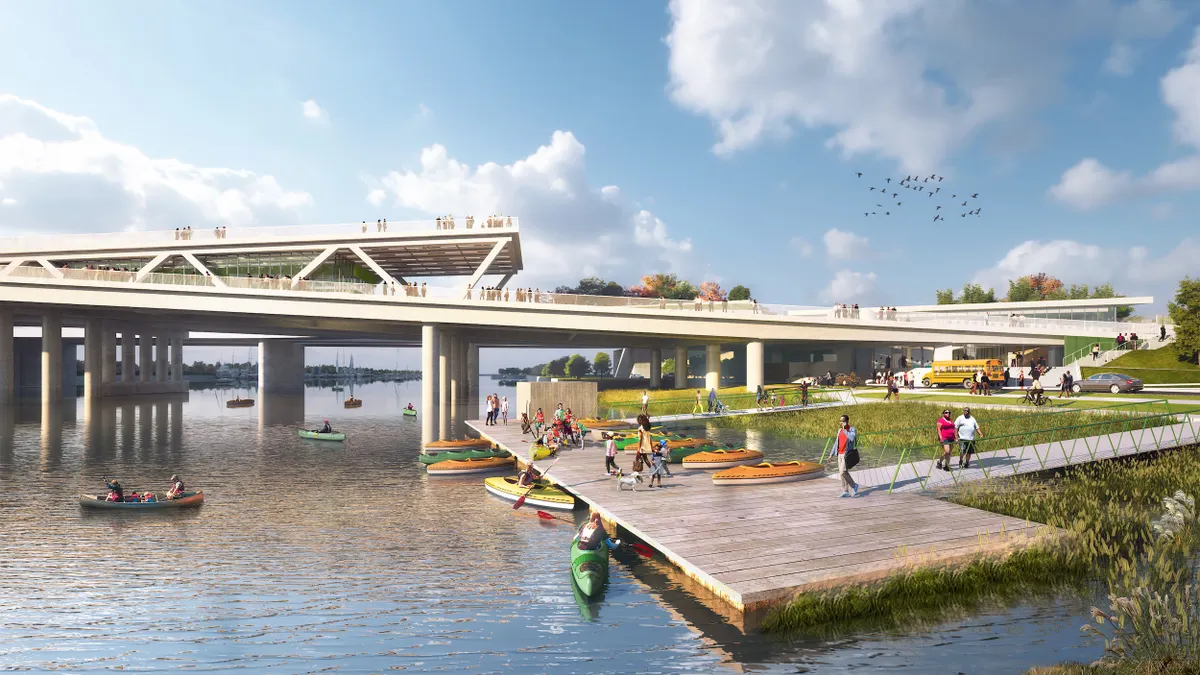
That project will connect the canal improvements to a 100-acre riverfront district encompassing a recreation area and mixed-use development linking two parks and opening up access to the Congaree River that residents and visitors have never had before. Eventually, the Congaree Riverfront District will connect with a 27-mile riverfront system following the Saluda River through downtown Columbia as it connects with the Broad River to form the Congaree, according to a city spokesperson.
“You just don’t have opportunities like this very often in downtown communities,” Shealy said. “The city is investing with its partners to strengthen quality of life, protect our critical infrastructure and really embrace who we are as a river city.”
Connectivity, community and conservation
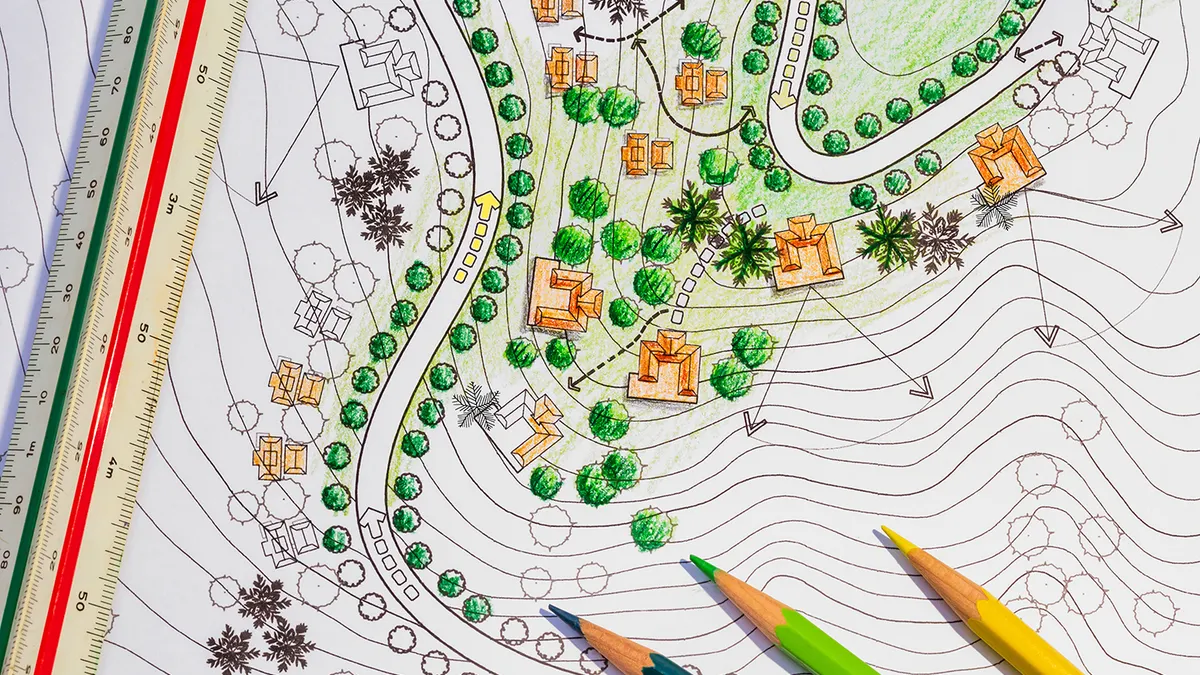
Field Operations, the landscape architecture firm behind high-profile projects such as New York City’s High Line and Chicago’s Navy Pier, is developing a master plan for Columbia in conjunction with Richland County, the University of South Carolina, a handful of development foundations and numerous community operations, Shealy said. He expects the master plan to be complete later this year.
Guignard Associates, which manages the real estate holdings of a prominent local family, donated a key piece of land for the riverfront system, which is being financed by a mix of available funds, grants, philanthropy and potential naming rights or sponsorship opportunities, according to the city. The full cost is yet to be determined.
“We’ve really been intentional about doing online surveys, having stakeholder meetings and trying to get public input so that we’re really satisfying our community’s needs,” Shealy said. “And wow, has our community embraced this thing.”
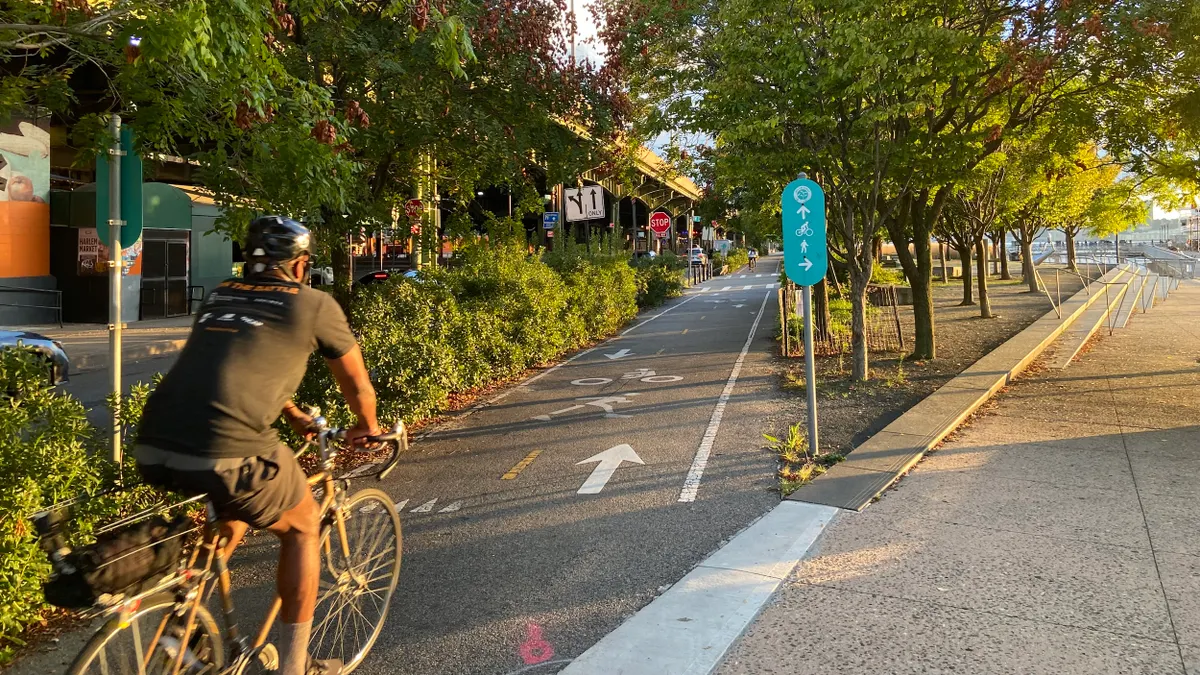
Residents’ primary interests are connectivity between parks, neighborhoods and communities; corridors for walking and biking; access to the river and water recreation; and preservation of natural resources and wildlife habitat, Shealy said.
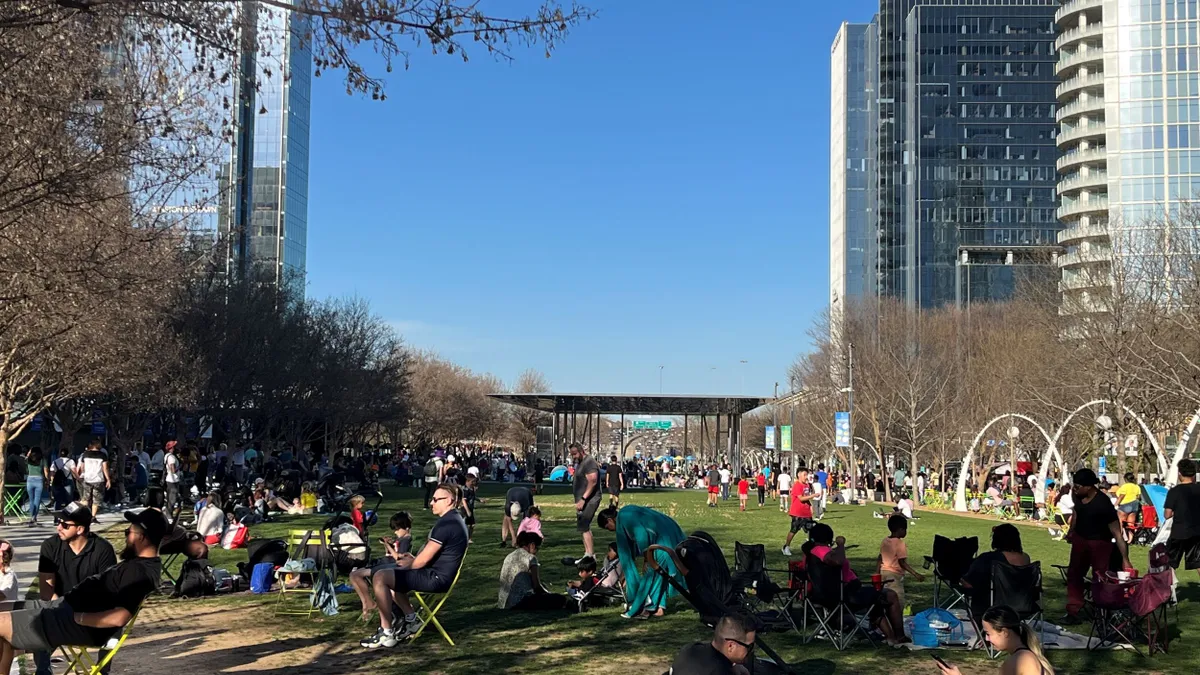
Field Operations is helping the city identify private development opportunities such as housing, coffee shops, brew pubs and hotels that will create a tax base to maintain the park, Shealy said, because “the last thing you want to do is build a beautiful park and not have a funding stream to be able to maintain it.”
Columbia launched a marketing and branding campaign in 2024 and adopted a new logo with three different shades of blue to represent the Congaree, Saluda and Broad rivers. “We’re embracing the rivers as part of our identity,” Shealy said. “And now that we have these opportunities to do this — the riverfront development, the resiliency projects, the overall connectivity — it’s just a key core of who we are as a city and how we want to be represented.”