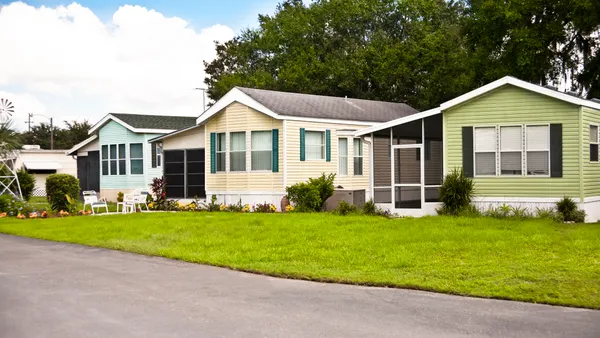



Streamlining permitting processes and clarifying housing regulations could help New Mexico address a deficit of 58,000 homes, according to a recent report by the Mercatus Center at George Mason University in conjunction with Homewise.
Restrictive local housing regulations have stifled housing production in the state, dramatically pushing up median rents and home prices in recent years, a 2025 report by Pew Charitable Trusts found.
As states across the country become more involved in housing development efforts, New Mexico stands alone in the Southwest for its lack of recent legislative reforms, according to the Mercatus Center report.
The report found “a great deal of variability” in local permitting standards across the state.
“While many jurisdictions have effective permitting processes, there is also a wide range of red tape in both local codes and state statutes that is delaying housing construction,” the report states.
Discretionary approval processes for housing projects, such as case-by-case public hearings, are a persistent statewide challenge, according to the report.
“Such discretionary processes can block housing by favoring a small number of people who are unrepresentative of the wider community yet are most able to attend public hearings,” the report states. “This often leads to inconsistent interpretations of the zoning code.”
Several municipalities, including Albuquerque, Farmington, Las Cruces, Rio Rancho and Silver City, are making strides to address housing shortages with policy reforms, the report stated.
The report offered five recommendations.
- Encourage public input on housing at the policy level, as opposed to individual cases, through regular comprehensive plan updates.
- Once standards are set, institute by-right approvals to improve predictability for neighborhoods and developers. Albuquerque, Farmington and Las Cruces have all adopted or extended by-right approval processes, allowing staff to sign off on individual projects that meet established standards.
- Establish regular reviews and goals for permitting processes, including timelines and bottlenecks.
- Simplify the permitting process. This can range from allowing simultaneous reviews of site plans and building permits to reducing the amount of required approvals.
- Provide direct funding for housing development and waive impact fees for affordable housing units.
The report also called on New Mexico to establish a housing division.
“Many states, including Colorado and Washington, have state agencies that fill this critical role,” Salim Furth, senior research fellow and director of the Urbanity Project at the Mercatus Center, said in a news release. “New Mexico lacks a central entity to drive a comprehensive housing strategy. A Division of Housing would fill that gap by helping local governments modernize housing policies, coordinating efforts across state agencies, tracking housing needs, and investing in innovative housing solutions.”