The Philadelphia Energy Campaign, an initiative to advance energy affordability, resiliency and sustainability across Philadelphia, has resulted in more than 11,000 jobs and $1.3 billion in economic investment and generated over $1.4 billion in energy savings for the city and its residents since it launched in 2016, according to a 10-year economic impact report released this month.
The partnership between the Philadelphia Energy Authority, the city of Philadelphia and the Philadelphia City Council generated $25.3 million in annual tax revenue and over $130 million per year in capital investment for energy efficiency and infrastructure, according to the report. The campaign “has saved millions in utility bills for the City of Philadelphia, homeowners, and commercial property owners, and generated significant tax revenues while cutting emissions and improving the health of buildings and tenants across the entire city,” the report states.
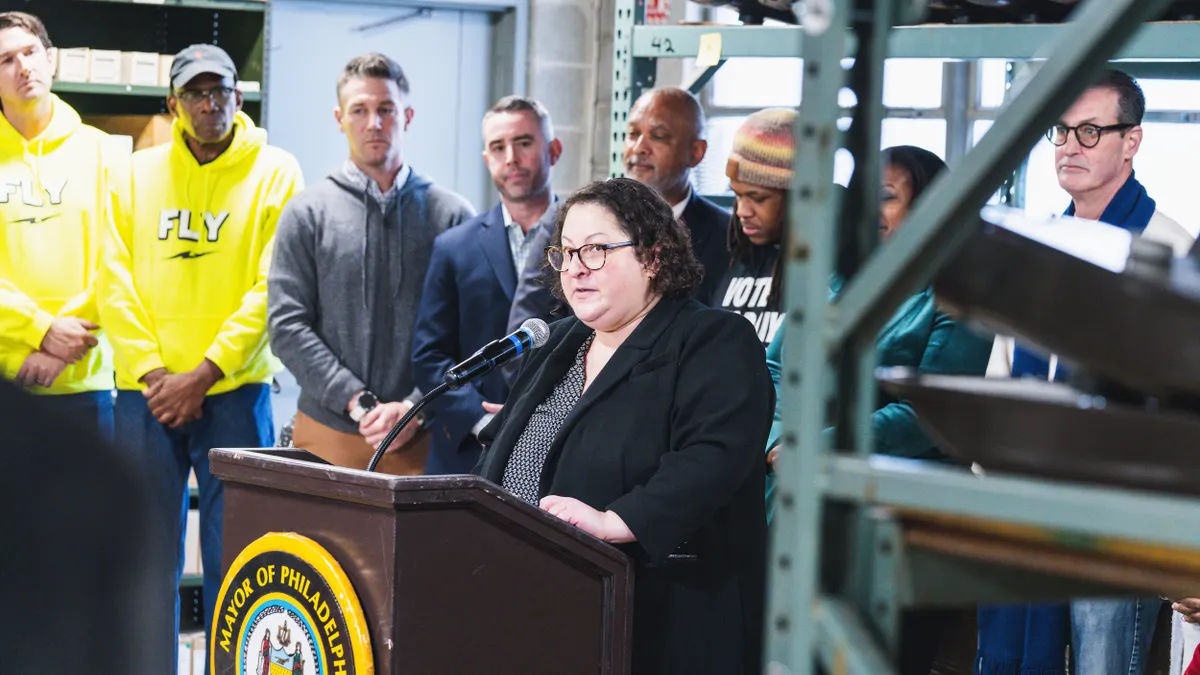
“We’ve come so far,” PEA President and CEO Emily Schapira told Smart Cities Dive. “We got $14.7 million total over the 10 years from the city of Philadelphia towards our operating budget. That was their investment. And we turned that into $1.3 billion and over 11,000 jobs. It's really been an amazing 10 years.”
Schapira said backing from City Council President Darrell Clarke, who built a coalition of labor, school officials and community organizations to support the campaign, has been key to its success. “Having that political encouragement, even though it didn't come with a lot of money, really made all the difference,” she said. “It opened a lot of doors. It got different parts of government, like our housing authority and our transit authority and our school district and folks who don't always get to work together in productive ways, to really open their minds to it and say, ‘Okay, let's give it a try.’”
The campaign started with what Schapira called a “Jenga approach — just tapping the blocks to see which ones come loose.” Projects included installing more than 130,000 LED street lights, energy-efficiency upgrades at the Philadelphia Museum of Art that reduced electricity use by 28% and a water and sewer line protection program that Schapira said reduces the amount of energy the water department spends on pumping and treating water lost through leaky pipes. These efforts save residents money and generate revenues that support the campaign’s clean energy initiatives.
Built to Last, a program that aggregates available funding to help low-income homeowners access housing-repair and energy-affordability programs, has completed energy efficiency and structural improvements for more than 400 low-income homeowners, delivering an estimated average savings of $300 to $1,000 per household annually, according to the report.
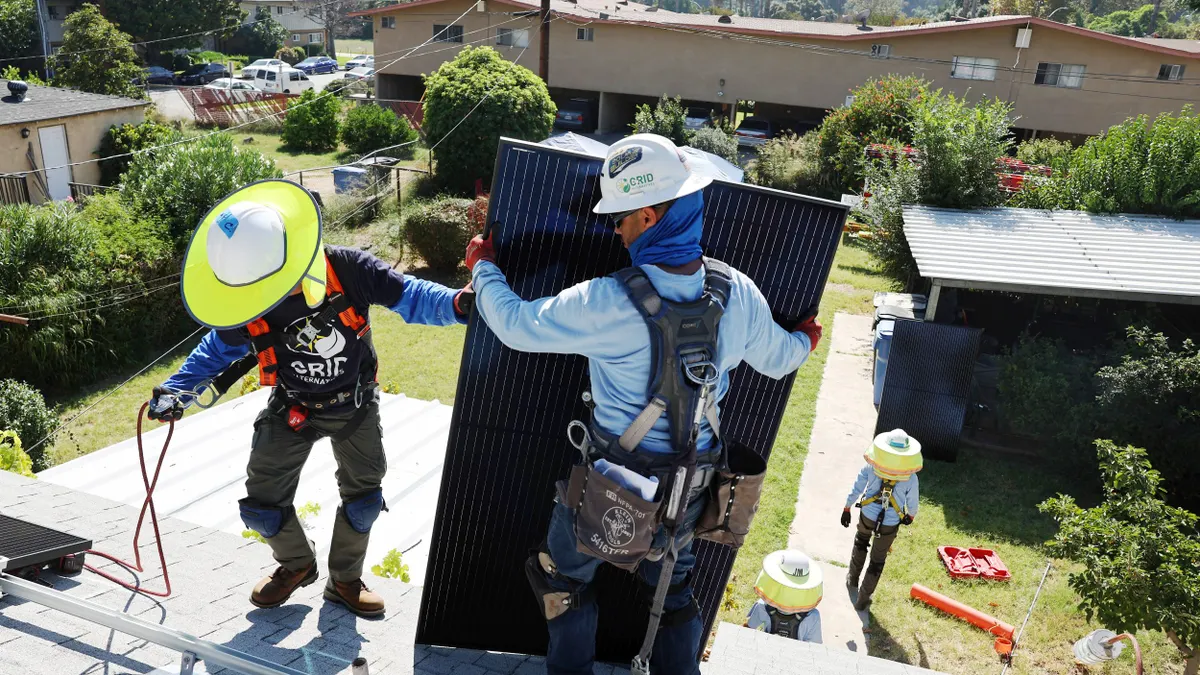
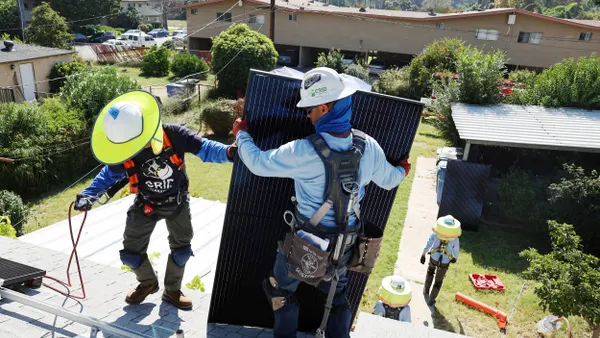
Solarize Greater Philadelphia, a government-backed program to help homeowners and businesses navigate the solar-installation process, has helped more than 4,300 homeowners — more than half of them low-income residents — install solar, adding 25 megawatts of solar to the grid, the report states.
“Stacking and layering different types of funding”
PEA funds the programs through bonds and a mix of public and private capital, Schapira said. Commercial Property Assessed Clean Energy, a tool that allows property owners to finance the upfront cost for energy, water, resilience and public benefit projects through a voluntary property tax bill assessment, has been one of the most impactful funding mechanisms in the campaign’s portfolio, the report states. Approximately $400 million in C-PACE financing supported 22 projects, producing $29.9 million in municipal tax revenue, according to the report.
Furthermore, the Philadelphia Green Capital Corp., a nonprofit “green bank” launched by the Philadelphia Energy Authority in 2021 to provide low-cost financing options for energy efficiency and renewable energy projects, “has been transformative for how we’ve been able to put different kinds of dollars together and make a lot out of a little,” Schapira said.
“The stacking and layering of different types of funding is really the unique thing that’s happening in Philadelphia that I think is not the norm,” she added. “We’re able to blend private financing with a little bit of public or a little bit of philanthropy and turn that into something that everybody can use. That’s the model.”
While the loss of federal funding, including a $156 million Solar for All grant, has been tough, Schapira said, “our model is incredibly resilient on purpose.” The campaign was launched during the first Trump administration, so its founders never had high expectations of receiving federal dollars. “We really designed everything around models that are very flexible and able to take advantage of opportunities when they come,” she said.
The key is to not “get bogged down by all you can’t do,” Elizabeth Lankenau, Philadelphia’s sustainability director, told Smart Cities Dive. “We’re all moving the needle in our own way. So, let’s just keep doing what we’re doing and focus on what we can change.”