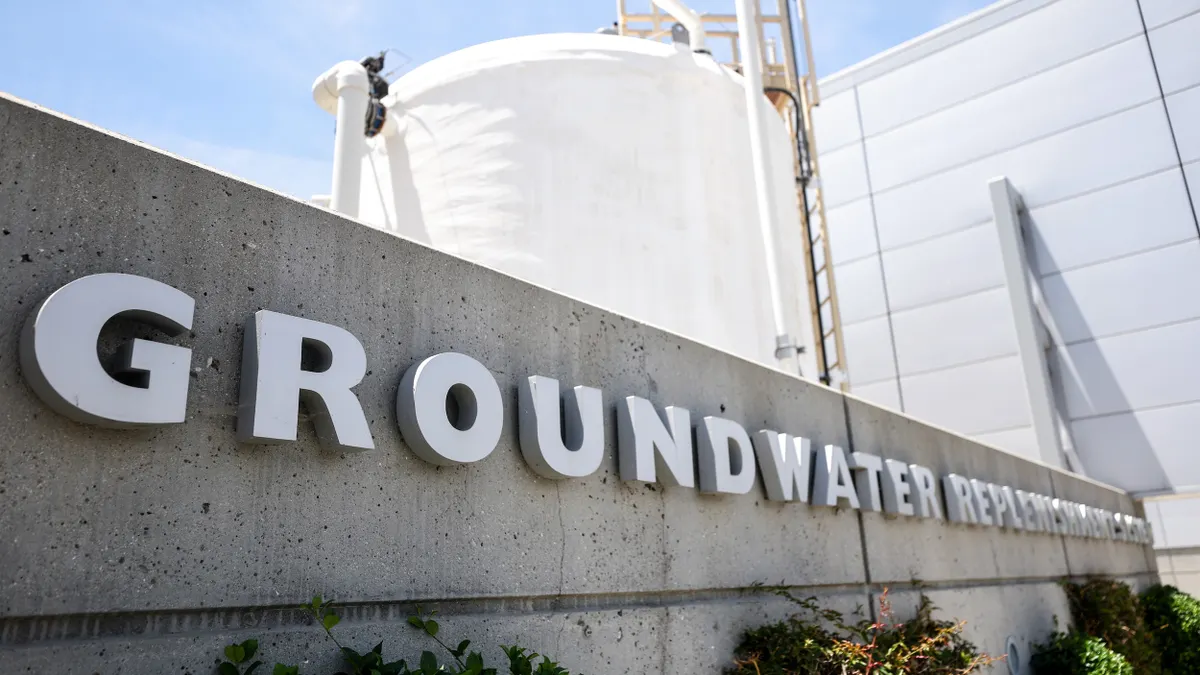
The Environmental Protection Agency launched a new water reuse action plan April 16 that reframes water recycling as critical infrastructure for water-intensive industries like semiconductor manufacturing and data centers. The plan emphasizes local leadership and collaboration, but fragmented regulations, tight capital budgets and public skepticism could slow the implementation of reuse projects, a water infrastructure expert says.
Aimed at normalizing and accelerating water reuse, WRAP 2.0 recognizes that “states and local leaders understand their water resources and needs best,” the EPA said in a press release, but it promotes “collaborative partnerships to advance reuse.”
“WRAP 2.0 is bringing together a unique group of public and private leaders from American industry, technology companies, the energy sector, the water sector, and government,” EPA Assistant Administrator for Water Jessica Kramer said in a statement.
This is a key shift, said Josh Mahan, senior director of government and industry relations at water technology provider Xylem, in an email to Smart Cities Dive. WRAP 2.0 recognizes “that water reuse is not just a municipal issue, with industrial users playing a critical role as early adopters of advanced reuse and partners in meeting shared water quality and resilience objectives,” he said.
According to Ana Schwab, a partner and director of government affairs at law firm Best Best & Krieger, “collaboration will be paramount to the success of the growth and evolving use of water reuse.” In an email, she said that “the implementation of water reuse is most successful when all parties are involved — federal, state, local communities, and stakeholders — each bringing a different level of expertise and experience to the development and implementation.”
But Street Lee, president and CEO of civil engineering firm McKim & Creed, who has nearly 40 years of experience in water and wastewater infrastructure, said encouraging government agencies and utilities to coordinate — while directionally helpful — “doesn’t fully address the core bottlenecks that slow reuse projects.”
Inconsistent state regulations, competing priorities for limited capital funding and stigma associated with treated wastewater could impede the plan’s goal of transforming wastewater into clean water for industry use, Lee said.
WRAP 2.0 fails to address the uneven regulatory landscape that makes permitting and scaling projects difficult, Lee said. While states like Florida have longstanding reuse programs with mature frameworks, others have little to no structure, he said.
Progress can also stall, Lee said, when government agencies and utilities have to balance water reuse projects with competing priorities, which could include leak reduction, PFAS treatment and system rehabilitation. As utilities manage multiple needs, reuse projects — which often require advanced treatment and infrastructure — can be deprioritized in favor of more immediate system demands, he said.
For private companies, compliance costs, reduced operational flexibility and liability concerns can “make participation less attractive and add another layer of complexity,” Lee said.
“In some communities, there is still a stigma associated with using treated wastewater, even when it meets or exceeds regulatory standards,” Lee said. “Ratepayers may prefer the most economical disposal option, and while reuse can be cost-effective in some cases, it is not always the lowest-cost path up front.”
Agencies and utilities already face competing demands for funding and resources, Lee said, and “adding another layer of coordination without alignment could increase project complexity rather than reduce it.”
“Without clearer integration between federal initiatives and local decision-making, WRAP 2.0 could struggle to achieve consistent outcomes across different regions,” Lee said.