In Virginia, the state Department of Transportation evaluated the cost of adding resilience to 36 construction projects and determined that a $1.7 million investment would reap a quantified benefit of $97 million, said Maria Mutuc, the agency’s resilience program manager.
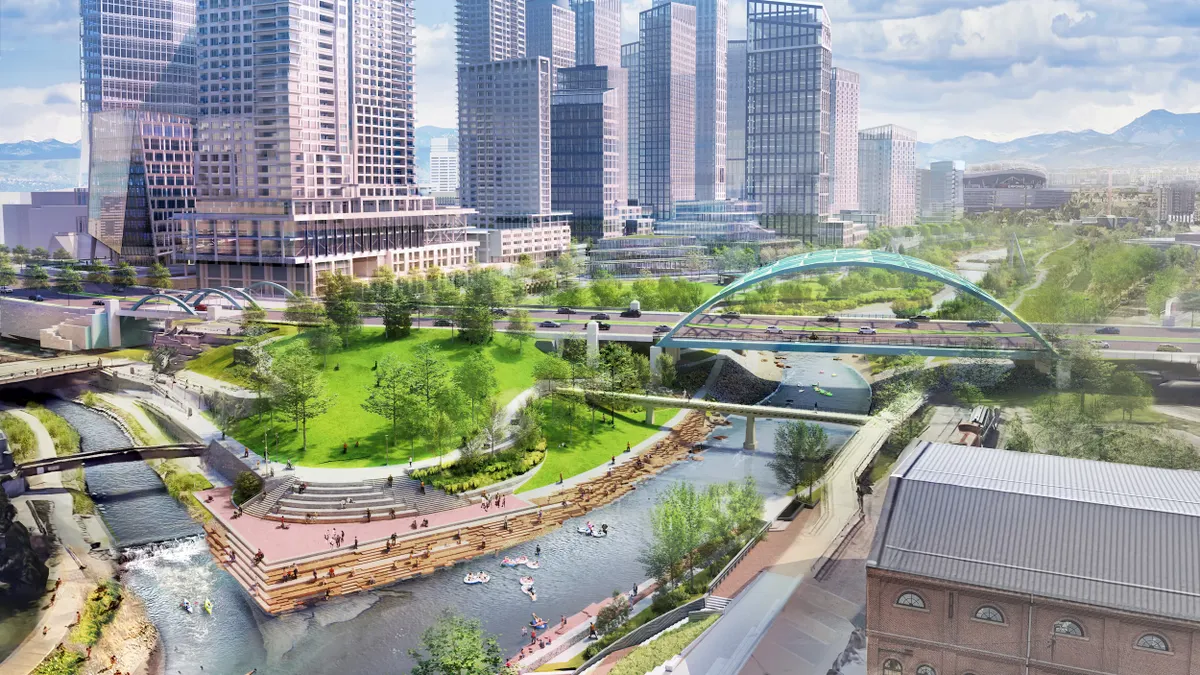
In West Sacramento, California, creating 3.8 miles of levee setback and 144 acres of floodplain habitat now protects 60,000 residents, 4,000 businesses and billions of dollars in assets, including a major transportation hub, from flooding, said Chris Elliott, senior vice president with infrastructure consulting firm ICF
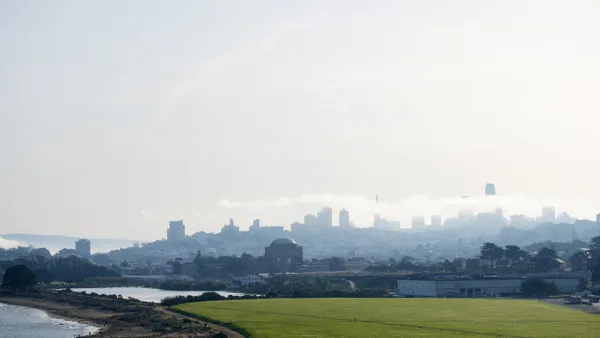
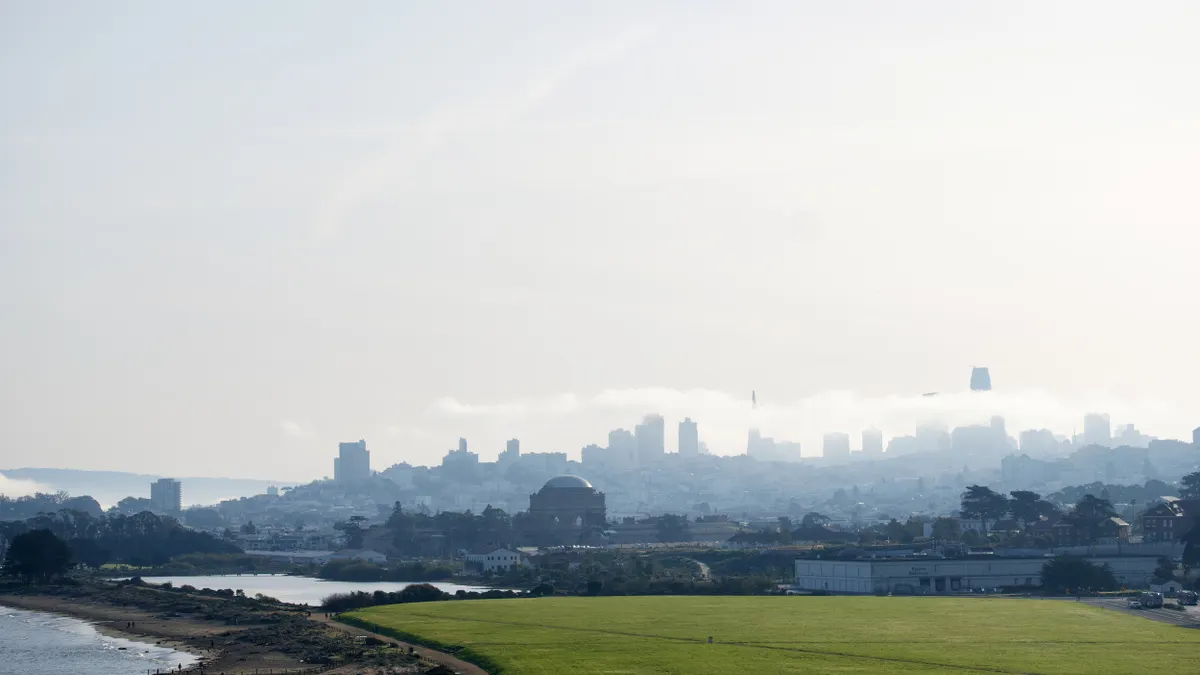
And in San Francisco, an $18 billion, 30-year plan to address 3.5 feet of sea-level rise by elevating a shoreline could spare up to 500 buildings and assets and up to 5% of the city’s most developed land area, said Brad Benson, waterfront resilience program director for the Port of San Francisco.
The experts shared what they’ve learned from these projects during a recent ICF panel about how to determine return on investment for public-sector resilience programs and nature-based solutions. The panelists used ROI analysis to show how green infrastructure projects can protect communities and inform how they’re incorporated into capital improvement planning.
Here are three takeaways.
It’s not all about the money.
Before the Port of San Francisco and the Army Corps of Engineers published a waterfront flood study analyzing the coastal flood risk and effects of sea level rise for 7.5 miles of waterfront, they developed two plans: a traditional national economic development plan and a total net benefits plan that looked at regional economic development, social effects such as lost productivity and community service disruption from disasters, and environmental quality including open space and habitat benefits, Benson said.
“When measuring these criteria, we did not monetize everything,” Benson said. “In some cases, we used monetized benefits, in others we were just counting, and we also had qualitative criteria. We found this a more intuitive way to share the effects of the different alternatives with our decision makers.”
The team wanted to include engineering with nature, or EWN, an Army Corps initiative that aligns natural and engineering processes to deliver economic, environmental and social benefits, in its recommended plan. Instead of monetizing those features, the team highlighted how EWN could diminish wave runup — a direct flood benefit — and add value through a more connected habitat system along the port’s waterfront, Benson said. As a result, they were able to justify almost 3 miles of EWN features in the $17.8 billion plan, he said.
“Many of the Army Corps engineers had previously seen EWN features value-engineered out of projects to reduce costs,” Benson said. “We had a different experience in this study.”
Keep flood control front and center.
West Sacramento has only about 60,000 residents, but the West Sacramento Area Flood Control Agency calls itself “the little engine that could,” said Elliott. Elliott served as the consultant environmental program manager for the agency’s $180 million Southport Levee Improvement Project, which provides ecosystem enhancements, recreational benefits “and a new view of flood protection,” he said.
“When you walked into a conference room in West Sacramento, the mission and priorities of the city were in bold letters right there,” he said. “You knew flood was number one. If we don’t solve flood protection for this municipality, nothing else can happen.”
The agency made the case that the city would not be able to pursue federal transportation funding or community development grants as long as that infrastructure was at risk of flooding, Elliott said.
The agency worked with the Army Corps, state agencies and 13 environmental NGOs to develop the project, which renovated an existing section of levee, built a new setback levee and converted several hundred acres of urban land into a riparian and oak savannah habitat to protect West Sacramento from seasonal flooding, Elliott said.
“There was strong city leadership that said we can do something different with our river and built it as an amenity,” Elliott said.
Test nature-based alternatives against traditional structural solutions.
The Virginia DOT hasn’t traditionally used nature-based solutions to enhance asset resilience because “we automatically gravitate toward structural solutions,” Mutuc said.
“The main concern we hear about NBS, at least in our agency, is cost,” she said. “There is an impression that NBS is more expensive than structural solutions. Although it has been demonstrated that coastal habitats can reduce wave heights by 35 to 70% and are often less expensive than armoring in the long run, that impression still lingers.”
To explore whether NBS could be a viable, cost-effective alternative to traditional engineering, a VDOT project team performed a conceptual analysis of three sites, evaluating existing conditions, drafting conceptual NBS designs and generating conceptual cost estimates, Mutuc said.
At one site in Richmond County, maintenance crews had to re-armor an eroding embankment on the only road in and out of a neighborhood after every storm, Mutuc said. The team developed three concept alternatives to reestablish and protect a marsh fringe along the roadway, ranging from a vegetative revetment to a hybrid solution of marsh plus breakwater to what Mutuc called “the greenest option,” marsh plus sill. The team compared the benefit-cost ratio of all three against a traditional revetment “because that comparison is how we can justify the use of NBS,” she said.
The hybrid solution, marsh with breakwater, “gave us the most benefit compared with the revetment,” she said.
“The final design includes breakwaters, oyster reefs and low and high marsh elevations, and this is what we built,” Mutuc said. The VDOT anticipates a 1,040-square-foot increase in vegetated tidal marsh, “which could yield tidal credits as a co-benefit of using a nature-based solution,” she said.
The solution has weathered a few nor’easters and is holding up well, Mutuc said. “Our maintenance crews are glad not to have to go out and work on the embankment storm after storm, and the community is happy, too. It looks good, and there’s no seawall obstructing the view. Everyone is pretty happy with the result of the pilot.”