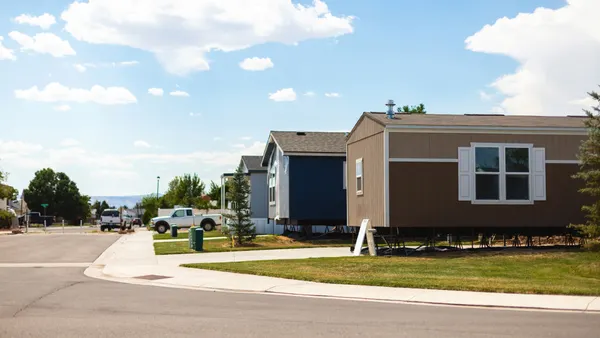


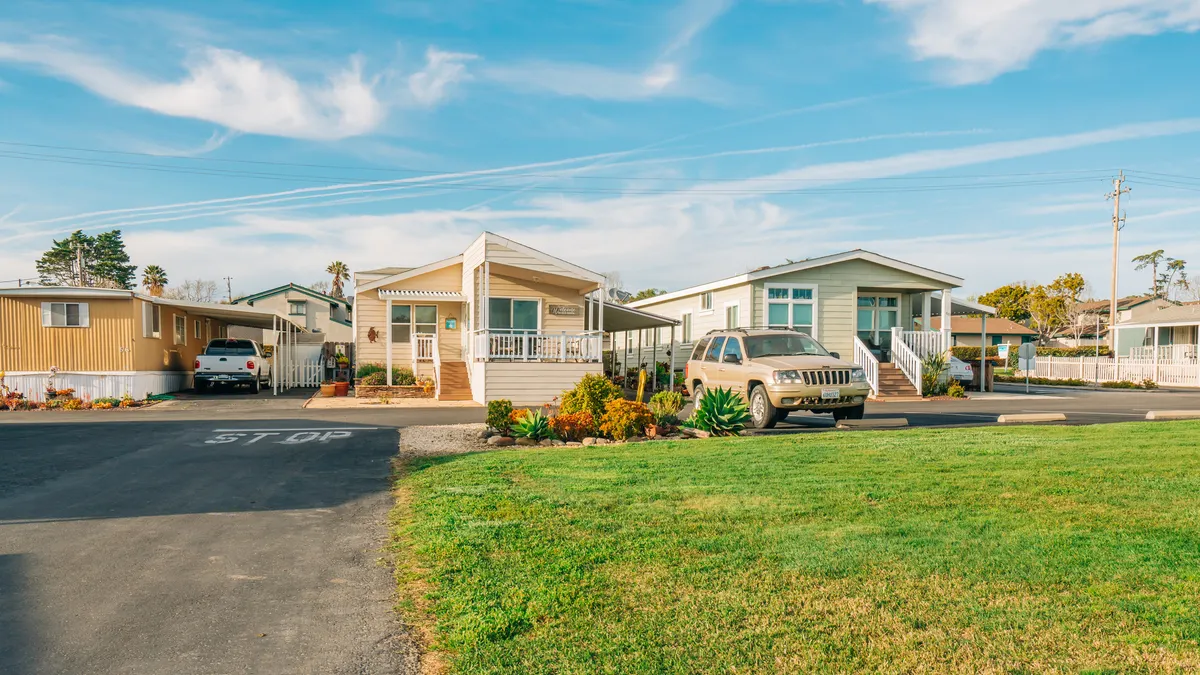
Last year, 102,700 manufactured homes were built in the U.S.
That’s only about a third of the 300,000 manufactured homes the country averaged every year from the 1970s through the 1990s, according to the latest Harvard Joint Center for Housing Studies’ State of the Nation’s Housing report.
Even as cities and counties scramble to find affordable housing amid a national shortage, the traditionally low-cost manufactured home has been stifled due in part to a longstanding rule that experts say drives up the cost of their construction: the requirement that manufactured housing be built on permanent chassis.
The U.S. Department of Housing and Urban Development’s requirement of a permanent chassis, a 10- to 12-inch metal frame that enables a mobile or manufactured home to be transported, dates back to the 1970s and has gotten renewed attention from lawmakers seeking to boost affordable housing options.
The 21st Century Road to Housing Act, passed by Congress on Tuesday, eliminates the requirement.
“It makes it easier and cheaper to build new manufactured housing by removing outdated chassis requirements, and brings down the cost of a new unit by up to $10,000,” Sen. Elizabeth Warren, D-Mass., said ahead of the bill’s passage earlier this month.
The clock is now ticking on whether President Donald Trump will sign the legislation or veto it, or take no action at all. Beginning at midnight on the closing day of presentment, the president has 10 days, excluding Sundays, to sign or veto the bill. If the bill is signed in that 10-day period, it becomes law. If the president declines to either sign or veto it, it becomes law without his signature, except when Congress has adjourned under certain circumstances. Both the House and Senate, meanwhile, are nearing recesses that could extend until mid-July, Politico reported.
HUD is also scrutinizing its regulations regarding the permanent chassis. It announced this month a proposed rule change that would open the door for multi-story manufactured housing by easing the permanent chassis mandate for upper floor sections.
“America needs more housing, and manufactured housing is part of the solution,” HUD Secretary Scott Turner said in a news release.
Whether cities will embrace manufactured housing, even with federal regulatory updates, remains to be seen. There is a negative perception of manufactured housing that “really needs to change in a major way,” Stockton Williams, executive director of the National Council of State Housing Agencies, said during a JCHS panel discussion last week.
Decades-old examples of shoddily built existing manufactured homes associated with the housing type aren’t representative of the manufactured homes that can be built today, according to Williams. “Manufactured housing is a lot more attractive, it's better constructed, and it can fit in different types of communities, not just exurban or greenfield areas, but even in infill locations in urban centers,” he said.
Restrictive local zoning codes can also block manufactured housing from gaining a foothold in a community, Williams said. More states are taking action to permit them, however, with Kentucky recently joining Maine, Maryland and Rhode Island in allowing manufactured homes to be placed in single-family zones, according to JCHS.
“I'm cautiously optimistic that it will start to become a more mainstream solution,” Williams said. “Bricks and sticks and traditional construction is still going to be by far the main way we build apartments and homes in this country for the foreseeable future, but I do believe modular and prefab and other innovations in off-site construction can be a growing part of the solution, particularly at the lower end of the market.”
More than 20 million people live in manufactured housing in the U.S., according to HUD.