Dive Brief:
-
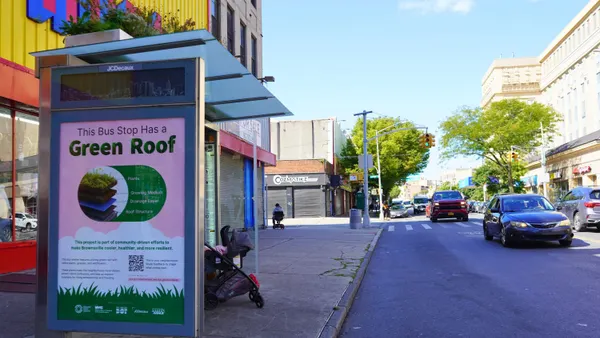
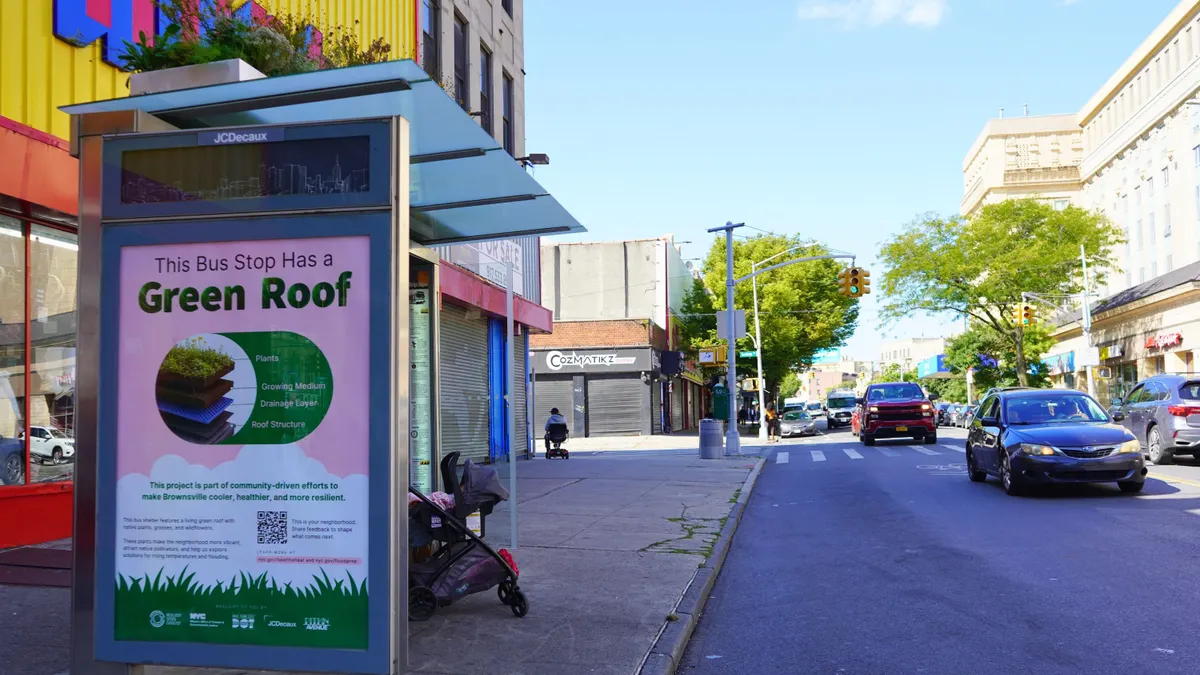
New York City installed four heat-resilient bus shelter roofs — one with a living roof of native plants, grasses and wildflowers and three with heat-reflecting film — to cool a commercial corridor in the Brownsville neighborhood of Brooklyn.
- The pilot project is part of New York Mayor Zohran Mamdani and New York Gov. Kathy Hochul’s Next Stop: Fast Buses, Better Service plan, which aims to make bus service faster, more accessible and more comfortable, in part by installing hundreds of bus shelters.
-
Brownsville, one of New York City’s most heat-vulnerable neighborhoods, is one of 12 neighborhoods worldwide where the nonprofit Resilient Cities Catalyst is working to accelerate climate-resilience projects along small-business corridors.
Dive Insight:
The 2026 New York City Heat-Related Mortality Report shows that approximately 500 residents die from heat-related causes each summer.
To mitigate extreme heat impacts on disadvantaged and heat-vulnerable communities, the state of New York’s Extreme Heat Action Plan calls for identifying priority corridors for shading, adding plants to formerly paved medians, building shade structures and adding cooling enhancements to bus shelters.
“As New York City sees hotter and wetter weather due to climate change, we must develop new ways of using green infrastructure to adapt,” NYC Department of Transportation Commissioner Mike Flynn said in a statement last week.
“Climate change is already redefining what it means to live in New York City, and our response has to protect New Yorkers where they are, including at bus stops,” Mamdani said in a statement. “We are turning everyday infrastructure into an opportunity to make our neighborhoods cooler, greener and more resilient.”
Living or green roofs can reduce surrounding air temperatures by up to 20 degrees Fahrenheit, according to Jean-Luc Martel, a construction engineering professor at the School of Superior Technology in Montreal, Quebec, as quoted in the Washington Post.
Green roof bus stops were first popularized in the Netherlands and have been making their way across Europe, Japan, Singapore and Canada. Boston has installed green roofs on 30 bus shelters planted with drought-resistant plantings to provide shade, improve air quality, increase stormwater retention and add new green space along its 28 bus route.
“Extreme heat kills hundreds of New Yorkers a year, and for too long our bus stops — where people can wait exposed for periods of time — have been overlooked in the climate crisis,” Elizabeth Adams, senior advisor for Fast and Free Buses for Mayor Mamdani, said in a statement.