While the federal government steps back from climate and resilience initiatives — both politically and financially — “states and cities are standing up,” Frederick Bell, associate director for state climate policy at the Center for American Progress, said Tuesday during a CAP panel discussion held in conjunction with DC Climate Week.
Mayors of two Washington, D.C., suburbs shared their strategies for delivering tangible benefits to their communities, places with strikingly different histories. In Takoma Park, Maryland, environmental activism “is embedded in the bedrock of our community,” said Mayor Talisha Searcy. At the other end of the spectrum, Dumfries, Virginia, “became economically depressed because of our climate illiteracy,” said Mayor Derrick Wood.
Despite these differences, both mayors have set clean energy standards and built public support through resident education and incentives, improved infrastructure and bolstered partnerships with state, federal and private entities. They laid out five strategies for successfully advancing climate action.
Retrofit buildings and target multifamily housing
Takoma Park is focusing resilience efforts on buildings because they’re easier to control locally than transportation, the city’s largest emissions source, Searcy said.
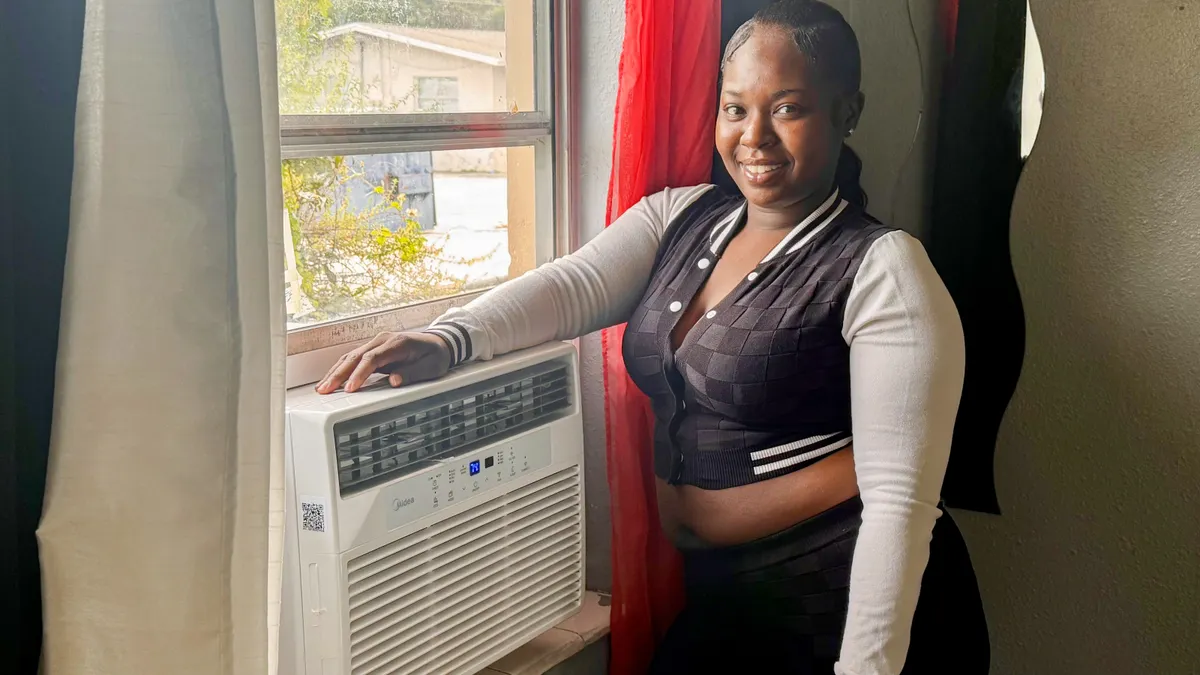
Antiquated heating and cooling equipment in several multifamily residences was “held together with Elmer’s glue and duct tape,” Searcy said, impacting quality of life for many people in the community. Upgrades were needed “to ensure that our residents, regardless of their income level, were able to be comfortable when staying in their homes.”
As part of its push to reach net zero greenhouse gases by 2035, Takoma Park is encouraging building owners to use green energy and piloting a food composting program for multifamily buildings, Searcy said. Using American Rescue Plan Act of 2021 funds, the city started a grant program to help multifamily building owners make efficiency upgrades.
Electrify city fleets and install charging infrastructure to support them
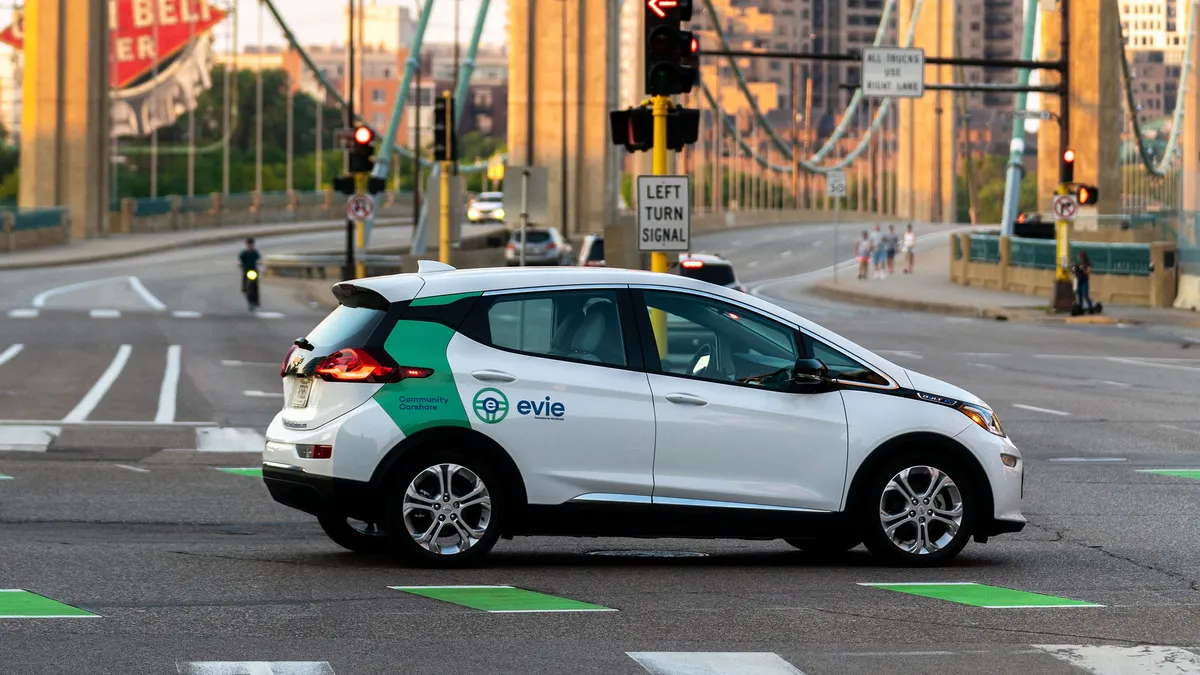
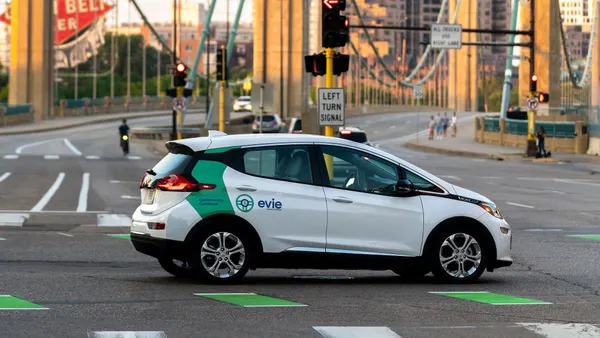
Takoma Park also obtained nearly $2 million in state and county grant funds to install EV chargers, the first step toward putting infrastructure in place so it can move toward electrifying its police fleet and other city vehicles, Searcy said.
Meanwhile, Dumfries has brought on an Environmental Defense Fund intern to help the city explore electrifying its entire fleet, including police vehicles, Wood said. “We’re about to map out our plan and change our vehicles over,” he said.
Address visible local problems
“My approach to sustainability has always been about, how can we help people in our community that are feeling real impacts of climate?” Searcy said. This includes protecting public buildings and residents’ homes from repeated flooding in areas that sit in a flood plain, she said.
“This is not a matter of performative policy speak,” Searcy said. “It was a real issue that so many people in our community were facing in a real way.”
In Dumfries, Wood worked to close a major construction debris landfill — which had earned the town the nickname “Dumpfries” — 10 years early, reclaiming 162 acres to build a gaming resort and public park along Quantico Creek. The resort brought 500 new jobs to the community of 5,000, Wood said.
“When you think about climate, you’ve got to think about, well, how are you creating jobs? How are you doing things to benefit residents?” Wood said. “And so, it was on this adaptive reuse of this landfill that I realized that, oh my gosh, I’m getting into climate — and at the same time, simultaneously working on my motto, which was to rediscover Dumfries.”
Align local plans with federal, state and private funding opportunities
Local climate work can’t get done without help from federal, state and agency partners, the panelists said.
Wood said Dumfries recently secured federal funds for a stormwater and stabilization project along Quantico Creek by strategically reframing the language around it to align with federal priorities — while accomplishing the same goals. In his effort to reconnect the community to the waterfront, he’s working to get Dumfries’ waterways “written into as many plans for funding as possible,” he said.
“My approach to sustainability has always been about, how can we help people in our community that are feeling real impacts of climate?”

Mayor Talisha Searcy
Takoma Park, Maryland
Even as federal funds for climate and resiliency dry up, Maryland General Assembly Delegate Joe Vogel said the Regional Greenhouse Gas Initiative, a multistate cap-and-trade program, has “unlocked millions of dollars every year” for strategic energy investments that help residents pay energy bills and fund renewable energy programs across the state.
Vogel has also sponsored a bill that would create regional support staff to help cities and smaller government agencies unlock federal and state funds as well as private opportunities to invest in energy efficiency, he said. “There is so much exciting work happening in the private sector that I wish our federal government was investing in, but our state can and definitely should be investing in,” Vogel said.
Build resident buy-in through education and outreach
In the end, cities can’t get climate results without changing resident behavior, which requires education, the panelists said.
“That takes work,” Searcy said.
Takoma Park educated 2,400 residents about energy use and efficiency last year alone, Searcy said, “and we’re seeing the fruits of that.” The number of residents who have installed rooftop solar has increased by 28%, and business owners are actively seeking out funds from the city’s grant programs to make energy improvements, she said.
More residents are engaged in environmental initiatives because the city is making the case “not just for the value to the environment, but also the cost implications and trying to lower some of those barriers of entry for people,” Searcy said.
The more residents see the city succeeding with climate initiatives --- and feel the effects of that success in their own lives --- the more engaged they will be, Wood said.
“In Dumfries, we’ve learned that real climate action isn’t just about the announcements, it’s about alignment with our plans, with our funding, with our infrastructure investments,” Wood said. “And that’s how we turn these overlooked assets, like a landfill, into a real asset to prepare for growth and a future that actually works for the people.”